
I used to be a sales manager at a big-name hair company that proudly claimed to sell raw, virgin human hair extensions. Sounds great, right? Except their “raw” hair prices were suspiciously low, and they could undercut competitors with ease. Why? Because they were mixing processed hair with unprocessed hair—charging you 20% extra for a misleading promise of hair quality.
Unfortunately, most of their customers weren’t exactly experts in raw hair extensions, so they ended up overpaying for hair that wasn’t nearly as amazing as advertised.
My experience is a classic example of how a hair vendor can profit from people who don’t know the ins and outs of human hair extensions. But don’t worry—with this ultimate guide to hair quality, you’ll avoid those mistakes and know exactly what to look for.
Table of Contents
Why a Guide on Human Hair Extensions?
Let’s face it—getting the truth about human hair extensions is harder than getting your cat to say “woof.” Salespeople know just enough to close a deal, while their managers keep them in the dark so they don’t run off to start their own business. Blogs and online posts? A breeding ground for misinformation. Ask about the difference between Peruvian and Brazilian hair, and you’ll get nine different answers. The truth? They’re just fancy marketing labels designed to sound exotic and dodge the “Made in China” stigma.
If you really want to understand hair quality, you need to know how manufacturers source and process their hair. But getting a straight answer from a vendor? Good luck with that.
At Bossique, we don’t just sell extensions—we’ve done the homework. While others were cutting corners during the pandemic, we leveled up. By sourcing better materials and partnering with manufacturers who prioritize quality, we’ve learned how to spot shortcuts and test for the real deal.
Here’s what we’ve uncovered—and what you need to know—about human hair extensions quality.
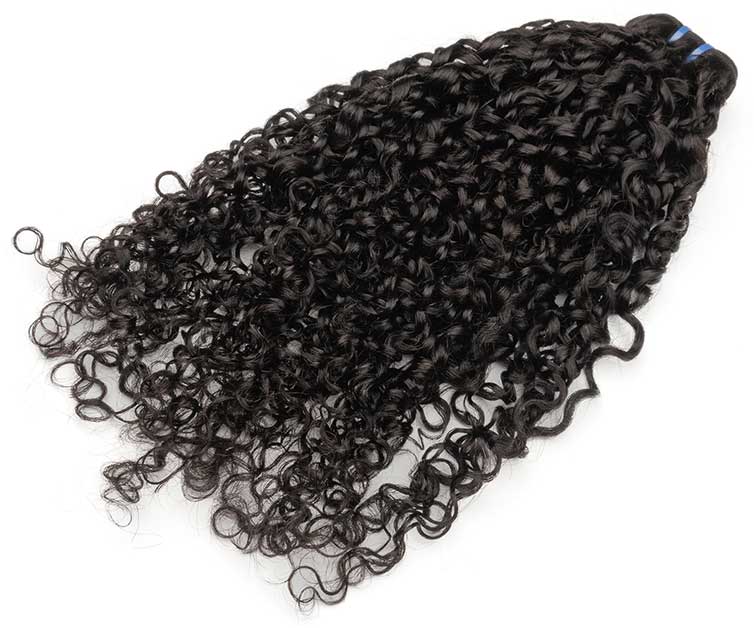
Quality Breakdown Without Labels
Labels like raw, virgin, and remy have lost their original meaning and do little to explain hair quality these days. Here’s the reality: raw hair and virgin hair are essentially the same thing—top-quality extensions. Raw hair is cut directly from a donor, while virgin hair is just raw hair that’s been steam-styled. The steam-styling process has little to no effect on quality.
So, if you think virgin hair bundles are somehow inferior to raw hair bundles, what you’re really comparing is chemically processed floor hair—not true virgin hair extensions. Don’t let misleading labels fool you!
2.1 Bianfa, Shunfa & Paofa: Hair Quality, the Chinese Way
In Chinese, we don’t have fancy terms like raw, virgin, and remy. Instead, we use practical words like “Bianfa,” “Shunfa,” and “Paofa” to describe hair quality. Don’t worry—you won’t be quizzed on pronunciation, but understanding these terms will help you grasp where the differences in quality come from. Let’s break it down:

2.1.1 Bianfa
Bianfa translates to “Ponytail Hair,” and it’s as straightforward as it sounds. This hair is cut straight from a girl’s head, ensuring the cuticles remain perfectly aligned. No processing, no fuss—just pure, high-quality hair. Less processing equals better hair, and these are the crème de la crème of human hair extensions. See 05, 06, and 07 in the above quality breakdown image.
-
Product on sale
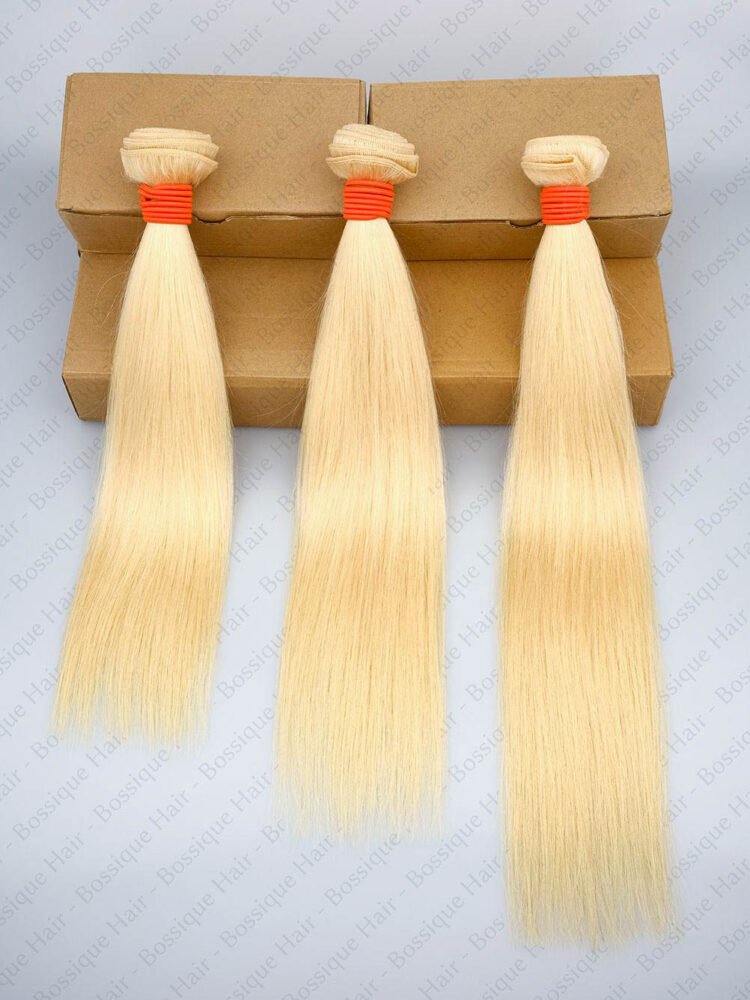 Orange Line 613 Straight BundlesFrom $44.10
 -
Product on sale
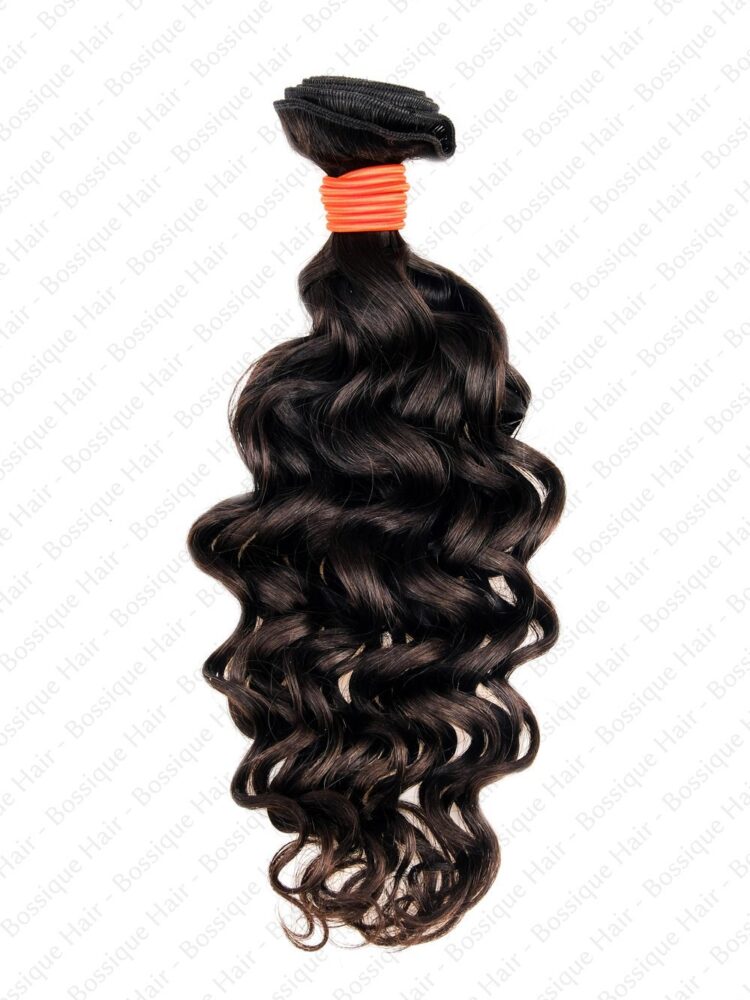 Orange Line Beach Wave BundlesFrom $35.80
 -
Product on sale
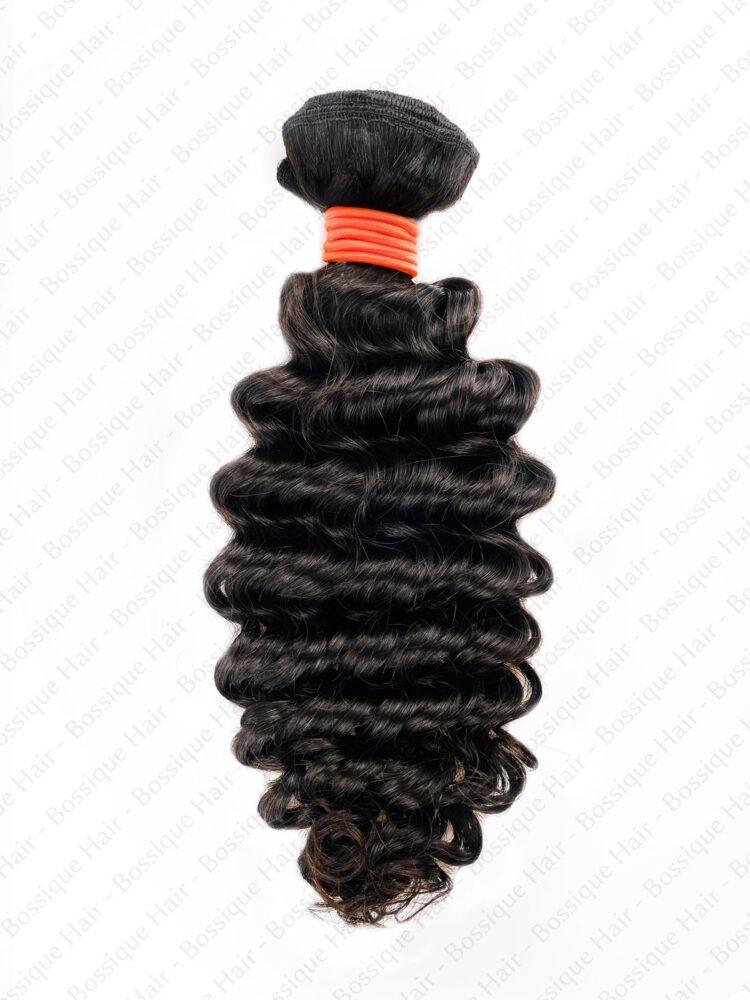 Orange Line Curly BundlesFrom $35.80
2.1.2 Shunfa
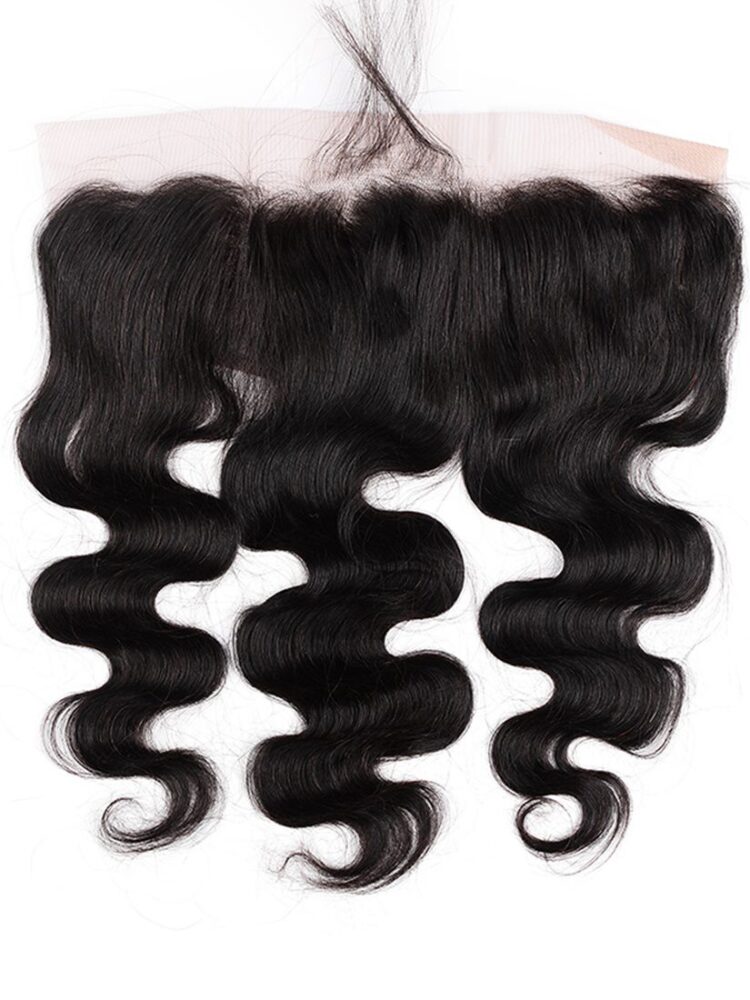
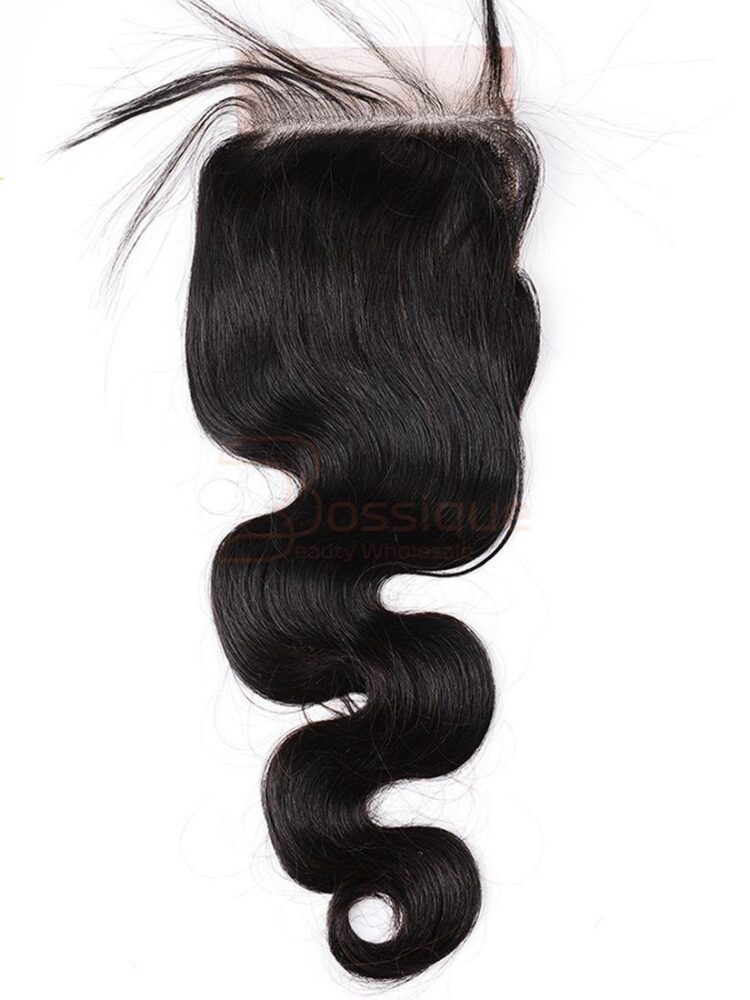
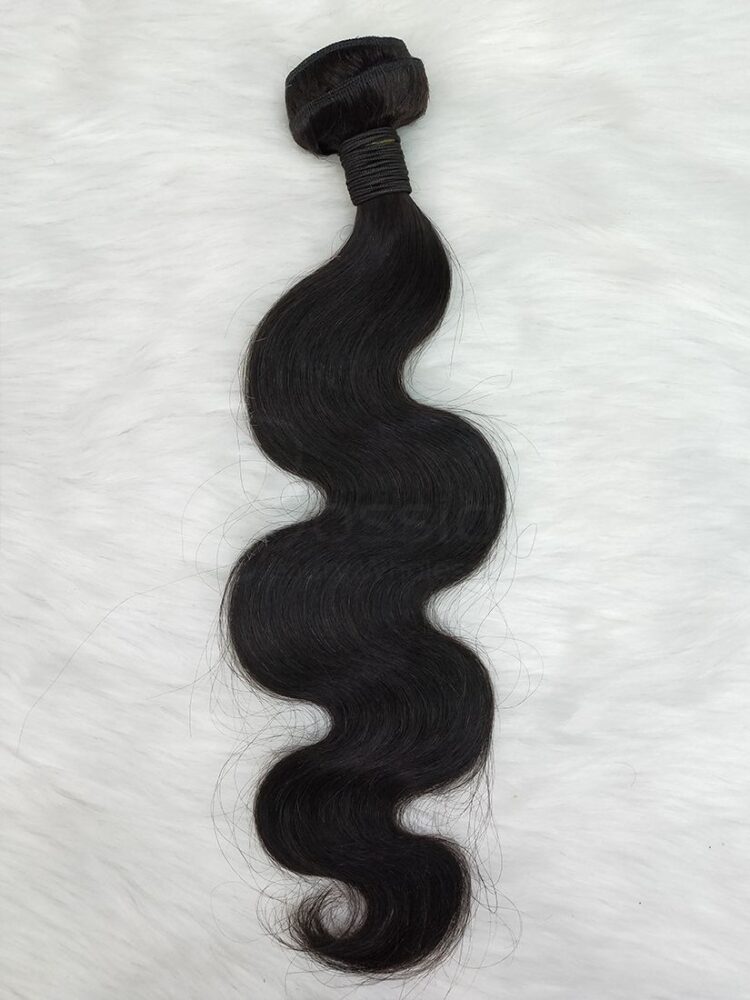
Shunfa roughly translates to “Smoothened Hair,” but it’s also known as Tiaoshun, meaning “picked to be smooth.” Sounds fancy, right? Don’t let the name fool you—this is floor hair. Translation: it has no aligned cuticles and would tangle like crazy without some serious intervention.
To make it manageable, it goes through a non-remy-to-remy machine (check out this video if you’re curious). This machine works to align the cuticles—let’s estimate around 95%. It’s not perfect, but it’s good enough to stop your hair extensions from looking like a bird’s nest.
But wait, there’s more! Even after cuticle alignment, the hair still needs an acid bath. Why? To burn off just enough of the cuticles to prevent tangling but not so much that it’s completely fried. The result is hair that’s better than the lowest-quality Paofa, but nowhere near the top-tier Bianfa ponytail hair.
It’s middle-tier quality, which explains why it’s cheaper and less durable. See 02 and 03 in the quality breakdown image above.
2.1.3 Paofa
Paofa means “Soaked Hair,” which is exactly what happens—it’s dunked in acid to strip the cuticles. This is also floor hair, but unlike Shunfa, it skips the remy-alignment machine entirely (too much hassle). The result? Heavily processed, fragile hair that’s dirt-cheap to produce and even cheaper to buy. This is the lowest-quality human hair, perfect for bargain hunters who don’t mind tangling nightmares. See 01 in the image above.
If these terms feel overwhelming, think of them as High-End (Bianfa), Middle-End (Shunfa), and Low-End (Paofa).
2.2 Bianfa – The Unicorn of Hair Extensions
Only about 10% of human hair is cut directly from a donor—making it the unicorn of the hair world: rare, sought after, expensive, and always in short supply.
But here’s the catch: not every girl who donates her hair has been living under ideal conditions. Genetics, sun exposure, diet, and hair products all play a role. So, even in that magical 10%, only 10-20% of the material is truly healthy and high-quality.
What happens to the rest? It often ends up in bundles with too many donors mixed together, resulting in multiple shades of black rather than a pure, even color. To fix this, it gets a mild chemical bath and will get colored to an even shade of black to make it look more uniform. The differences between this and 100% unprocessed hair are subtle but noticeable if you know what to look for.
For example:
- Acetone Test: As subpar hair is impure in color, it always ends up getting colored. Acetone, commonly found in nail polish remover, can dissolve some of the dye. Applying acetone to the hair and rubbing it with a white tissue will reveal if the hair has been dyed, making this one of the most reliable tests for identifying high-quality bundles. If the hair extensions have a pure color and pass this test, it is a clear sign of high quality. Other methods, like the scraping test or clarifying shampoo, are less effective because they may not detect mild dyeing.
- 613 Bundles: High-quality 613 bundles are made using the best hair material. If lower-quality bianfa hair is used, the bundles will lack the natural wheat-like coarse texture and instead appear yellowish and overly shiny.
- Bleaching: The mild chemical bath used to process bianfa hair breaks down some of the melanin in the strands. As a result, this type of hair bleaches 5-6 times faster than 100% unprocessed natural-color hair. If your extensions lighten quickly during bleaching, it could be a sign they have been processed.
- Smell Test: The smell of the hair can reveal important details. Real unprocessed hair has a light protein-like or milky smell. When heated with an iron, this natural scent becomes more noticeable, whereas processed hair often gives off a strong chemical odor.
- Feel Test: Unprocessed hair feels thick and slightly coarse, with some stiffness that prevents it from falling flat when you hold the ends upward. In contrast, processed hair feels smoother and lacks the same firmness.
- Light Test: Natural color hair glows red when held in front of a bright light source. The stronger the black dying process, the less red it will glow.
If you’re after those rare, high-quality, unprocessed, cuticle-aligned extensions, keep these tips in mind. True Bianfa hair may be elusive, but when you find it, it’s worth every penny.
2.3 Bianfa/Shunfa Mix – The Processed/Unprocessed Hybrid
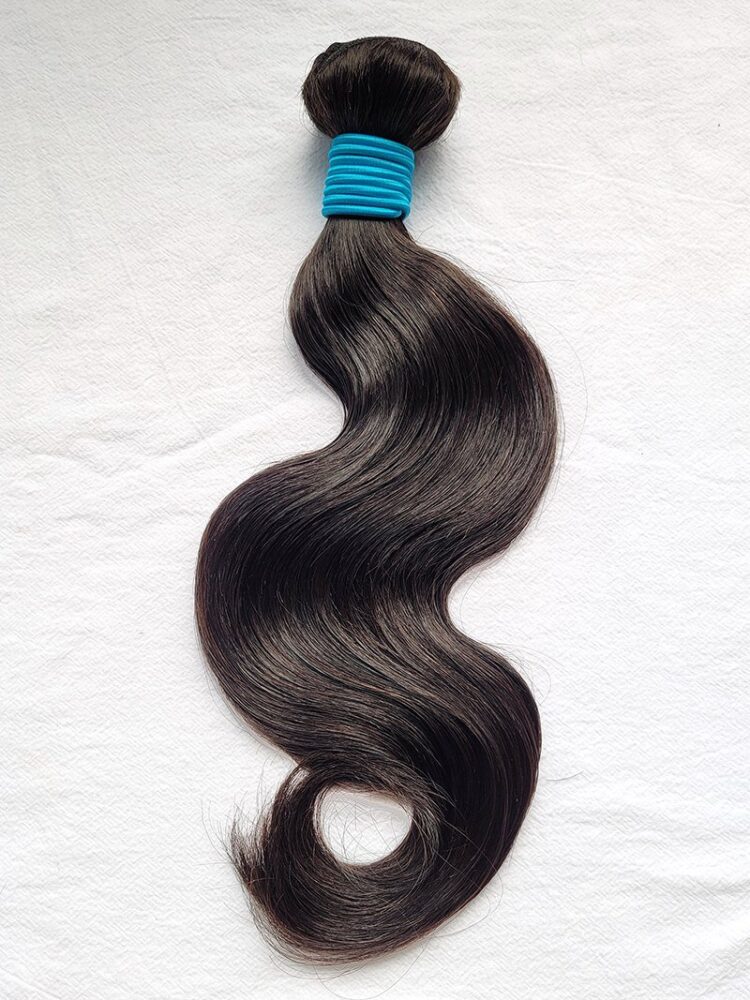
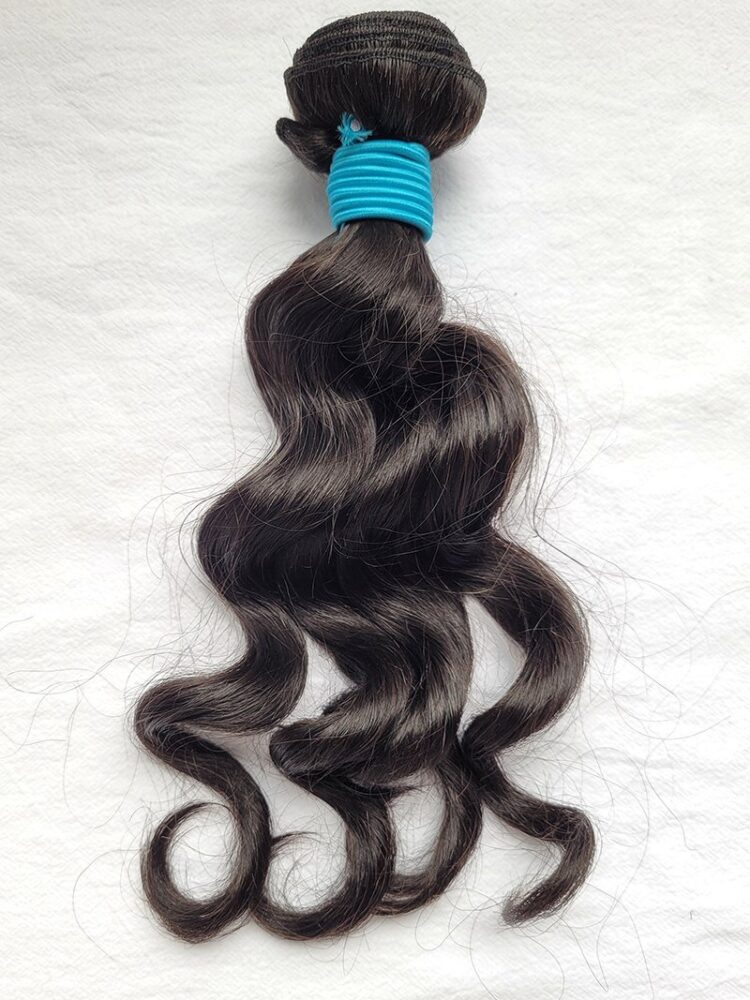
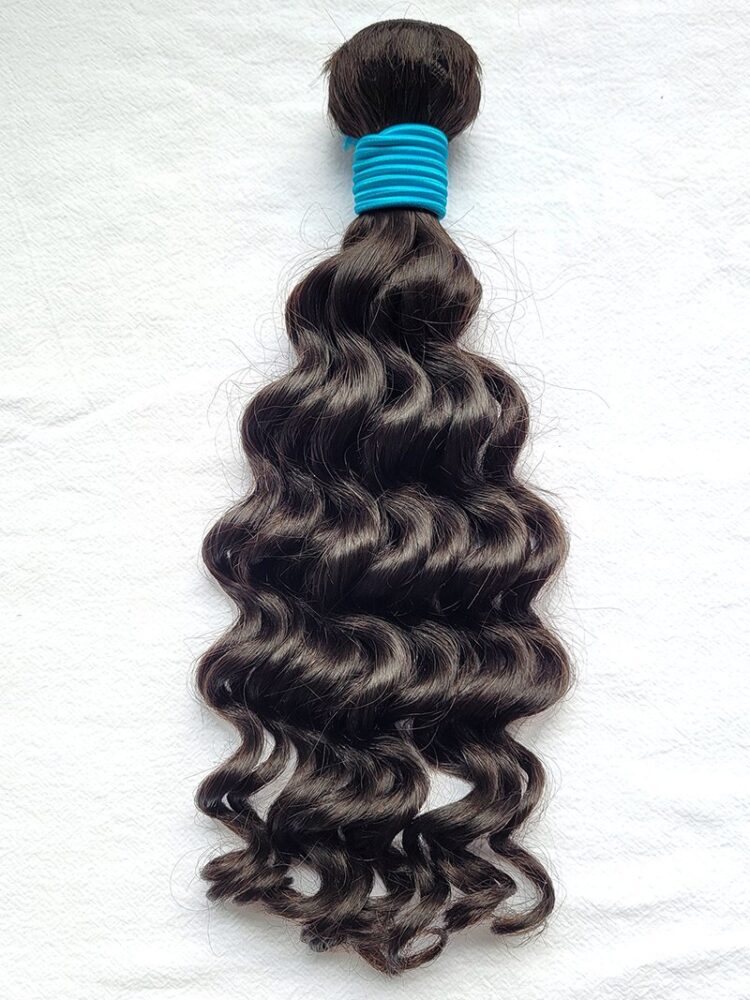
Let’s talk about the not-so-raw truth: many vendors claiming to sell raw hair are actually peddling a blend of Bianfa (processed) and Shunfa (unprocessed) hair. Brands like KBL’s XR Brazilian and VIP Sister’s so-called “raw” hair, as well as our Blue Line, are classic examples of this hybrid. For context, a true 30″ raw hair bundle will set you back about $120, while a 30″ mixed bundle lands closer to $80. So when someone offers you “raw” hair for $100, it might sound like a bargain—but you know what they say about things that sound too good to be true…
This mix is dyed to a consistent black and can bleach near #613, but don’t expect it to go all the way. It’s a slight upgrade from processed floor hair, making it a decent middle-ground option for those who can’t stretch their budget for authentic raw hair but want something a notch above plain Shunfa. Think of it as “raw-adjacent.”.
2.4 Shunfa – The “Virgin” Hair Everyone Talks About
Virgin Hair is a term every vendor loves to throw around, but let’s unpack what it really means. First, let’s set the record straight: steam-styling doesn’t ruin the quality. For example, steaming raw hair to create body wave bundles doesn’t magically make it something else—it’s still raw quality.
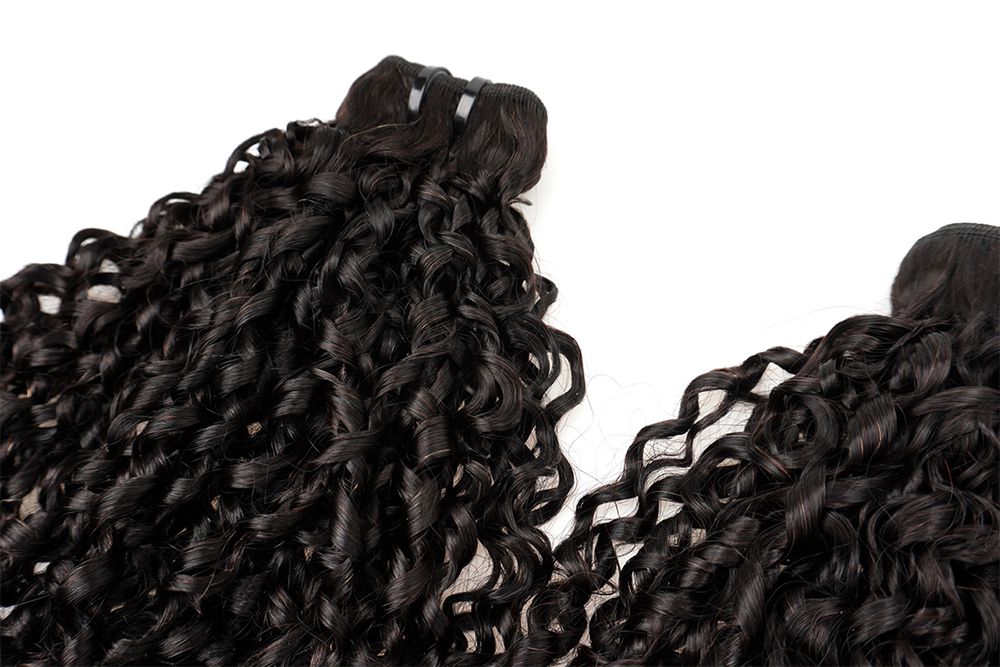
True “virgin hair,” on the other hand? That’s a different story. It’s usually floor hair run through a machine to align it from non-remy to remy, then chemically processed, and dyed to a uniform black. That’s why it only bleaches to a #27—it’s been through a lot.
The term might sound a little intimidating, but here’s the deal: if you’re not shelling out serious cash, you’re buying chemically processed floor hair. And that’s not necessarily bad—it can still be great quality for clients who aren’t after high-end luxury. The key is setting realistic expectations upfront.
Underprocessed hair tangles endlessly, while overprocessed hair loses so much of its cuticle that it becomes thin, brittle, and sheds like crazy. At Bossique, we opt for slightly thicker hair to ensure it holds up better under processing. It’s a careful balancing act, but when done right, Shunfa can be a dependable, budget-friendly choice for buyers looking for decent quality without stretching their wallets too far.
2.5 Paofa – The Bottom of the Barrel
Paofa is as low as it gets in the world of human hair extensions. It’s the go-to choice for those on a tight budget, anyone needing a one-day-wonder for an event, or people who think their trashcan could use a little extra company. Sure, it’ll mostly bleach to a #27, but don’t expect it to bounce back—it’ll look lifeless and fried, as if it’s already seen better days (and then some).
What Else Matters for Quality Human Hair Bundles?
We’ve dissected the hair material and how the manufacturing process can make or break quality. But let’s not stop there—there’s more to great hair than just, well, the hair. Other factors, though not directly tied to quality, can make all the difference in how the hair is valued and appreciated.
3.1 Single-Drawn or Fuller
Have you ever noticed that when you buy six bundles of 20-inch hair, they all have the same thickness? That’s no accident—it’s because manufacturers control the short-to-long hair ratio in every bundle. Single-drawn bundles, for example, are only about 10-20% full, meaning just 10-20% of a 24-inch bundle is actually the full 24 inches.
Of course, fullness varies from supplier to supplier. While more fullness is usually better, the length of the shorter hairs also matters. A bundle with the shortest hairs at 12 inches will look thicker than one with the shortest hairs at 8 inches.
If you want true 100% fullness for top-tier weft extensions, prepare to empty your wallet—or maybe take out a small loan. A realistic 30% fullness is already considered premium and targets the high-end market. That’s why double-drawn bundles reflect this price point. For perspective, bundles with 80% fullness cost nearly twice as much as 30%.
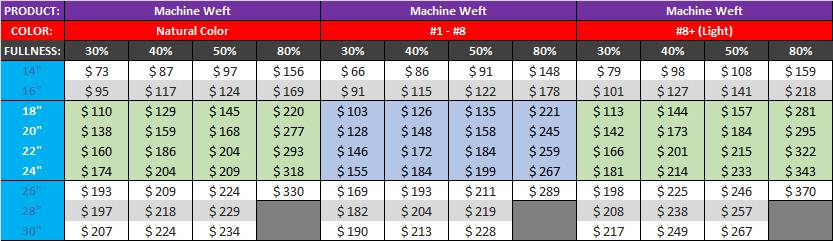
Most people might think, “$277 for a 20-inch bundle? That’s insane!” And sure, it’s not cheap. But there’s a whole market of people willing to pay for it, just like there’s a market for diamonds. High-end buyers treat this as an investment, not an expense. For example, authentic Russian hair can cost at least $900 for just 100 grams of wholesale, high-quality hair. Not everyone shops—or sells—inside the same box.
3.2 Weight: The Not-So-Heavy Truth
Everyone assumes bundles should weigh exactly 100 grams, but they usually don’t. In China, most hair extensions weigh between 80 and 95 grams. Just remember to measure without the rubber bands, because that’s where the plot thickens.
Take this example from a company I used to work for. They’d use about 8 grams of rubber bands to bulk up the bundle weight closer to 100 grams. And of course, they had a clever excuse ready: “Oh, we use the black band under the white one to avoid residue on the hair.” Right. Meanwhile, you’re paying full price for less hair.
Here’s the catch: one supplier might be 5% cheaper, but if they’re giving you 10% less hair, are you really saving anything?

3.3 Length: The Stretchy Truth
Another sneaky way to cut corners is by fudging the length of the bundles. Take the example below—it measures about 25.7 inches. Close enough to 26″, right? Technically, we sell it as 24″, but we could easily sell it as 26″. And with a $10 price difference between 24″ and 26″ in our top-tier hair, the temptation is real.
That’s exactly the kind of trick many vendors pull—selling you a “26-inch” bundle that’s really just a generous 24. On the bright side, if your bundle comes with a little extra length, you can always trim an inch or two to make it fuller. But don’t let vendors pull the wool—or the hair—over your eyes!

3.4 The Unwanted Accessory
Even the best-quality raw hair extensions can lose their appeal if they smell like wet dog or—worse—corn chips. Yes, the infamous “corn chip smell” is a thing, usually caused by perming chemicals. Other odors might come from hair coloring, chemical processing, or the leftover residue of hair products.
Take steam-styling, for example. Products are applied to protect the hair from heat and to give it a soft, smooth finish. While some of these odors wash out easily, others tend to stick around. It’s hard to pinpoint exactly how hair should smell, but let’s be real—no one wants extensions that turn stomachs.
4. Common Issues with Hair Vendors
4.1 Vendors Don’t Understand Hair Quality
Ever wonder what it takes to become a sales rep for a hair company? Spoiler: it’s not expertise in hair. If you can speak English and follow a script, you’re in. Most reps get a cheat sheet of canned answers to common questions, and voilà—they’re suddenly “hair experts.”
Here’s the kicker: it’s almost a rite of passage for these reps to quit, start their own hair company, and poach clients from their old job. This has hair company bosses in a perpetual state of paranoia, so they keep employees in the dark about the nitty-gritty of hair quality. Why invest in training when your staff might become tomorrow’s competition?
The result? Sales reps learn most of what they know about hair quality from foreign customers. And let’s face it—many of those customers are winging it, doing little to no research themselves. It’s a case of the blind leading the blind, but hey, as long as the sales keep rolling in, who’s complaining?
4.2 Honesty Doesn’t Sell Hair—Lies Do
Picture this: two vendors are selling identical hair from the same factory. Same fullness, same packaging, same quality. But here’s the twist:
- Vendor 1 calls it “virgin hair” and slaps on a premium price.
- Vendor 2 calls it “chemically processed hair” and sells it for $3 less per bundle.
Which one do you think sells better? Yep, the one with the fancy, feel-good label.
Here’s the dirty little secret: most “virgin hair” is chemically processed, but who wants to hear that? It doesn’t sound luxurious. Many buyers don’t know (or don’t want to know) the truth, and they’ll happily pay more for the illusion of quality. As a hair pro, it’s your job to see through the labels and focus on what actually matters—the hair’s properties.
Sales reps, on the other hand, have one goal: sell. With commission-based pay, the pressure is real. So, when a customer asks for 12a hair or hair from a single donor, it’s easier (and more lucrative) to nod along and say, “Of course we have that!” than to admit those terms are meaningless. Honesty might win over a few buyers, but most will keep chasing the marketing fairy tale. Lies may not grow hair, but they sure sell it.
4.3 The Birth of Bossique: Fighting Back Against Shady Practices
I started out as a sales manager for a big hair vendor in China, earning a modest 3% commission on every sale. For a $30,000 order, that meant $900 for me—not bad, right? Meanwhile, my boss pocketed a cool $9,000 or more, thanks to a 20% profit margin that ballooned to 30-40% by cutting corners on quality. As you can imagine, this “profit over people” approach didn’t sit well with customers, and as they walked away, so did my income.
I decided I’d had enough. Being outgoing helped me connect with many people in the hair market, and I started digging deeper into hair quality and industry secrets. Armed with this knowledge, I quit and started my own company, Bossique. I set my profit margin at a lean 12%, making me one of the most affordable vendors out there. On a $10,000 order, I’d earn $1,200—not as flashy as my old boss, but enough to reinvest and grow my business with integrity.
Of course, my former boss didn’t take kindly to this. He tracked down my suppliers, used his wealth and influence to scare them off, and tried to crush me. Fighting him directly was impossible, but instead of backing down, I doubled down. I started exposing the industry’s shady practices, helping others avoid the traps I’d seen.
Now, I’m proud to say I’ve built a loyal community and helped put some of these bad vendors on the blacklist where they belong. Bossique isn’t just a business—it’s a mission to make the hair industry a little less toxic.
Our articles are created to help you make smarter purchases and save money. If you’ve found them helpful, we’d greatly appreciate it if you shared them with your friends, family, or in your favorite online groups. Your support helps us reach more people and keep producing high-quality content.
Have questions? Contact us directly on WhatsApp or iMessage at +86 135 3369 3283, or email me at cristina@bossique.com. Many of our articles originate from discussions on our Facebook page. We’d love to hear from you!
Hair Cheat Sheet
How Much Do Raw Hair Extensions Cost?
A 30-inch single-drawn raw hair bundle costs around $110. Vendors in China buy them for 600-660 RMB ($93-$105), but after fees like currency conversion and payment processing, the final price ranges from $100 to $120.
Which Hair Extensions Are Best?
The best hair extensions come directly from a donor and are 100% unprocessed human hair with perfectly aligned, undamaged cuticles. This premium hair bleaches easily to #613 with minimal quality loss, though it takes longer than processed hair to achieve.
What is Remy Human Hair?
Remy hair has aligned cuticles, but the term varies. True Remy hair is cut directly from a donor, while floor hair aligned by machine is also labeled Remy. These differences mean “Remy human hair” can refer to varying qualities, so be mindful.
What are Human Hair Extensions?
Human hair extensions are made from real human hair and can be styled, colored, and treated like natural hair. They come in various qualities, with the best being unprocessed, cut directly from a donor, and having aligned, intact cuticles for a natural look and feel.
1 thought on “Your Human Hair Extensions Quality Guide”
Comments are closed.