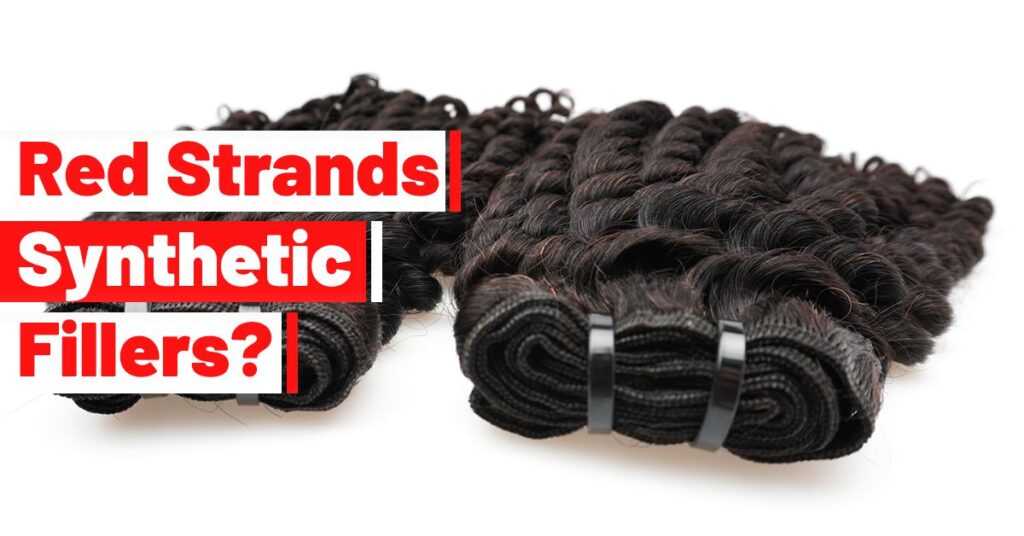
If you’ve bought affordable hair extensions, you’ve probably seen them. Many people talk about these red strands online. They’re often described as red, orange, or copper-colored strands of hair that light up depending on the room’s light. Are these actually synthetic hair fillers that increase the weight of the bundles?
We’re not talking about a colored piece of lint or fabric that seems to originate in the hair weft. Those obviously aren’t human hair or synthetic strands. We’re talking about the red or orange strands you find in hair or hair extensions.
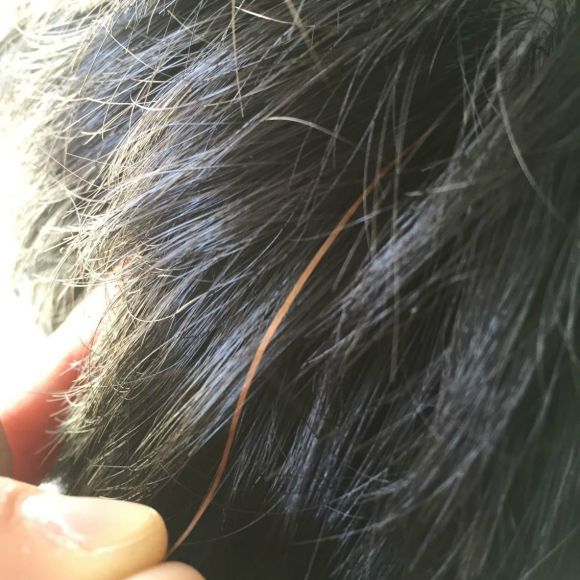
Table of Contents
1 – Human Hair vs Synthetic Hair
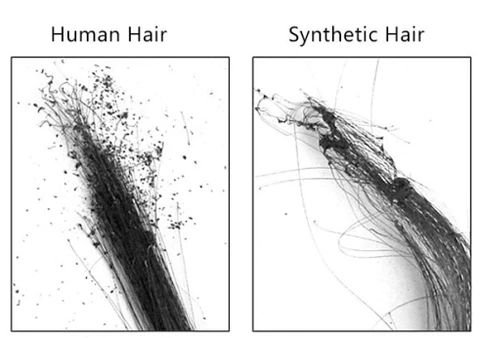
It’s fairly easy to tell the difference between real and synthetic hair. Just perform these simple tests.
1.1 – Feeling cuticles
Hair has cuticles, and they all run in one direction. They can be felt. If you grab a lock of your hair and hold it under tension, you can stroke your fingers over that lock of hair. When you move toward the ends of the hair, you can feel it’s smooth. However, if you move it in the other direction, you can feel roughness.
Synthetic hair will be completely smooth in both directions. There’s no way to fake these cuticles. With human hair, you can only feel the roughness in one direction.
These red strands are quite common in processed hair. The processing involves using chemicals that smoothen the cuticles of the hair. The more the hair gets processed, the less you can feel the cuticles. However, for decent-quality processed hair, you can still feel some of the cuticles and experience that rough feeling in one direction.
You can still find the roughness in one direction, even for these red strands. This means that these red strands aren’t synthetic hair but are actually human hair.
1.2 – The burn test
Synthetic basically means plastic. Those who’ve tried to burn plastic will know that plastic melts. An easy way to test whether your hair is human or synthetic is to simply get a lock of it and use a lighter to light it on fire. Make sure to extinguish it quickly, as human hair can burn quickly.
Human hair will burn and then turn to ash. Plastic will melt and stick together, producing a hard ball of molten plastic. If these red strands are synthetic hair fillers, you can simply do the burn test and see for yourself. However, we’ve previously done this and can tell you that it’s definitely human hair.
2 – Manufacturers are good at cheating
Synthetic hair is cheap to produce and much cheaper than human hair. It logically makes sense that using synthetic hair as filler would mean cheaper hair. However, why would manufacturers add them in red?
It’s without effort to produce them in the right color at no extra cost. Cheating in this way would be the equivalent of trying to sell fake purple cocaine to a drug dealer. It’s severely underestimating the ability of Chinese manufacturers to cheat people. After all, most of them have over a decade’s worth of experience cheating clients. They’re good at it.
3 – Are they caused by henna?
Indian people regularly use henna. Could it be the case that those red and copper-colored strands are hair dyed with henna?
“It is possible, but unlikely. If you were to cut or shave a girl’s hair, all the hair would be bundled up together. It’s highly improbable that only one or a few strands would be dyed, as it would be easy to select and prevent the red strands from getting mixed in with the rest of the hair.”Additionally, red strands are commonly found in Chinese hair extensions, even though China is very hesitant to accept hair from India.
So it will be better to find another cause.
4 – What are the red strands in hair extensions?
Red strands are a common occurrence in processed hair. While they may be present to a lesser extent in subpar raw hair, top-quality raw hair typically has very few or none at all.
The prevalence of red strands is likely linked to the processing techniques used. When collecting floor hair, which is often made up of hair from multiple women, impurities in color can arise due to various factors such as the age of the donors, whether they have previously dyed their hair and the individual hair histories.
During hair processing, cuticles are stripped, and melanin is removed with chemicals before dyeing the hair to achieve a uniform black shade.
This processing explains why 100% unprocessed hair bleaches at a slower rate compared to processed hair. Unprocessed hair retains more melanin, resulting in a slower bleaching process.
5 – Should I mind?
Hair can always be more expensive. Find quality raw hair, and you can make it more expensive by upgrading the fullness. If you’re not happy with the coarseness of the hair, you can spend 30% more and buy hair from young girls. You can buy authentic Russian hair if that’s not enough for you.
There are always sacrifices you’ll have to make. When you want more affordable hair, you’ll buy floor hair processed in a certain way. While certain quality problems can be acceptable, hair tangling when it gets wet is useless. Vietnamese vendors have more experience making processed hair look pretty, while Chinese vendors have better technology available to avoid tangling. If I had to choose, I’d choose hair that doesn’t tangle and try my best to make the hair last as long as possible with excellent hair care.
But part of making these products with floor hair is chemically processing it. This will cause some hair strands to lose melanin and create these red strands. In the end you have to decide for yourself what the lesser of two evils is.
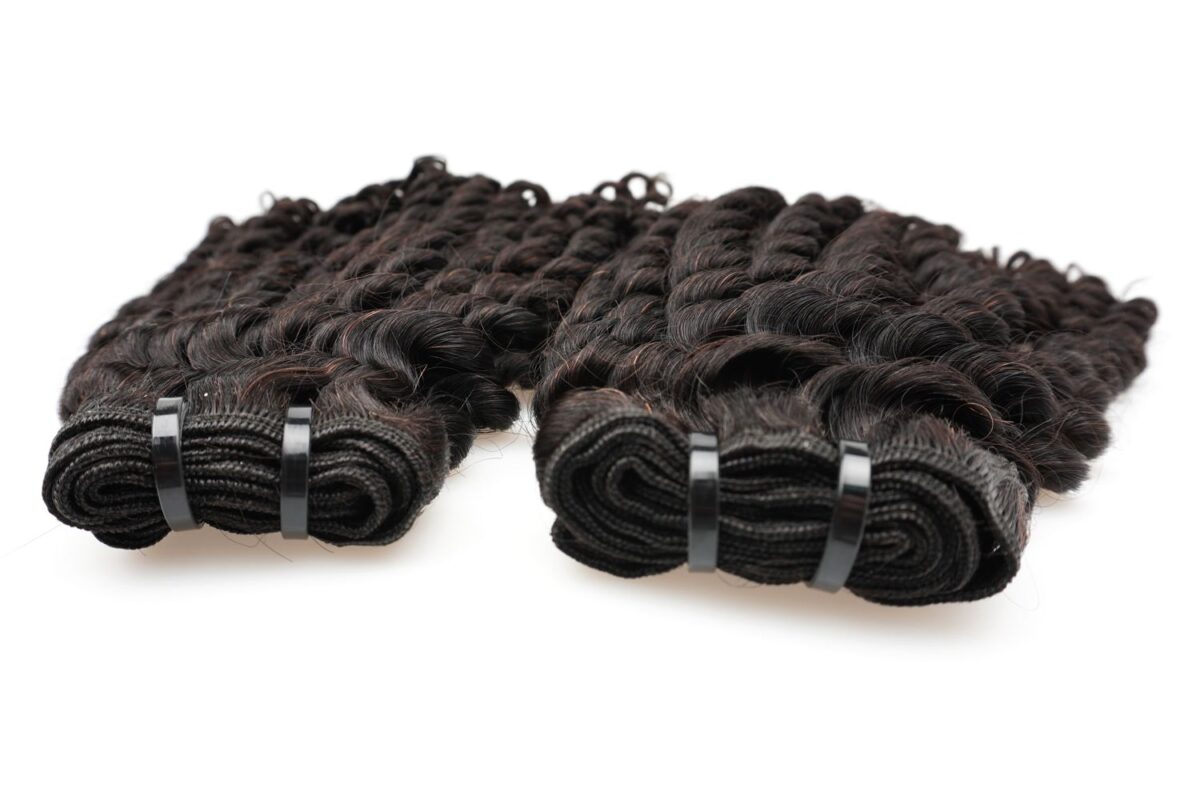
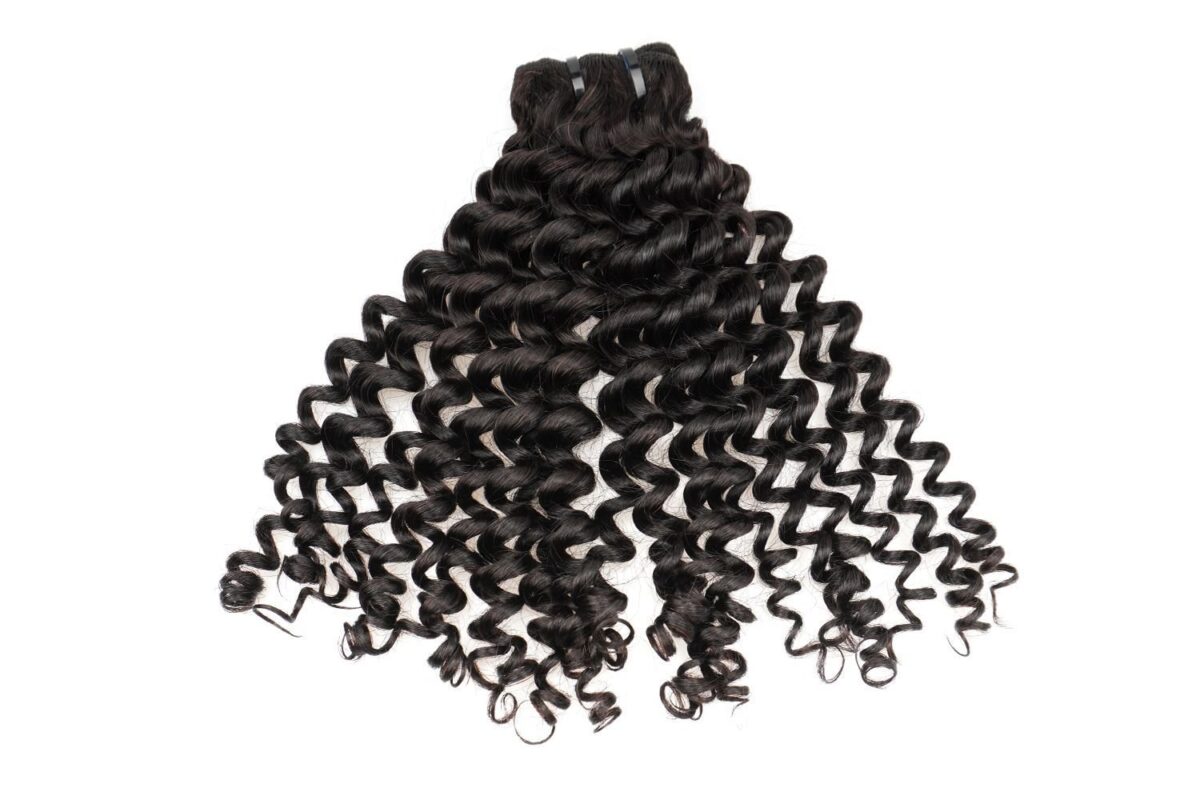
In any case, it requires certain lighting circumstances to make these red strands visible. The red strands aren’t visible if you look at the following picture (same bundle as above).
6 – Frequently Asked Questions
Who are Good Hair Vendors for Starting a Business?
Any vendor who can consistently deliver the quality you require. Don’t focus as much on the costs. Some vendors might be $3-10 dollars cheaper, but all of that is lost when they cause $300 disputes. While Bossique isn’t the best for everyone’s needs, we do offer competitive pricing, and consistent quality, are very honest and straightforward, and offer excellent customer service. We’re probably one of the better options in the Chinese market. Always try to go with smaller vendors, as large vendors have a high upkeep and come with additional costs.
What Does Density Mean in Wigs?
The density of a wig is determined by weight per length. There’s no universal standard for this, meaning that one vendor’s 130% density wig could be as full as another vendor’s 150% density wig. If you’re looking for full wigs, always go for a vendor who will customize a wig for you with their bundles and lace products. A 20″ wig made with 3 bundles is going to be a lot fuller than a 180% density pre-made wig. So if you have the choice, choose for number of bundles, not the wig density.
What Is Remy Human Hair?
Remy human hair is hair with cuticles in the same direction. The label isn’t exclusively used for hair that was cut directly from a donor and is also used for floor hair that has been aligned with a non-remy to remy machine. This makes remy human hair a bad label to use to describe the quality of hair extensions.
Are Double-Drawn Hair Extensions Better Than Single-Drawn Hair Extensions?
Double-drawn extensions are generally 30-100% fullness while single-drawn 10-15%. The plus side of double-drawn hair is that you’re going to get hair with fuller ends and require fewer bundles to create a natural-looking fullness. The downside is that it’s more expensive. A 20″ closure wig made with 2 double-drawn bundles is going to look quite natural and is lightweight. A closure wig wig made with 3 single drawn bundles can also create a natural look but is going to be more bulky.
Our articles are designed to help you avoid bad purchases and save money. If you’ve found them useful and wish to support us, please consider a small donation. Your contributions will help us purchase better equipment, like a new camera, or even just a milk tea to keep us going! Thank you for your support!
A lot of our articles first start out on our Facebook page. Follow us there and feel free to leave your questions there, or contact us through WhatsApp/iMessage: +86 135 3369 3283.