
In this article, we’re diving into the debate of raw hair vs virgin hair. Raw hair is often hailed as the gold standard, but “virgin hair”? That term seems to mean something different depending on who you ask. To clear up the confusion and give you the full scoop, we’ll break down everything you need to know about these two labels.
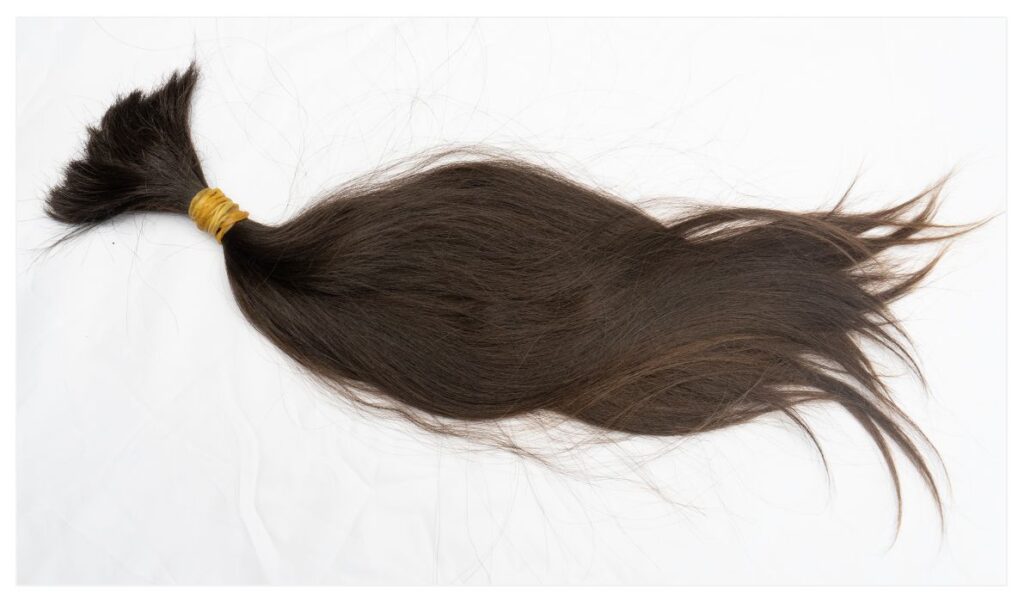
Table of Contents
What is Raw Hair?
Raw hair can be the highest quality of hair. Cut straight from a donor’s head, it keeps all its cuticles intact and aligned in the same direction. But here’s the catch: once you chemically process it, it’s no longer raw. Even heat or steam styling takes it out of the “raw” category. Raw hair is as pure as it gets—until you mess with it!
Caveats: When the “Raw Hair” Label Fails
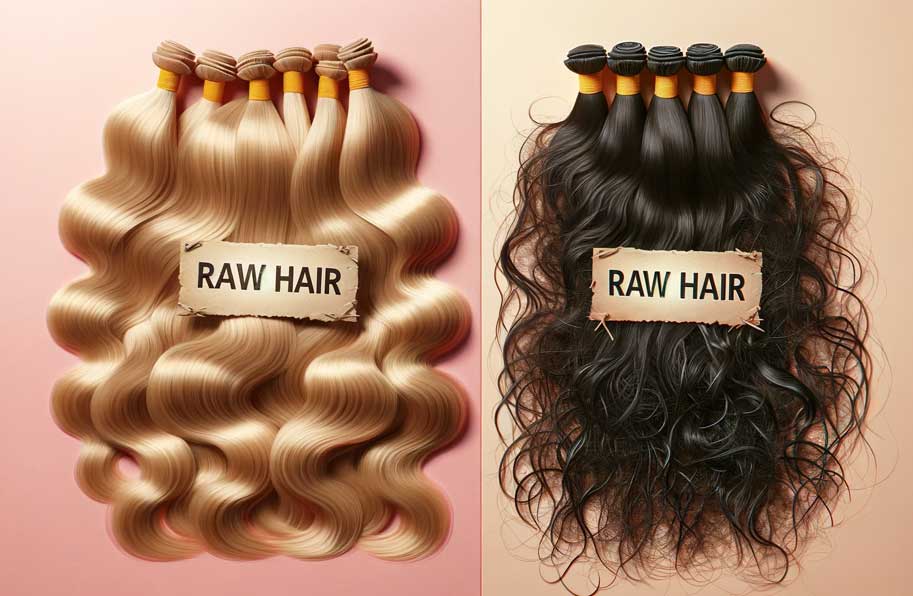
When it comes to premium hair extensions (which is where our focus should be), the “raw hair” label isn’t without its flaws. The strict definition excludes many high-quality hair types while sometimes allowing lower-quality raw hair to sneak in under the radar.
Hair Health Matters
Here’s the thing: raw doesn’t automatically mean healthy. Some donors have less-than-stellar hair genetics, while others battle UV damage or haven’t cared for their hair properly. The result? Hair that’s technically raw but lacking the vitality you want for high-quality extensions. Because let’s be honest—healthy raw hair extensions are the real gold standard.
Making Textures
Raw hair, in its purest form, typically comes in straight or natural wavy textures. To create the diverse “steam-styled textures” or “typical Chinese textures” many people love, the hair is manipulated using steam or chemicals. While this process doesn’t drastically reduce quality, it does strip the hair of its “raw” status. High-quality? Absolutely. Raw? Not anymore.
Sorting Methods
Ponytails, the raw hair material, vary in weight and fullness. Bundles are consistent in weight and fullness. This uniformity is achieved through one of two sorting methods: either combining individual ponytails or tossing them into length-specific piles and drawing hair to form bundles. The latter method compromises purity and often involves a bit of processing or coloring to hide the difference.
While this hair technically stops being “raw,” here’s the trick: when subpar raw hair gets the color treatment, it’s easy to spot. Just grab some acetone, and the truth will come out!
Salon Hair
When the hair comes from a woman who’s dyed or altered it, it’s often still labeled as “raw hair.” But let’s be clear: there’s a noticeable dip in quality. In China, this hair is called “salon hair.” While it’s still high-quality material, it’s more suited for creating B-grade “raw hair”—good, but not quite the gold standard.
-
 Orange Line Beach Wave Lace Frontals | 13×4 13×6From $110.00
 -
Orange Line Beach Wave Lace Closures | 4×4 5×5 6×6 7×7From $57.00
-
Product on saleOrange Line Beach Wave BundlesFrom $35.80
What is Virgin Hair?
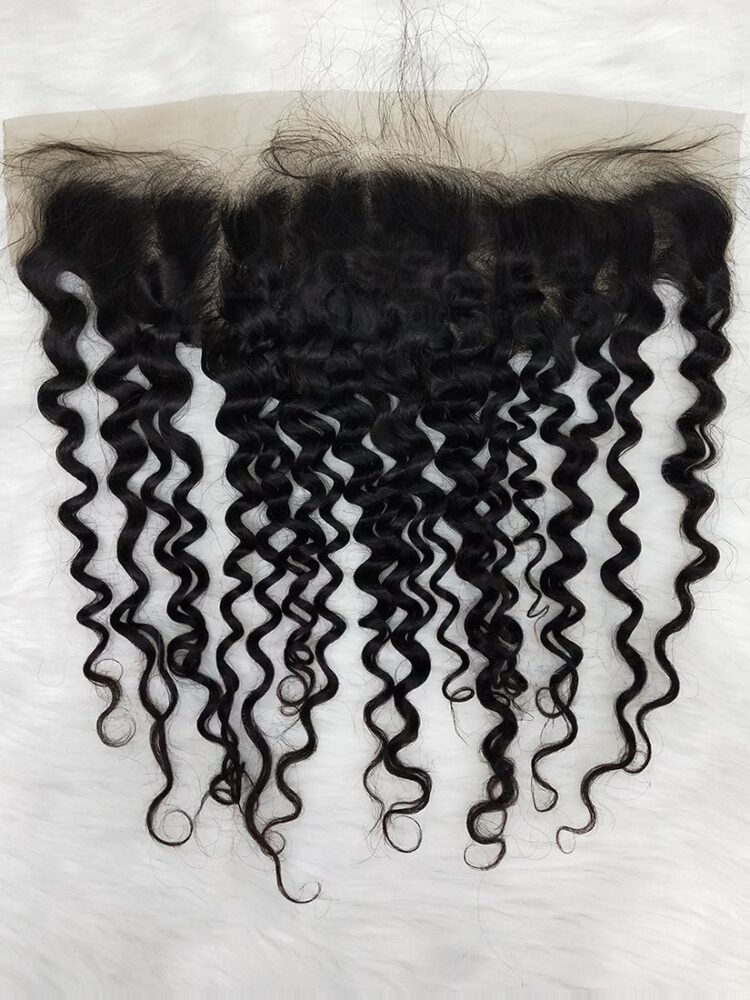
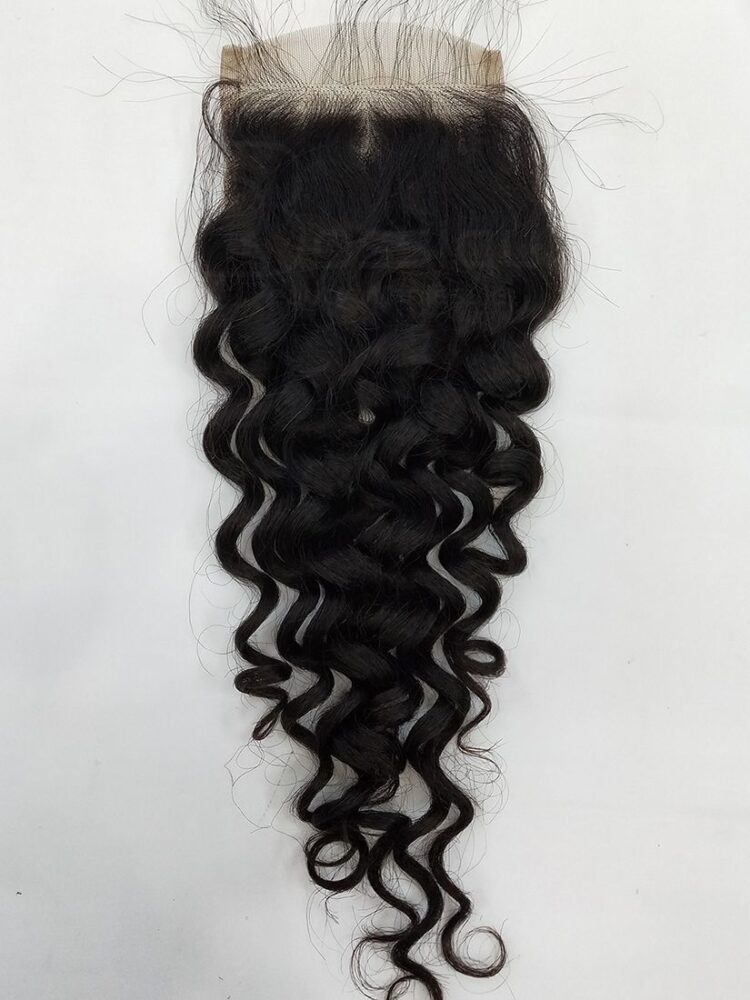
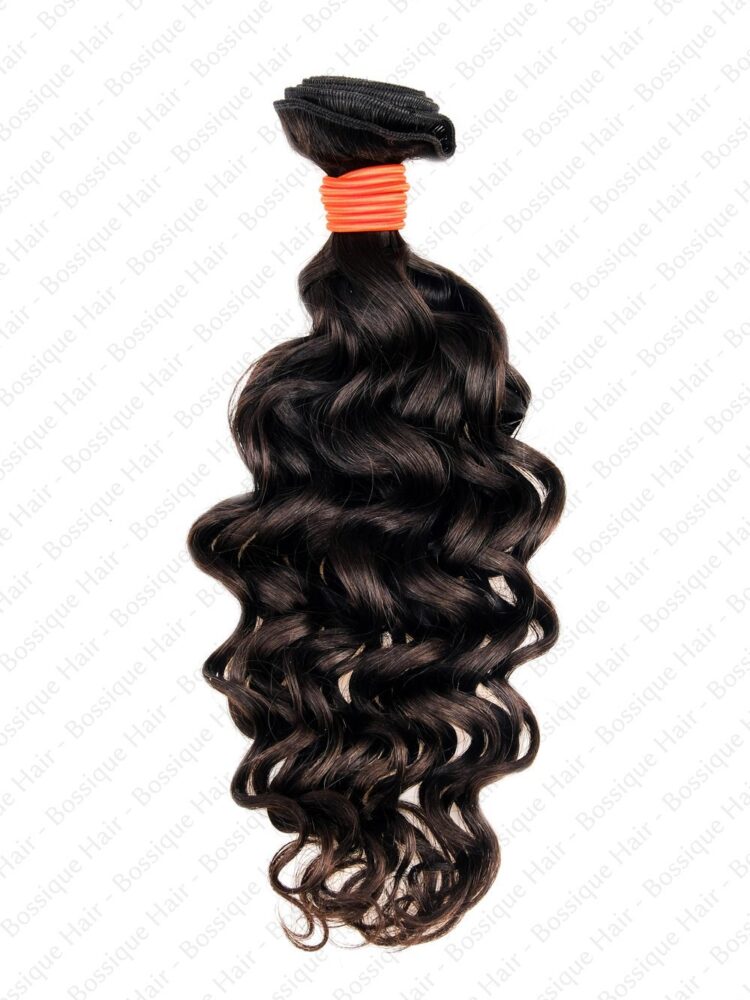
Virgin hair is chemically unprocessed hair but allows for manipulation by heat. It can either be raw hair or hair styled using steam. Steam styling doesn’t significantly affect the quality, so it’s the same quality as raw hair.
You might take issue with the term, and that’s perfectly fine. The fact remains: it’s often misused by both vendors and buyers, leading to all sorts of interpretations. But here’s the thing: the label itself isn’t the real focus—it’s the knowledge behind it that matters.

Top Virgin Hair: The Confusion Continues
Top virgin hair is meant to be the kind of hair that didn’t quite make the raw hair cut—chemically unprocessed, steam-styled hair. But as we’ve seen with the “raw hair” label, these two categories often overlap.
Now, creating curly textures with steam styling is trickier than it sounds. Even when hair is perfectly cuticle-aligned, adding curls turns those cuticles in all directions—360 degrees, to be exact. This leads to tangling, so manufacturers often remove some cuticles before creating the texture.
It might sound complicated, but the following image will clear things up.
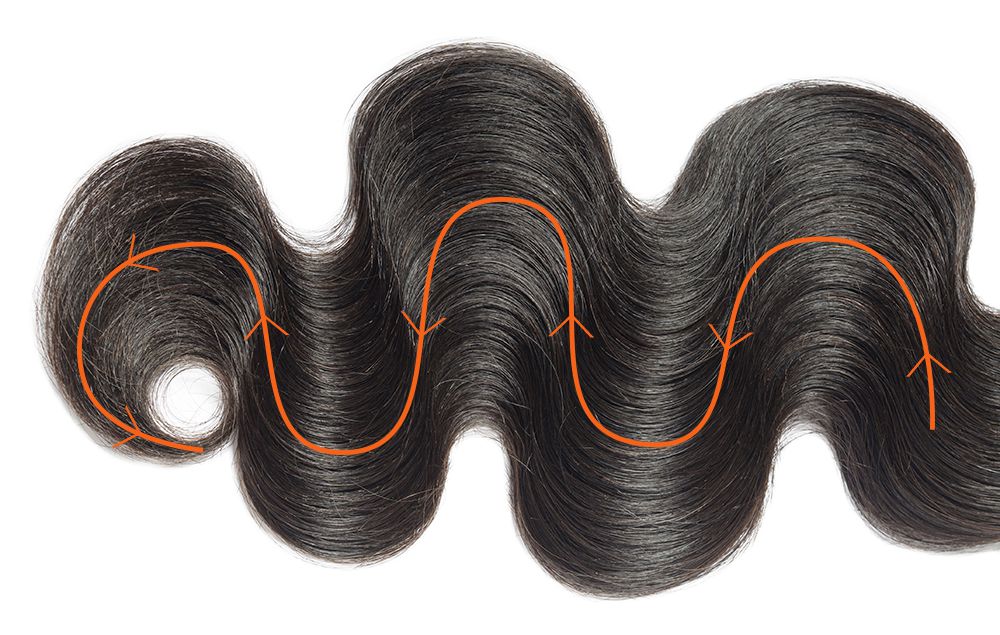
While the hair’s cuticles are aligned, some textures naturally have unaligned cuticles. Technically, this hair isn’t raw or virgin anymore, but it’s still miles ahead of anything made from floor hair.
Affordable Virgin Hair
Most so-called virgin hair bundles are actually floor hair that’s been first aligned using a non-remy to remy machine, then chemically processed to remove cuticles and prevent tangling. But let’s face it, calling it “chemically processed floor hair” doesn’t have quite the same appeal as “virgin hair,” so that’s what it’s marketed as.
This hair can only be bleached to a #27 due to the damage caused by both the processing and the bleaching itself. Bleaching weakens the hair, and starting with already processed hair risks overprocessing, leading to shedding. Plus, if the hair’s been dyed, getting it to lighter shades becomes even trickier.
Floor hair is cheaper than cuticle-aligned donor hair, and that’s why this “virgin” hair is much more affordable than raw hair.
Raw Hair vs Virgin Hair – Debunking Claims
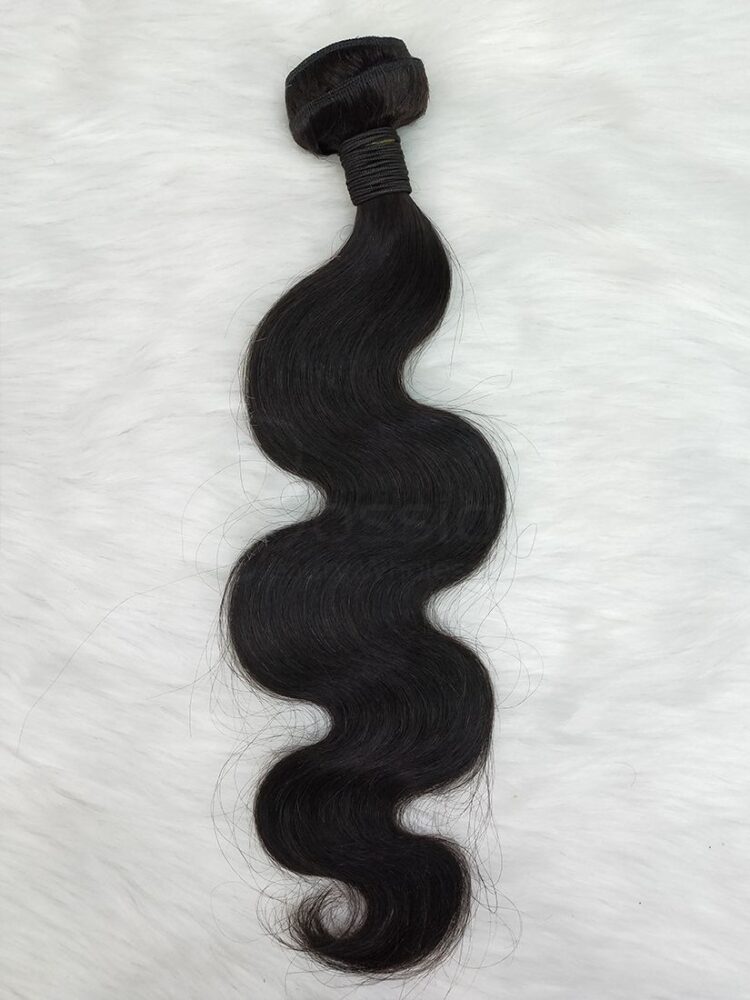
Raw hair is chemically unaltered in its original texture, while virgin hair is chemically unaltered hair, but has been styled or manipulated into a different texture. Non-chemical manipulation doesn’t affect the overall quality, so both can be equally high-end.
People make the following claims:
- Raw hair comes from a single donor, while virgin hair comes from multiple.
- Hair from 2-3 donors can only bleach to color #27.
- Virgin hair is silky, whereas raw hair is coarse.
- Raw hair should always be double-drawn.
- Raw hair is easier to bleach.
- Raw hair lasts longer than virgin hair.
But here’s the truth:
- Single donor vs. multiple donors: If single-donor hair were truly superior, installing four single-donor bundles would somehow magically reduce the quality of your extensions. Spoiler alert: that’s not how it works.
- Hair from 2-3 donors can only bleach to color #27: If the hair can only bleach to #27, it’s likely because it was previously dyed to an even shade of black. This is the true limiting factor—once it’s been dyed, it can’t reach lighter shades easily. So now you’re not really talking about hair from 2-3 donors, but floor hair that may come from 100+ donors. The color process is what holds it back, not the number of donors.
- Silky vs. coarse: Chemically unaltered Asian hair is naturally coarser—no surprise there. But that doesn’t make it inferior. Vietnamese, Cambodian, and Chinese hair is generally thicker than Indian hair. Silky hair comes from chemical processes like cuticle stripping or silicon application—this applies to both virgin and raw hair.
- Double-drawn hair: The short-to-long ratio is controlled by the manufacturer, not the hair’s label. If it weren’t, you’d end up with bundles where one has thick ends and the other is sparse. Consistent fullness is the goal, regardless of whether it’s raw or virgin.
- Bleaching raw hair is easier: In reality, raw hair, with its natural melanin intact, is harder to bleach. Processed hair bleaches faster because chemicals have stripped it of its melanin. But speed isn’t the goal—what matters is how the hair handles the bleaching process and remains healthy.
- Longevity: The lifespan of both raw and virgin hair depends on the health and thickness of the hair, not whether it’s raw or virgin. Healthy hair can withstand more abuse, and proper care ensures it lasts longer. Both raw and virgin hair are considered some of the healthiest available.
However, these claims make more sense when it comes to chemically processed hair marketed as virgin hair. But then we’re comparing raw and chemically processed hair, not raw and virgin hair.
Our articles are designed to help you avoid bad purchases and save money. If you’ve found them Our articles are created to help you make smarter purchases and save money. If you’ve found them helpful, we’d greatly appreciate it if you shared them with your friends, family, or in your favorite online groups. Your support helps us reach more people and keep producing high-quality content.
Have questions? Contact us directly on WhatsApp or iMessage at +86 135 3369 3283, or email me at cristina@bossique.com. Many of our articles originate from discussions on our Facebook page. We’d love to hear from you!
Hair Cheat Sheet
How Long Does Raw Hair Last?
Raw hair can last 2 to 5 years, depending on how much TLC you give it. Frequent washing, bleaching, and heat styling will shorten its lifespan. While it’s more expensive upfront, its long-lasting quality makes it a solid investment.
How Do You Know If Your Hair Is Raw?
Raw hair stays frizz-free after washing, keeps its elasticity when bleached to lighter shades, and has a natural color. Want to be sure? Try the Washing Test, Bleach Test, and Acetone Test.
Does China Have Raw Hair?
Yes, China does have raw hair. As a Chinese person, I can confirm I have unprocessed hair growing on my head. However, to create quality extensions, the hair must be sourced and processed by a factory. In its strictest form, raw hair is only considered “raw” when it’s in its natural, straight state.
What is the Difference Between Raw and Virgin Hair?
Raw hair is untouched by chemicals or steam—straight from the donor’s head. Virgin hair, on the other hand, is also unprocessed but can be styled or steamed into a different texture. Both are unaltered, but raw hair is the purest form.
What is Raw Virgin Hair?
Raw virgin hair is the best of both worlds: unprocessed human hair taken directly from the donor’s head without any chemical or steam treatments. While all raw hair is virgin, not all virgin hair is raw—if it’s steam-styled, it’s no longer raw!