
One of the hottest questions on Facebook is, “How to Find a Hair Vendor?” With hair quality ranging from sublime to suspect, and suppliers often cutting corners, navigating this market can feel like solving a mystery. But don’t worry—these 33 quick tips will help you cut through the confusion and boost your odds of finding a hair vendor that meets your standards.
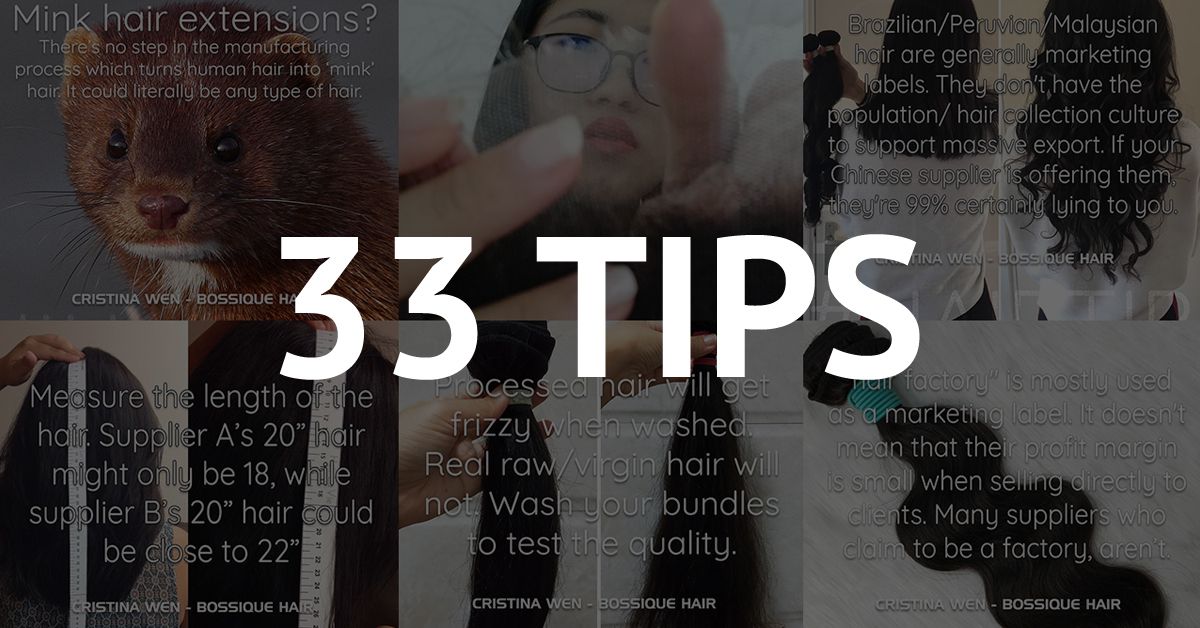
Table of Contents
Tips 1-11: Understanding Hair Quality and Vendor Practices
1) Raw vs Virgin Hair: Are They Really the Same Quality?
Virgin hair is steam-styled raw hair. Steam-styling doesn’t affect the quality but costs money, making virgin more expensive than raw.
Many people mistakenly think virgin hair is a lower-quality, more affordable alternative to raw hair. In reality, this misconception comes from mislabeling. What’s often sold as “virgin” is actually chemically processed floor hair.
So, if you’re after top-tier quality, stick with raw hair pricing. For the full breakdown, check out this post.
2) Why Processed Hair Becomes Frizzy After Washing
Processed hair is damaged. Damaged hair has an increased porosity, and can’t contain moisture well. That’s why it will get frizzy when washed. Real raw/virgin hair will not. Wash the samples you get from your hair vendor to test the quality.

3) Most Hair on the Market Is Processed Floor Hair – Here’s Why
Raw hair is rare, and healthy raw hair? Even rarer. But floor hair? There’s plenty of that to go around. So, what ends up in most of the market is either floor hair or raw hair mixed with floor hair.
Now, before you assume all floor hair is subpar, let’s clear that up: some of it is surprisingly affordable and high-quality. Just don’t have raw hair expectations.
4) 90% of Suppliers Claim to Sell Virgin Hair – But It’s Often Processed Floor Hair
Finding real virgin hair is like searching for a needle in a haystack. In fact, only about 1 out of 10 suppliers actually offer authentic virgin hair. The rest? They market their products as “virgin hair,” but in reality, it’s often processed floor hair.
Why the misleading label? Simply put, “virgin hair” sounds a lot more appealing than saying, “We’ve used chemicals to process your hair extensions.” Unfortunately, that’s the reality for most of the so-called virgin hair on the market.
5) Can Unprocessed Hair Always Be Bleached to a Light Blonde?
The short answer: yes. There are two main factors that determine how well hair can bleach.
- Hair being pre-colored. Lower-quality hair often comes from many donors, which means it’s made up of different shades of black. This creates an uneven, “dirty” look, which is why it’s often dyed. Unfortunately, dyed hair doesn’t bleach well because the color is locked in.
- Processed to the limits. Processing chemically alters the hair, pushing it close to its limits. Bleaching healthy hair to #613 also pushes it near the breaking point. But when processed hair is bleached, it’s pushed beyond its limits, resulting in over-processed, fried strands that shed easily.
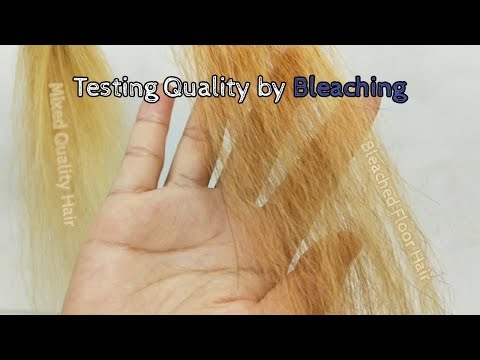
Think of bleaching as a marathon, not a sprint. Unprocessed hair takes 4-5 times longer to bleach compared to processed hair because the chemicals used in processing have already stripped some of the melanin. So, if you’re going to bleach to blonde, patience is key!
6) What Does It Mean If You Find Follicles in Your Hair Bundles?
Floor hair comes from natural hair loss, so the follicles can sometimes still be attached to the strands. If you spot them in your extensions, it’s likely floor hair.
While a few follicles might show up in raw hair bundles, this often points to a shortcut in sourcing. However, if you see follicles at the ends of the bundles, it’s a clear sign the hair isn’t cuticle-aligned. In that case, you’re definitely dealing with floor hair, which could lead to tangling—unless it’s processed properly.
So, follicles can be a clue—but not always a dealbreaker!

7) Why Colored Hair Is a Red Flag for High-Quality
Colored hair is often a sign of processed hair, which comes from many donors. The varying shades of black create a “dirty” look, so the hair ends up getting colored to make it more uniform. One test you can perform is the Scrape Test: scrape the hair with a razor, knife, or scissors, and if non-white powder comes off, it means the hair was pre-colored and isn’t a natural color.
The surface of the hair always gives off black flakes, so make sure you don’t just scrape the surface of the strands. Go deeper into the hair, as that’s where the dye is stored.
Bad raw hair sourcing practices can also increase the number of donors, causing the hair to have that same impurity. In this case, the hair may only be lightly colored, which the Scrape Test might not pick up. But you can catch it with the Acetone Test, which helps reveal if the hair has been colored.

8) How to Assess Hair Quality Through Elasticity and Strength
Hair is naturally strong and elastic, meaning it will stretch before breaking. However, processing hair reduces its elasticity, so this trait becomes a useful way to measure hair quality.
This test is particularly useful for processed floor hair, where higher-quality strands maintain enough strength to last, while lower-quality ones are over-processed and prone to shedding. It’s also great for high-end #613 hair, as any subpar strands will be pushed beyond their limits, causing them to lose elasticity.
To test the elasticity of a strand, hold it between your hands, rolling it between your fingers about 2-3 inches apart. Gently pull on the hair. If it stretches, it means the hair is healthy. If it stretches a bit and doesn’t break, it’s considered okay. But if it breaks quickly, it’s a clear sign of poor-quality hair—and you should consider returning it instead of installing it.
With a little practice, you’ll be doing this test like a pro—just check out the video below to see how I do it!

9) High-Quality Lace Closures and Frontals Are Expensive
Lace products used to be made in North Korea, where cheap labor kept prices low. But when the Covid pandemic hit and borders closed, China stepped in to take over production. In North Korea, workers were paid in food, with studio bosses pocketing the profits. In China, workers earn a meager $2-3 an hour, but even at that rate, the costs add up. A 4×4 closure can take up to 8 hours to make, and a 13×6 can take around 28 hours.
Now that North Korea has resumed production, studio bosses have realized the value of raw hair—so they’ve started stealing it. They replace the raw hair with cheaper alternatives while keeping the stolen raw hair for themselves.
So, about 60% of high-end North Korean lace closures and frontals come back defective. While 40% can be fixed, 20% must be discarded—adding to production costs.
For consistent quality and fairer compensation, these products are now more reliably made in China.
10) The Truth About “Swiss Lace” – Is It Really Swiss Lace?
The original HD lace design came from Switzerland, but as with anything good, it didn’t take long for copies to flood the market. While production was once limited, today it’s mainly made in South Korea, where labor costs are lower than in Europe and it’s much closer to China. Even China has started producing high-quality copies, making it nearly impossible to verify the true origin.
11) Will Hair Prices Return to Pre-Pandemic Rates?
Hair prices have already dropped by about 10% since the pandemic. For example, our 30″ Orange Line bundles are now $110, down from around $130 during the height of the pandemic. However, longer lengths over 22″ are still in short supply, and I don’t expect those prices to decrease anytime soon.
The lace supply is still a mix of North Korean and Chinese production. North Korean lace is cheaper but tends to be inconsistent and comes with more issues. Chinese-made lace is more reliable but comes at a higher cost. So, unfortunately, it’s unlikely that hair prices will drop significantly anytime soon.
Tips 12-22: How to Spot the Right Hair Vendor
12) How Am I Supposed to Make Money With These Raw Hair Prices?
Yes, quality comes at a cost. Just because you think you can’t make a profit doesn’t mean vendors aren’t thriving with a solid base of clients. Sure, some are buying for personal use, but we’re still serving plenty of successful businesses.
Five years ago, people were marking up 1.5-2x when a 30″ bundle cost $80. At a 1.5x markup (and add your fees), you’d make a $40 profit margin. But now that the same 30″ bundle costs closer to $120, if you still mark it up by 1.5x, you’d charge $180—leaving you with the same $40 profit margin. Or, you could charge $160 and keep that same $40 profit margin, without sticking to the 1.5x markup.
Alternatively, consider focusing on shorter to medium-length wigs. While 22-30″ bundles have seen a significant price increase, lengths under that range have remained fairly consistent. There’s still plenty of room to profit while catering to what your clients actually need—high-quality—just less chance to profit off the “more is better” mentality of 30″ wigs with 5 bundles and a 13×6 HD lace frontal.
13) Hair Quality Comes First: Small Savings, Big Losses
A vendor who is $5 more expensive per bundle is often a better choice than one who makes $500 worth of mistakes. Sometimes, saving a little money means getting 10% less hair, 5% less fullness, or lower-quality hair. Quality should always be your priority.
But that’s assuming the quality is the same. Many vendors claim to sell raw hair at prices 15% cheaper than the going rate, but it often turns out to be a mix of floor hair and raw hair, which is about 30% cheaper in actual value. So, while you think you’re saving 15%, you’re actually overpaying for lower-quality hair.
Hair can always be cheaper, but it comes at the cost of reduced quality. When searching for a vendor, focus on finding the best quality that fits your budget.
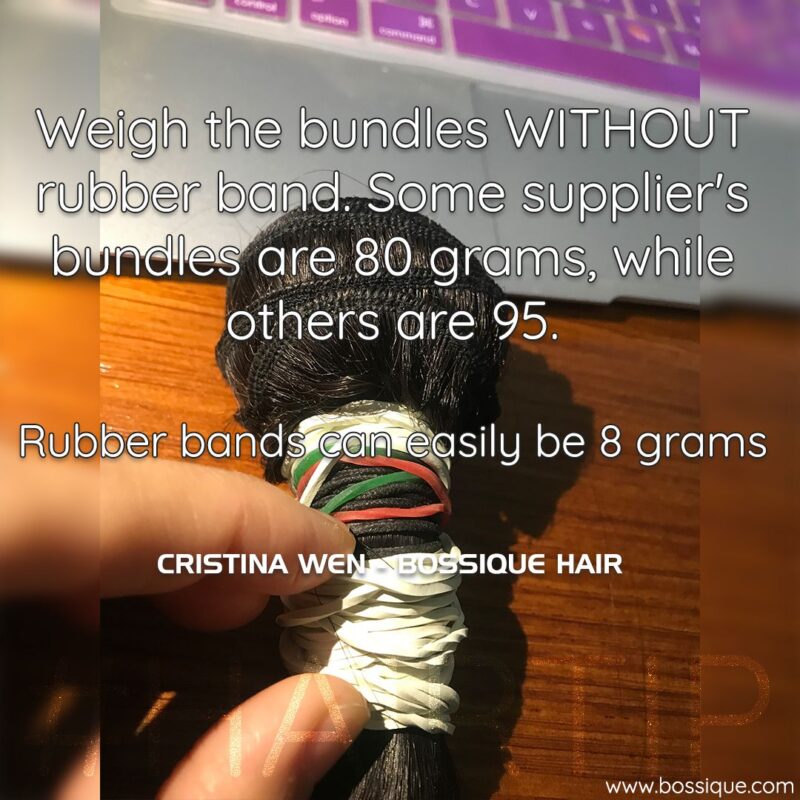
14) Weigh Hair Bundles: $10 for 8g of Rubber Bands
Adding rubber bands is a trick some suppliers use to make it seem like you’re getting more hair. While some bundles weigh 80 grams, others are 95 grams. The rubber bands alone can add up to 8 grams, inflating the perceived amount of hair.
15) Measuring Hair Length: Don’t Get Cut Short
Hair vendor A’s 24″ hair might actually measure only have 3 strands reaching 24″, while vendor B’s 24″ could be closer to 25.8″. This becomes especially important when buying from raw hair vendors, as the price difference for longer lengths can be up to $10. This is one way a raw hair vendor can boost their profit margins.

16) Why Short Hairs Are Added to Hair Bundles
Fewer short hairs mean fuller bundles, which means higher prices. It’s a cost-saving tactic. The average single-drawn bundle contains just 10% of the hair’s full length, while more generous suppliers may offer 15%. We’ve upped the ante by offering 20% with our Orange Line bundles, making them some of the fullest raw hair in the Chinese market—while still being among the most affordable.
The term “drawn” in single-drawn and double-drawn doesn’t mean the short hairs are removed once or twice. It simply refers to a mix of short-, medium-, and long-length hairs in varying proportions.
Many complain about the high prices of single-drawn raw hair, but the market for double-drawn hair remains surprisingly small.
17) Why Large Hair Vendors Are More Expensive
Larger companies need larger profit margins to operate. The well-known vendors have multiple offices and tons of employees and require a large profit margin to operate. Employees receive sales commissions. Their managers receive some as well, and that can easily add up to 5% extra on top of your regular price.
The company I used to work for had a roughly 30% profit margin before it started reducing quality to earn more. At Bossique, we keep our profit margin considerably lower, allowing us to offer competitive prices for top-tier quality.
-
Product on sale
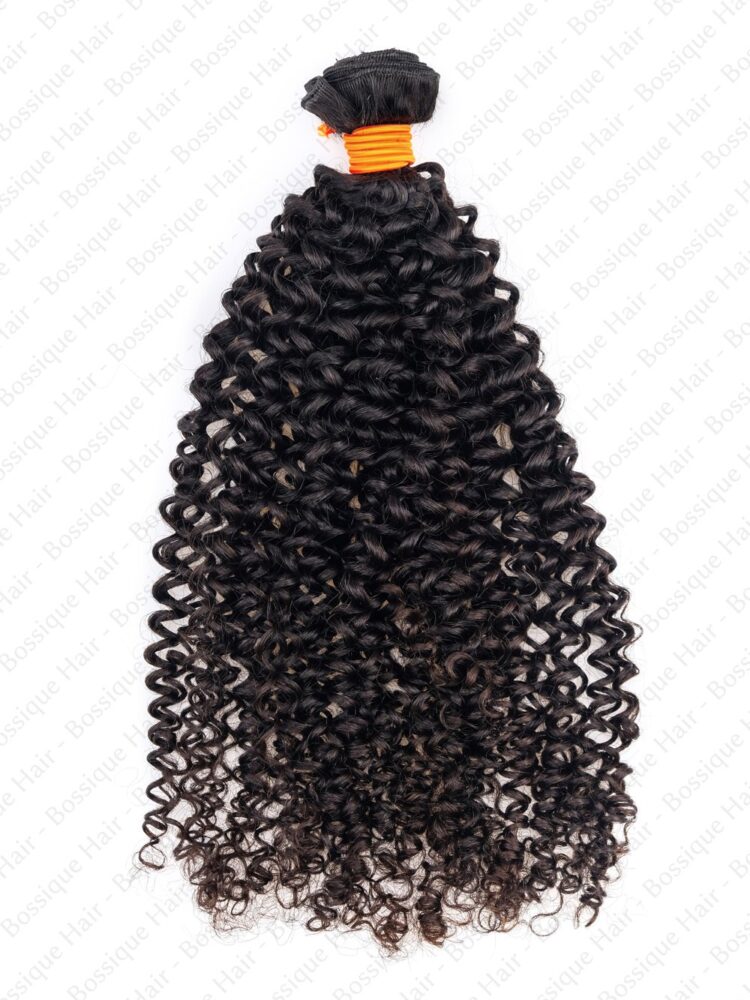
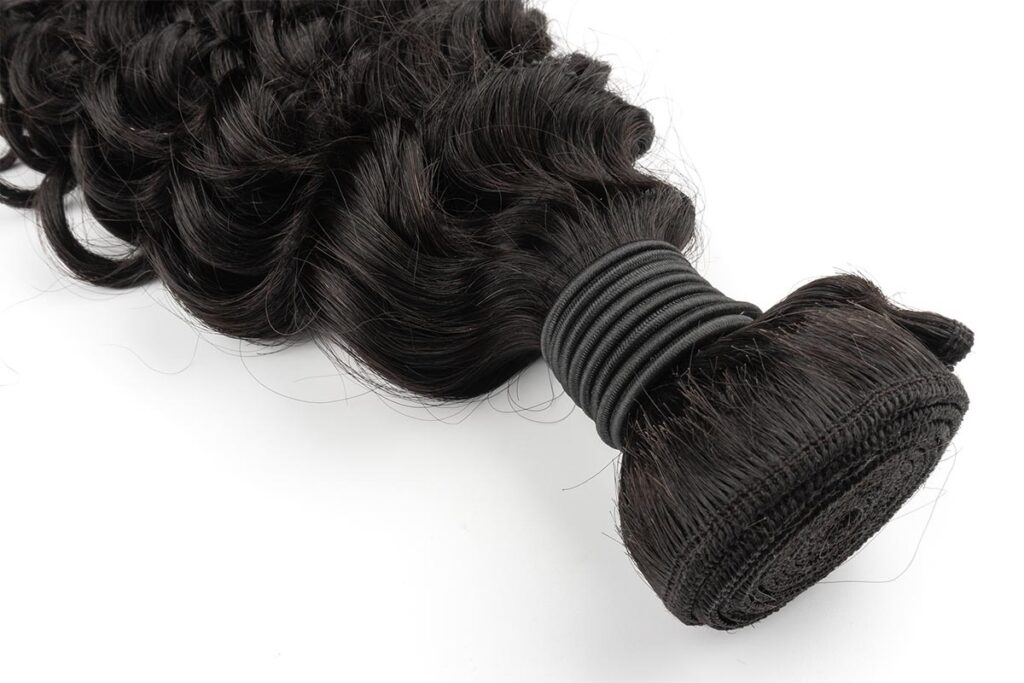
 Orange Line Kinky Curly BundlesFrom $37.80
 -
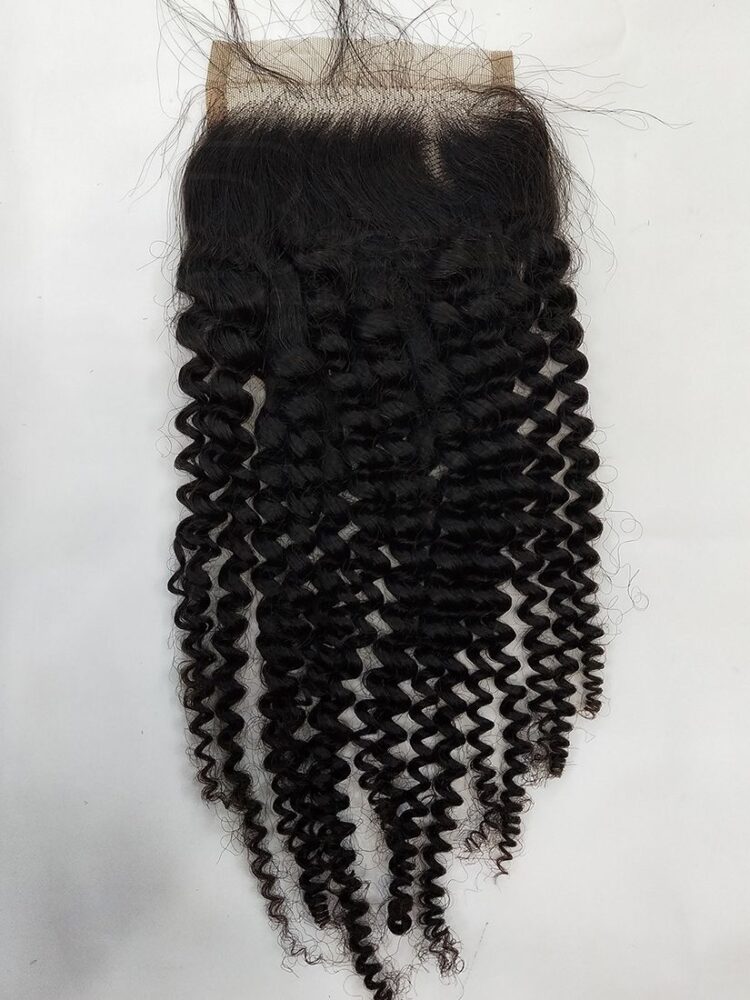
Orange Line Kinky Curly Lace Closures | 4×4 5×5 6×6 7×7From $59.00
-
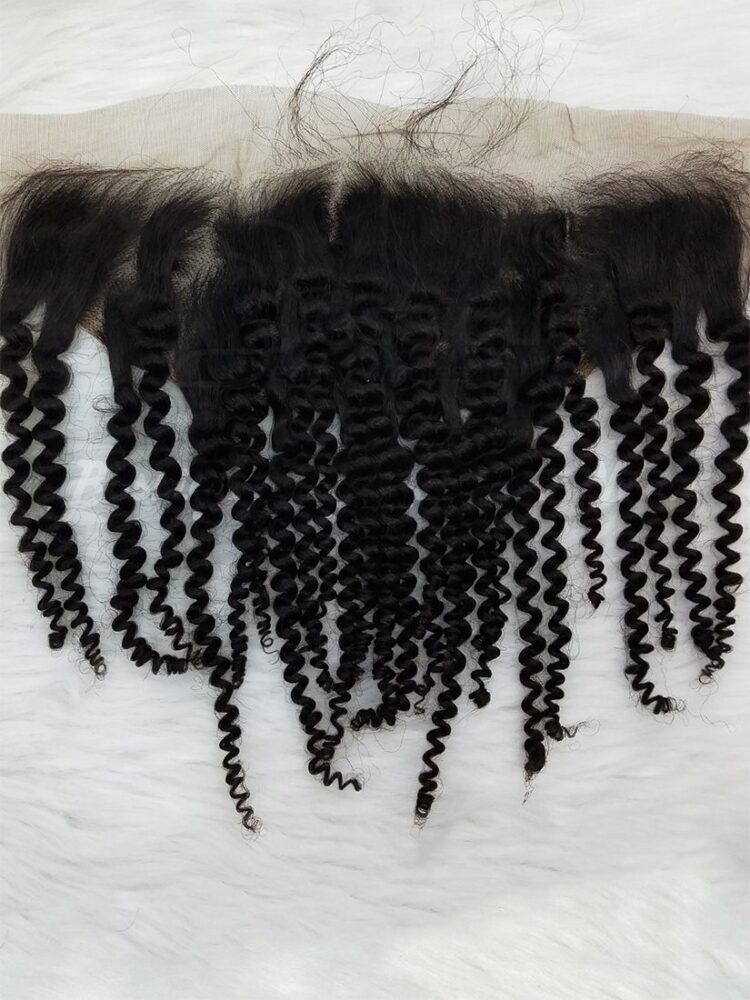
Orange Line Kinky Curly Lace Frontals | 13×4 13×6From $112.00
18) What Are “Hair Factory Prices?”
“Hair Factory Prices” might sound like you’re getting a steal, but don’t be fooled—it’s often just a clever marketing ploy. The term is usually pushed by sales teams, which means commissions are tacked onto the price you see. And let’s not forget that manufacturers who do retail have their own set of overheads: office rent, employee salaries, taxes, medical benefits, and the costs of marketing. All these add up, driving prices higher.
When a factory starts selling directly to consumers, those additional costs mean higher prices. The factories that truly offer lower prices are typically the ones selling only to local suppliers in China, avoiding sales teams, foreign currency issues, and taxes. These suppliers can afford to keep prices competitive without the extra markup.
Larger vendors, with their bigger operations, inevitably charge more—but they usually carry better stock and offer a smoother buying experience. So, when you see “factory-direct prices,” don’t assume it means a small profit margin. In reality, many vendors claiming to offer “factory prices” aren’t even factory-direct. The “savings” they tout often come with hidden costs, disguised as marketing.
Focus on finding a supplier who can deliver the quality you’re looking for consistently, not just someone who claims to be a “manufacturer.” Quality and reliability should always come first.
19) Why You’re Not Getting Wholesale Prices for Retail Orders
You’d expect to get wholesale prices from wholesale hair vendors. However, pricing is based on the company’s costs and desired profit margin. Suppose you have large offices in populated areas. In that case, many educated employees give sales commissions to sales and spend a lot of money on advertising, which will reflect in your product prices.
If we have to fulfill 1 order of 100 bundles, we have way less work than fulfilling 100 orders of 1 bundle. Retail orders require a lot more effort on our part. Therefore, we find wholesale orders much more desirable compared to single bundle deals. Our pricing will reflect this difference.
20) Does Hair Origin Actually Affect Quality?
Let’s be real: Brazilian, Peruvian, and Malaysian hair are often just catchy marketing terms. These countries don’t have the infrastructure or culture to supply the volume of hair they claim, so if a vendor’s selling these origins, you might want to raise an eyebrow.
Now, Indian hair does have some perks—it holds curls like a pro and is generally fuller than Chinese hair. But, Chinese hair is the true MVP in the hair world: healthier, more consistent, bleaches better, and comes in a more nourished state.. Plus, it arrives in top condition thanks to excellent processing practices.
Vietnamese hair is quite similar to Chinese hair. However, let’s be honest—China pretty much invented hair processing, and they’ve mastered it. The result? Consistent, high-quality hair every time. On the other hand, while Vietnamese hair is great, some suppliers can occasionally drop the ball when it comes to processing.
And Russian hair is special in its own right. It comes in various natural shades, which means it doesn’t need as much chemical work to go blonde. Plus, it’s finer, making it a better fit for certain textures—think Caucasian hair. But, let’s be honest, this is more of a personal preference thing than a quality win.
Bottom line: Don’t get hung up on the “origin” labels. Quality is all about processing, care, and how the hair’s handled—not where it comes from.
21) Why Natural Curly Hair Extensions Are Hard to Find
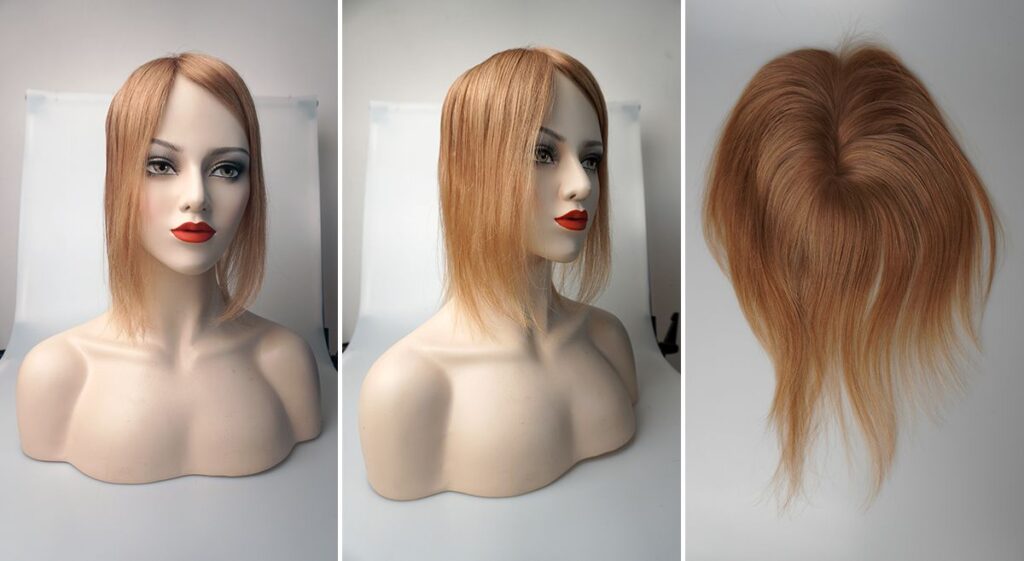
Most women in Asia—whether it’s Cambodia, Burma, China, or Vietnam—have naturally straight hair. So, any non-straight textures are usually steam-styled, meaning they can’t technically be “raw.” That said, the difference between raw and virgin hair in terms of quality is minimal.
Now, India, the Philippines, and Indonesia do have some different genetics, so they mostly produce wavy hair. But curly hair? That’s as rare as a unicorn.
Also, it’s a nightmare to turn curly hair into extensions. The production process is tricky and often results in inconsistent, messy textures. So, when you see consistent-looking curly hair advertised as natural, it’s likely been manipulated through steam-styling, heat, or perms.
22) Is Single-Donor Hair the Best Quality?
Single-donor hair is a marketing gimmick. Most raw hair ponytails cut directly from a donor typically weigh just 30-40g. To make a full 100g bundle, hair from multiple donors needs to be mixed. Even if a ponytail weighs, say, 140g, the excess 40g would either be discarded or sold as multi-donor hair—something that doesn’t really happen.
When you buy 100 bundles of 20” hair, the ends will generally have a consistent fullness, because different ponytails are combined to ensure even weight and thickness across the bundles. So, the notion that hair from a single donor is somehow superior is misleading—properties like bleachability, frizz, shedding, and overall health aren’t noticeably affected by adding a few extra donors.
In the same way that your 3 single-donor bundles + single donor frontal/closure make for a 4-donor install. Installing the hair didn’t reduce the quality, and neither did mixing and matching hair from a few donors.
The only time mixing multiple donors might impact quality is when you hit double-digit donors. At this point, different shades of black are blended, resulting in a “dirty” look. That’s when the hair might undergo processing or coloring, which can lower its quality.
In short, single-donor hair offers no advantage in quality. What truly matters is how the hair is sourced, handled, and processed.
Tips 23-33: Red Flags, Testing, and Real Hair Vendor Insights
23) Can You Still Make Money Dropshipping Hair?
The hair industry has gotten too competitive for dropshipping to work as it once did. Your competitors are stocking up and shipping hair much faster than you can. Meanwhile, your vendor is selling the same products at a lower price and with similar shipping times. As a newcomer without an established brand, you’re already at a disadvantage in a crowded market. Unless you’re prepared for a major marketing push, it’s going to be hard to stand out and succeed.
24) What Are Hair Grades: What Do They Really Mean?
Hair grades are a bit like the name “Wáng” (王) in China — with 108 million people sharing it, that doesn’t mean they all act the same. The same goes for hair grades.
In the hair industry, grades are just labels suppliers use to categorize hair — they don’t actually tell you anything about the hair’s quality. There’s no universal standard for grading, so don’t get too hung up on grade numbers. What one company calls a “grade 10” could mean something completely different from what another company considers top-tier.
25) How To Find Good Quality Hair Extensions?
Looking for “good” quality hair is like trying to find a sock. Which sock? The one lost to the dryer? A sock puppet named Gerald? Or the one secretly building an army to overthrow humanity? You need to be specific.
First, decide if you’re after high-end hair or something more affordable. For high-end hair, look for extensions that pass the acetone test and can bleach to a healthy #613 blonde. If you’re going for affordable, focus on hair that passes the elasticity break test to ensure it won’t shed easily. Then, get even more detailed. Do you want single-drawn or double-drawn? A natural black color or a light blonde?
By defining the exact qualities you’re looking for, you’ll narrow down your search. Eventually, you’ll realize the hair you want fits within a specific price range, making the whole process far easier (and way less like hunting for a rogue sock).
26) Why Is My Hair Business Failing After Finding a Vendor?
You don’t get rich by finding a vendor with great hair—you get rich by mastering marketing. Success depends on being seen and convincing people to choose your products over others.
Far too many people start their hair business by obsessing over finding the “perfect” vendor, pouring thousands of dollars into the search. But even after finding a vendor they like, they hit a wall—because marketing is tough. It takes time, consistency, and skill to do well. Results don’t happen overnight, and you’ll need patience to see your efforts pay off.
Before you even think about starting a hair business, ask yourself: “Why should people buy from me instead of my competitors—or even directly from an Asian vendor?” If you can’t answer that question, stop looking for a vendor and go back to the drawing board. You don’t need a fully fleshed-out answer yet, but you do need a clear sense of direction.
If you’re not offering anything unique, you’ll just blend into the sea of sellers in this already competitive market. Stand out first—then worry about your vendor.
27) Why Hair Suppliers Lie: Because Dishonesty Sells
Think about it: Which ad sounds better? “Authentic Chanel bag for $100” or “Copy Brand Chanel bag for $40”? Most buyers would prefer the allure of authenticity, even if it’s a lie. Suppliers know this, and dishonesty often leads to more sales and bigger profit margins. That’s why you shouldn’t blindly trust what they say.
Even if you’re selling retail and want to be transparent like us—informing your clients about every little detail—it’ll cost you sales. Retail clients often prefer the easier (and shinier) version of the truth. Explaining everything takes a lot of work and might not always pay off, so some sellers simply go with the marketing flow and tell white lies.
To protect yourself from bad purchases, take the time to educate yourself about hair quality and learn how to spot the common lies vendors tell. Knowledge is your best defense in this game.
28) How to Tell If Hair Samples Are Good Quality
Testing the hair isn’t optional—it’s essential. You can easily verify quality with a few quick tests. Just wearing the hair isn’t enough to gauge its true quality.
If you think you need to wear the hair for weeks to evaluate it, you’re probably not familiar with how to assess hair quality. With a few simple tests, you can distinguish top-tier hair from something slightly below average in under 30 seconds.
Here are some tests to get you started:
- The Acetone Test: This checks if the hair is naturally colored or dyed. Raw hair should have a natural color.
- The Scraping Test: A less sensitive alternative to the acetone test, it helps determine if the hair is natural or dyed.
- The Washing Test: Damaged hair will get frizzy when washed. Healthy hair should stay smooth.
- The Bleaching Test: High-quality hair should bleach to #613 blonde without issues.
- The Elasticity Test: After bleaching, top-quality hair should still be elastic and resilient. Even well-processed floor hair should have some degree of bounce and stretch.
- Check for Follicles: Raw hair has no follicles at the tips, while processed hair often does.
- The Burn Test: This is more for synthetic hair (which shouldn’t be in your hair extensions) but can help you identify low-quality, fake hair.
But choose your tests carefully. If you aim for affordable hair, it’s definitely colored, won’t bleach to #613, so no need to perform those tests.
And if it passes those test, wear the hair. Not so much to verify the quality of the hair, but to see how it will respond when you’re good to it, when you’re bad to it. This way you will find problems, come up with solutions, and test those, so you can guide your clients when any problems arise.
-
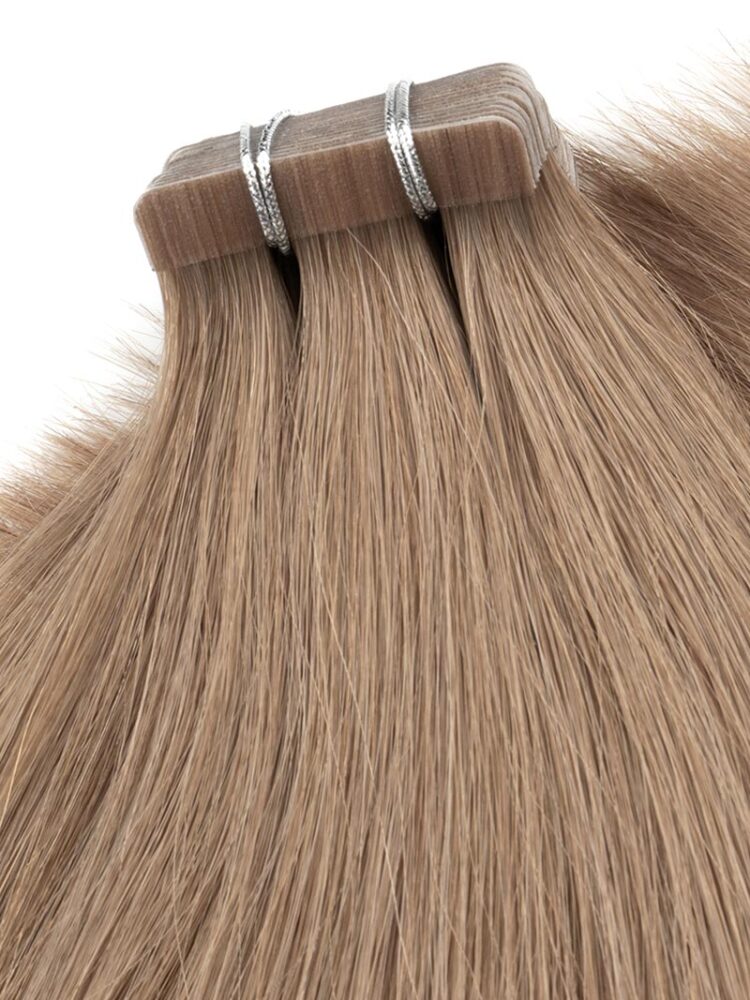
Tape-In Hair Extensions – LUX Quality – MOQ: 200gFrom $127.00
-
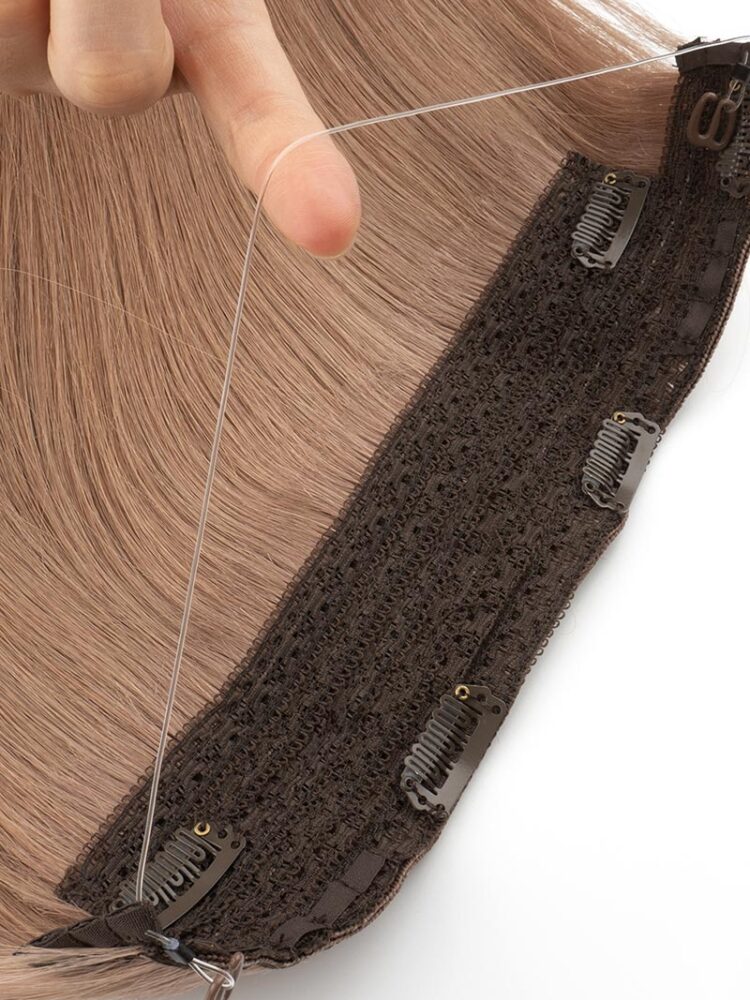
Halo Hair Extensions – LUX Quality – MOQ: 200gFrom $119.00
-
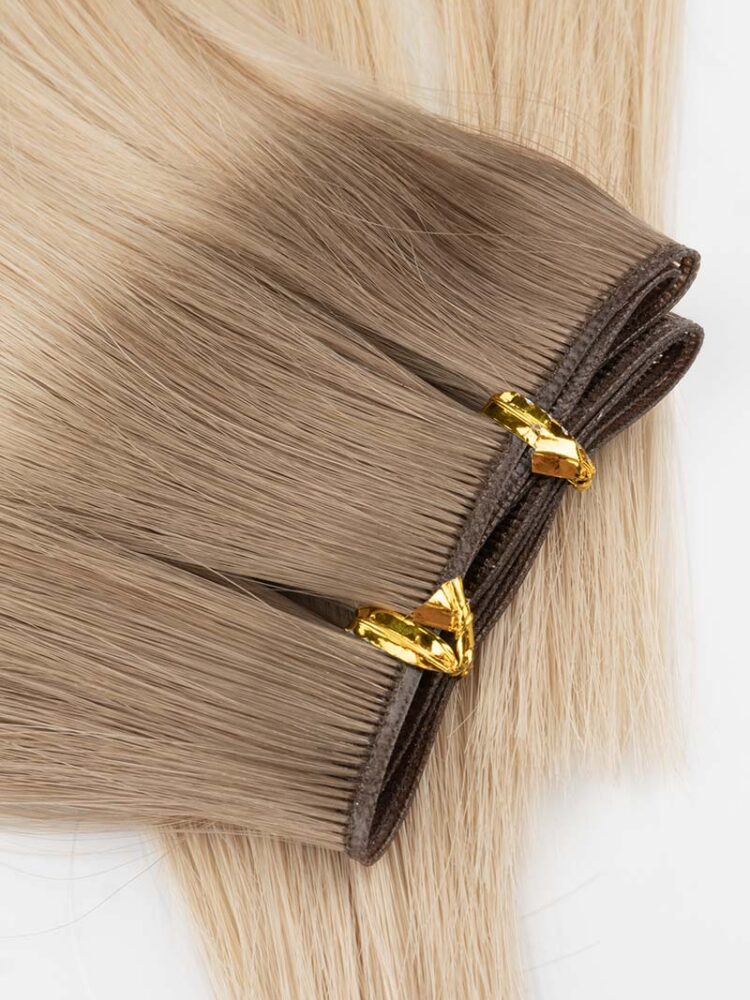
Genius Wefts – LUX Quality – MOQ: 200gFrom $137.00
29) Why Raw Hair Comes in Different Shades of Black
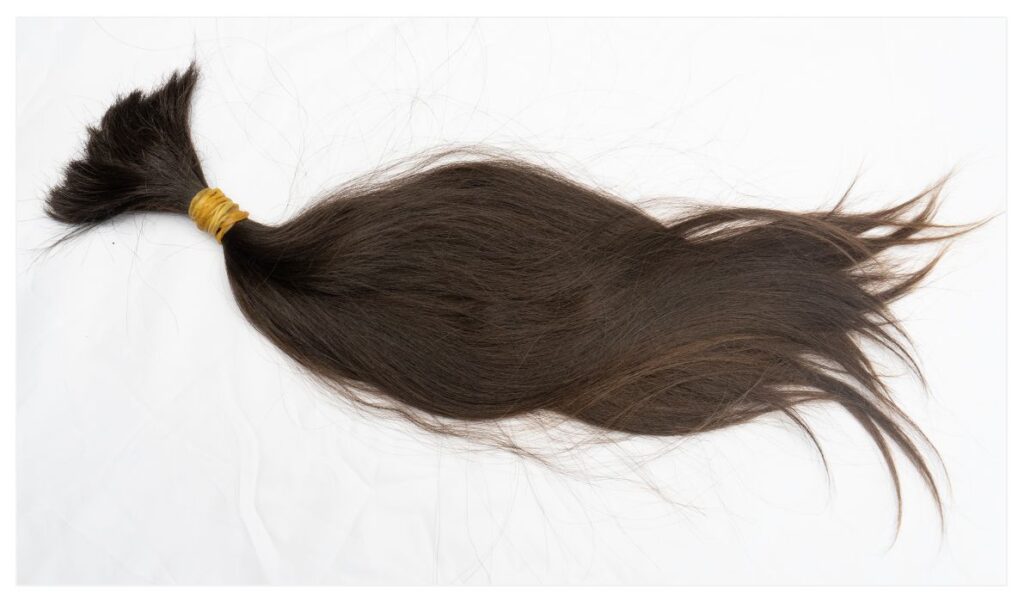
When it comes to raw hair, don’t expect uniformity. Unlike colored bundles, which are consistent, raw hair comes in various shades of black—some leaning more towards deep black, others closer to dark brown.
Since we often produce batches in bulk, most bundles of the same length will be fairly consistent in shade. However, it’s not uncommon to see, for example, a batch of 16″ bundles that are closer to brown, while the matching closures might lean more towards black. This can make achieving a perfect match tricky.
Got specific requirements for your hair—whether it’s lighter or darker bundles, certain lace types, or even lace colors? Be sure to communicate these with your supplier. While your options may be limited, a heads-up can help them accommodate your needs as best as possible.
30) You’ll Always Pay the PayPal Fees When Buying Hair
Whether hair suppliers charge the PayPal fee directly or quietly add it to the product price, you’ll end up paying for it. That’s just how business works—fees always get passed on to the customer.
And sure, you might argue it’s against PayPal’s rules. But let’s be honest: it’s easier for suppliers to refuse an order from a difficult customer than to give them a 5% discount.
31) How Much Do Hair Salespeople Really Know About Hair?
Salespeople are just one link in the chain. Most of the time, they simply repeat what their higher-ups have taught them and may not fully understand the details about the hair they’re selling. In fact, many rely on notes or scripts to answer your questions.
Back when I was a sales manager at my previous company, I gave new team members a Q&A list to help them with customer inquiries. For anything they didn’t know, they’d turn to me for answers.
It wasn’t until I started my own company that I had the chance to dive deeper into the industry, uncover the full truth, and educate myself about real hair quality. Salespeople don’t always have this opportunity, so their knowledge is often limited to what they’ve been told to say.
32) How to Use Video Chats to Verify Hair Vendor Claims
A video chat with your vendor can be a game-changer. Curious if they really have HD lace? Don’t just ask for a video—ask them to show it live on camera. Want to check the weight of their bundles? Have them weigh it during the chat. Concerned about the fullness of their 30″ bundles? Watch them show it on camera. Wondering if the hair is dyed? Ask them to perform the acetone test right there.
That said, if you’re scheduling a video chat with us, please come prepared. While I enjoy connecting with you, every hour spent chatting means other customers are waiting longer for responses.
For simpler questions, a quick text message is always preferred—it saves time and helps us assist everyone faster. Video chats are great for in-depth verifications but should be reserved for when you really need them!
33) Why Salespeople Are Human Too (Not Robots)
Despite what it might seem, your vendor isn’t a 24/7 sales robot—they’re a real person, often in a different time zone. They’re usually doing their best to respond to you as quickly as possible while juggling other responsibilities.
Think about it: if they worked 16 hours a day, 7 days a week, that’s a 112-hour workweek. But life happens. They’re not just responding to messages—they’re also packing orders, taking video calls with clients, eating, spending time with family, and maybe even dealing with personal matters like hospital visits (as I’ve been doing during my pregnancy).
If you’re concerned about slow replies, it’s worth simply asking why. You might be surprised by their honesty—and it’s always better to approach with understanding than assumptions.
Our articles are created to help you make smarter purchases and save money. If you’ve found them helpful, we’d greatly appreciate it if you shared them with your friends, family, or in your favorite online groups. Your support helps us reach more people and keep producing high-quality content.
Have questions? Contact us directly on WhatsApp or iMessage at +86 135 3369 3283, or email me at cristina@bossique.com. Many of our articles originate from discussions on our Facebook page. We’d love to hear from you!
Are you looking for a hair vendor?
We have the best quality Raw, Virgin & Remy hair you could find in China. A bold claim but can be verified by ordering a sample.
Discover Our Products
We offer a large selection of high-quality hair products. Follow us on Instagram to explore our collection and stay updated.
This is very good information.
This valuable message