
If you’re starting your hair business, one of the steps involves finding a hair vendor. However, not everyone knows how to ask the right hair vendor questions. At Bossique, we often see question lists copy-pasted from google and are expected to answer all of them.
It gets increasingly frustrating when people ask the wrong questions. For example: “Can you supply a certificate of authenticity?” might be an excellent question to ask a vendor from Russia who claims to sell Russian hair, but a silly question to ask a Chinese vendor who sells Chinese hair. People end up asking questions because they found them on Google and don’t even know what the correct answer would be to their question.
Your goal should always be to find a vendor who can meet YOUR requirements, so the questions you ask should help you determine whether that hair vendor is the right one for you.
If you don’t know which questions to ask a hair vendor, you probably don’t know what you’re looking for. If you don’t know what you’re looking for, you’re making it very difficult to find a hair vendor who can supply that. So if this is your issue, go back to doing research.
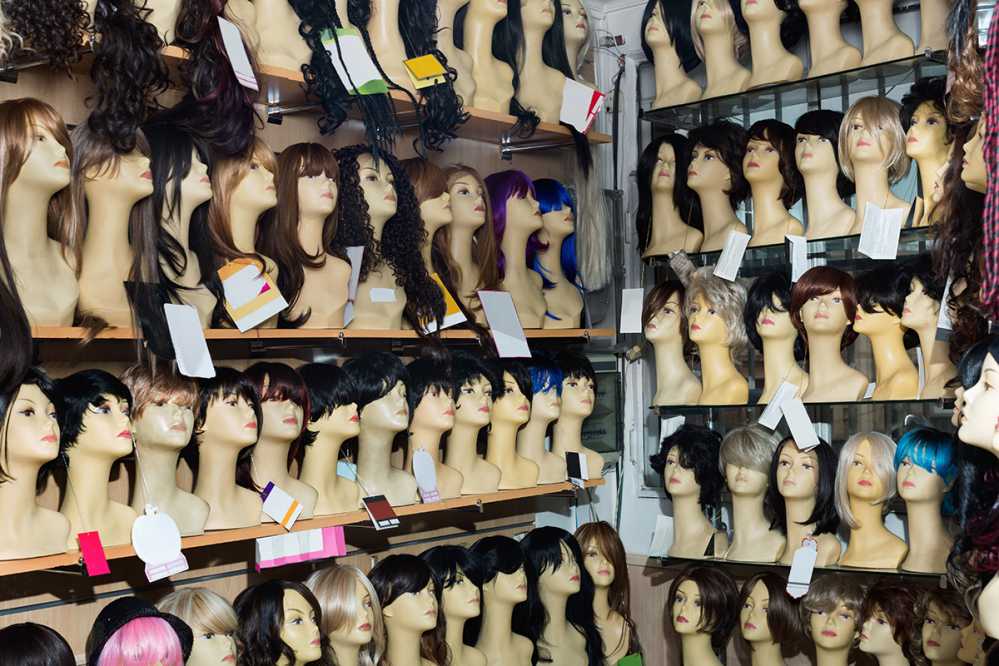
Table of Contents
Googling Hair Vendor Questions
We believe that it is essential that people who ask questions know the correct answer. We copy-pasted some of these “questions to ask a hair vendor?” lists and tried to help you understand if these questions are the right ones to ask your hair vendor.
1. What Kind of Hair Does Your Company Sell?
If you get an answer like “Virgin Hair” or “Remy Hair,” you will have to keep asking more questions to find out about the quality of the hair. Hair vendors use different marketing labels for their hair. For example, a Vietnamese and a Chinese vendor could have other ideas about the meaning of Remy Hair.
Raw hair is a label that generally means the same in every country. Virgin hair is the same quality as raw hair, but many companies use the title to advertise their chemically processed floor hair under a “virgin hair” label. Remy only means if the cuticles are aligned, but some floor hair will get processed with a non-remy to remy machine, indicating that the cuticles will be made to be aligned. So remy hair ends up being used for processed hair as well.
Sometimes you can derive what it is indirectly. For example, if a vendor’s virgin hair is lower quality than their raw hair, it’s chemically processed floor hair. For raw hair, the answers are more straightforward. Raw hair, hair cut directly from a donor, and cuticle-aligned hair would all be good answers and aren’t confusing.
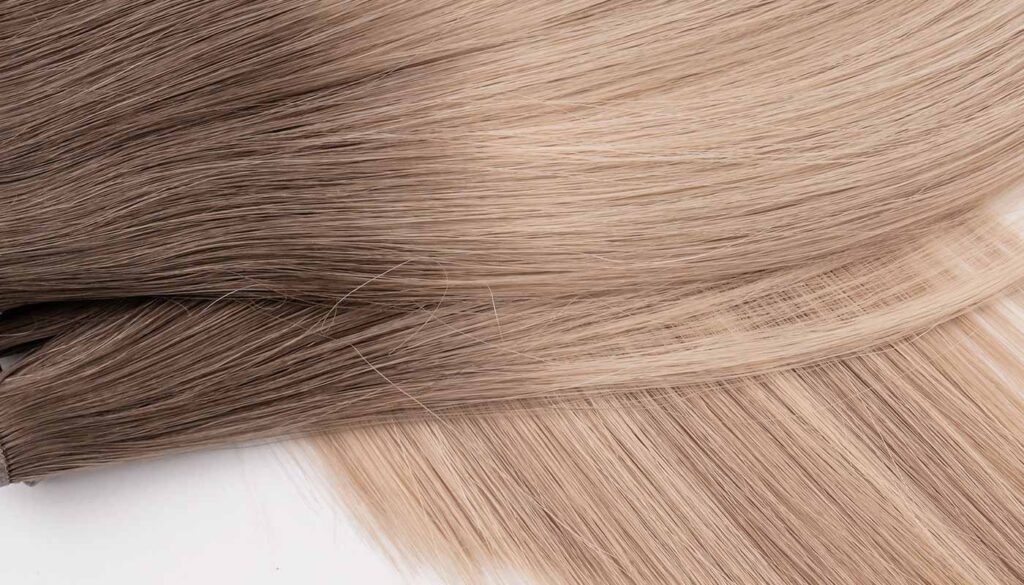
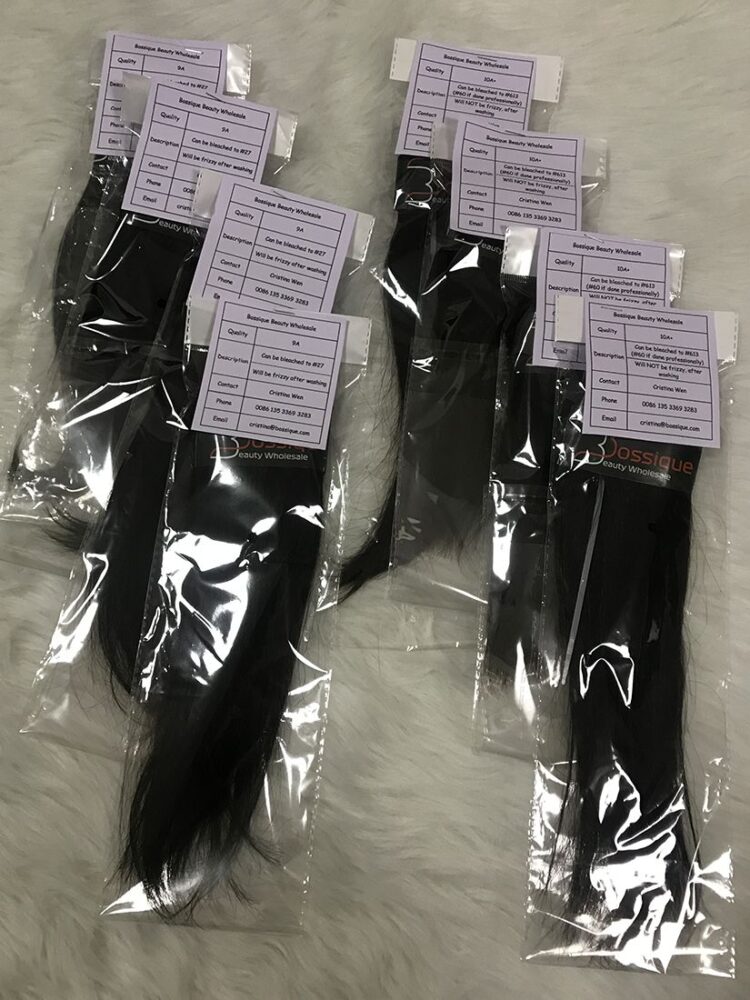
And instead of just focusing on the label, you could focus on the properties of hair. For example, hair that only bleaches to #27 is chemically processed floor hair, regardless of what they call it. And if it bleaches to #613 with healthy cuticles, it’s supposed to be their best quality.
2. Do You Sell Single Donor Bundles?
This one appears quite often in hair vendor questions. It’s good to clarify what’s really behind the term.
The idea of “single-donor hair” is mostly a marketing tactic and doesn’t necessarily equate to higher-quality hair extensions. While it may sound appealing to have extensions sourced from a single donor for consistency, the reality is that to achieve a consistent weight (100g) and fullness ratio (with either thin or full ends), bundles are typically created by blending hair from multiple donors. In fact, hair from just a few donors does not differ in quality from hair sourced from multiple donors.
3. How Long Has the Hair Vendor Been in Business?
You might wonder, “How long have you been in business?” and think this is a straightforward gauge of reliability. But let’s flip that question around for a moment. If you’re just starting your hair business, does that mean you’re not yet reliable? And if a company has been around for 15 years, does that automatically make it highly reliable? Or could it mean that they’ve simply been doing the same thing long enough to build a brand that allows them to charge more?
Truth be told, a hair vendor being around for ages doesn’t always mean top-tier quality. I’ve seen it firsthand as a sales manager at a well-known company where the boss cut corners on quality to pocket more cash, all while keeping us in the dark. Lots of years under their belt, sure, but not more reliable.
Now, take us at Bossique—we’ve been shaking up the industry for about 5 years, and we’re all about delivering some of the highest-quality hair on the market. We keep profit margins small and our overhead low, which means fair prices for you without sacrificing quality.
It all comes down to finding a hair vendor who ticks all your boxes, ideally without breaking the bank. But it’s better to pay $3 per bundle extra for a reliable hair vendor than to have a cheaper vendor who makes $200 mistakes.
4. What Sets You Apart from Other Companies?
This question could have an exciting answer.
At Bossique, our standout answer is this: “We’re one of the few hair vendors who not only supply hair but also empower our clients with industry knowledge. Through our blog and Facebook page, we expose harmful practices within the hair industry and teach you how to spot them. So, if there ever comes a time when we slip up—which we work hard not to—you’ll be well-equipped to call us out on it.”
This question is a real chance for a salesperson to make an impression. Unfortunately, most just fall back on the usual lines like, “We’ve been around for 15 years and have hundreds of happy clients.” While longevity and satisfied customers are great, they don’t tell the full story. Every company will quickly show you their positive reviews, but they’re not as quick to point out any slip-ups.
At Bossique, we do things differently. We believe that educating our clients is just as important as serving them. It’s not just about selling hair; it’s about building a relationship where honesty leads the way.
5. Are You Also Selling on a Marketplace like Amazon or AliExpress?
I don’t think this hair vendor question matters unless you plan to buy from those places directly. If you don’t want to compete directly with your vendor, add something unique that they can’t offer, such as customized wigs.
6. Can I Have a Video or Skype Tour to See Your Facility or Products?
This is one of those things to ask your hair supplier that can be helpful if you’re looking to confirm specific details. For example:
- They claim to be a hair manufacturer, and you want to verify if they are.
- You want to see if their bundles over 24″ have thin or full ends.
Hair vendors are often busy, and they won’t like it that much to take an hour to show you all their products and answer all your questions by video.
You should be aware that most hair vendor sales work from a small office (or home, even), which might or might not have stock. Most of the hair is usually stored externally in a warehouse, which might or might not be their own. It’s probably not something that interesting to see. Even if they’re small, that could potentially be a good thing.
7. Are You a Trade Company or a Manufacturer?
When it comes to finding the right hair supplier, the price differences between a trade company and a manufacturer are often overstated. What really matters is their ability to meet your needs: delivering the right products, providing excellent customer service, and avoiding costly mistakes.
Keep in mind that manufacturers typically cater to buyers purchasing in large quantities. If you’re buying wholesale hair extensions, manufacturers might offer competitive pricing, but “wholesale” doesn’t mean ordering ten bundles a month—it’s about significantly larger volumes. For smaller orders, expect them to add a 10-20% profit margin to account for logistics and lower quantities. Ultimately, finding the right hair supplier is about identifying someone who aligns with your business goals and consistently delivers the quality you need
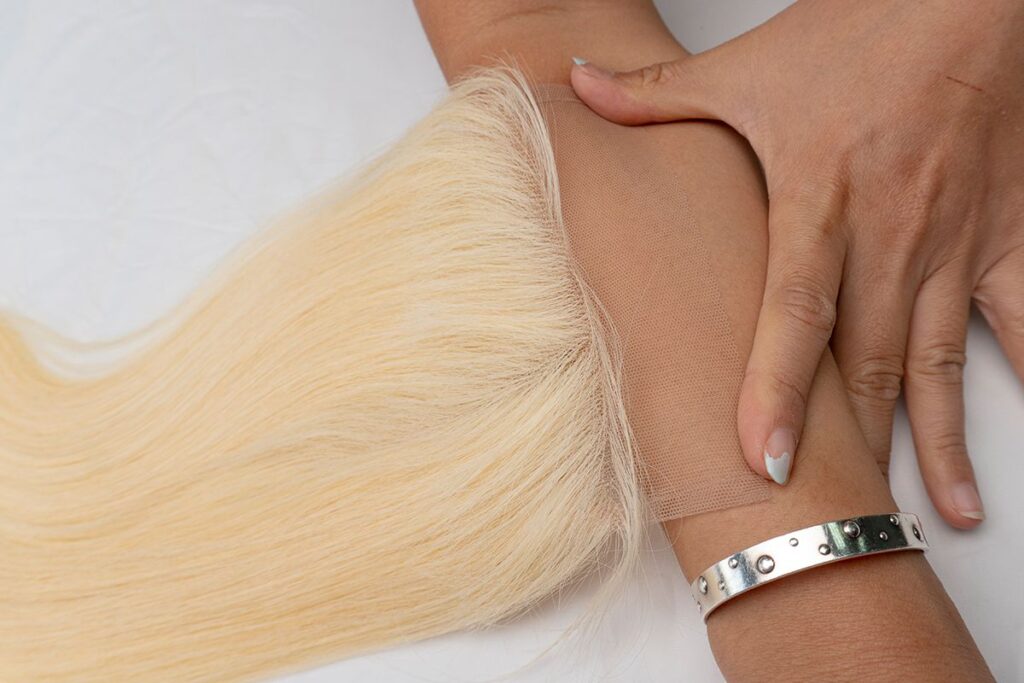
8. What Is the Density of Your Frontals and Closures?
This is one of those questions to ask hair vendors that might not get you a useful answer. While the standard density is typically 130-150%, even an experienced salesperson may struggle to verify this accurately. Most vendors will default to giving you the “right” answer, whether or not it reflects the actual product.
Instead of focusing on density, ask for pictures or videos of recently sold lace products to ensure they meet your expectations. Keep in mind that because these products are hand-tied, fullness can vary. If you want to get specific, asking about the weight of the product can give you a more objective idea of how much hair is used.
9. Do the Bundles and Closures Match in Color?
This is a common concern when working with a wholesale hair supplier, but here’s the truth: they usually come close but don’t always match perfectly. Vendors often try their best to select bundles and closures that pair well together.
Why the difference? Lace products and bundles are typically produced by separate manufacturers, each specializing in their type of products. Since much of the hair is dyed, the methods and amounts can vary. However, a good supplier will put in the effort to ensure the colors are as close as possible for a cleaner look.
10. Are There Synthetic Fibers in Your Hair?
This question might be more critical when looking for cheap but still human hair. Synthetic hair could cause significant issues when coloring your hair or applying heat.
Also, those reddish or orange strands you sometimes see? They’re not synthetic. They’re usually human hair that’s lost pigment or hair that’s been dyed with henna.

11. Is the Hair Processed, and If So, How?
This is an important topic to discuss with your hair vendor, as understanding how hair is processed can save you from unwanted surprises.
Steam styling, for example, is a form of processing but doesn’t negatively impact the hair quality. On the other hand, floor hair often undergoes two very different treatments:
- Low Quality: It either gets strongly processed or will completely burn off the cuticles in acid.
- Medium Quality: The hair manufacturer first uses a non-remy to remy machine to align the hair’s cuticles and gives it a mild acid bath.
Most raw hair sold isn’t of the highest quality. To cover that up, many hair extension vendors will slightly process the hair and cover impurities with hair dye. Testing with acetone, washing, or bleaching the hair can give you a better idea of what you’re working with.
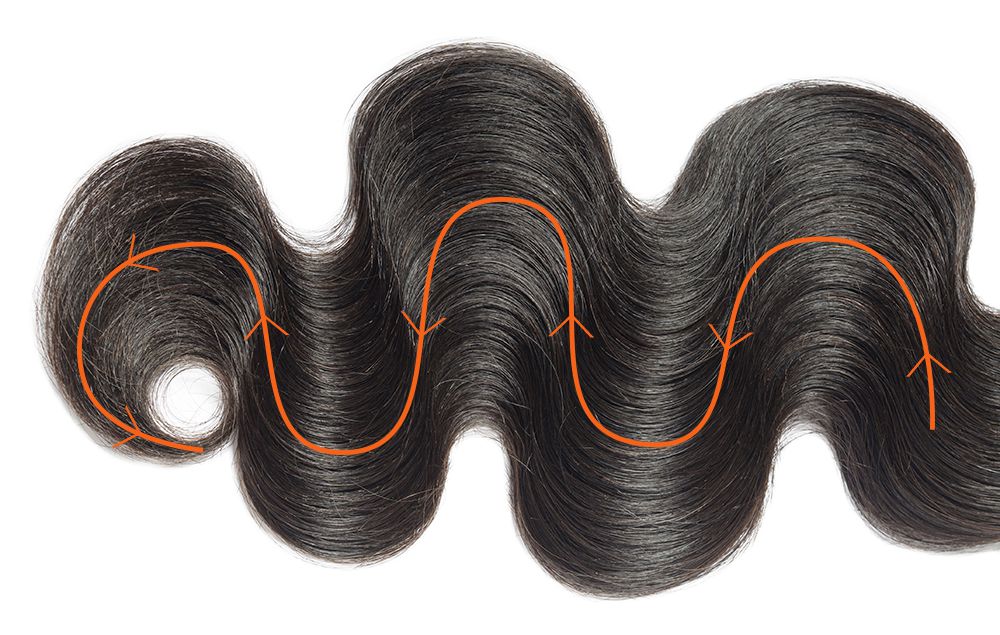
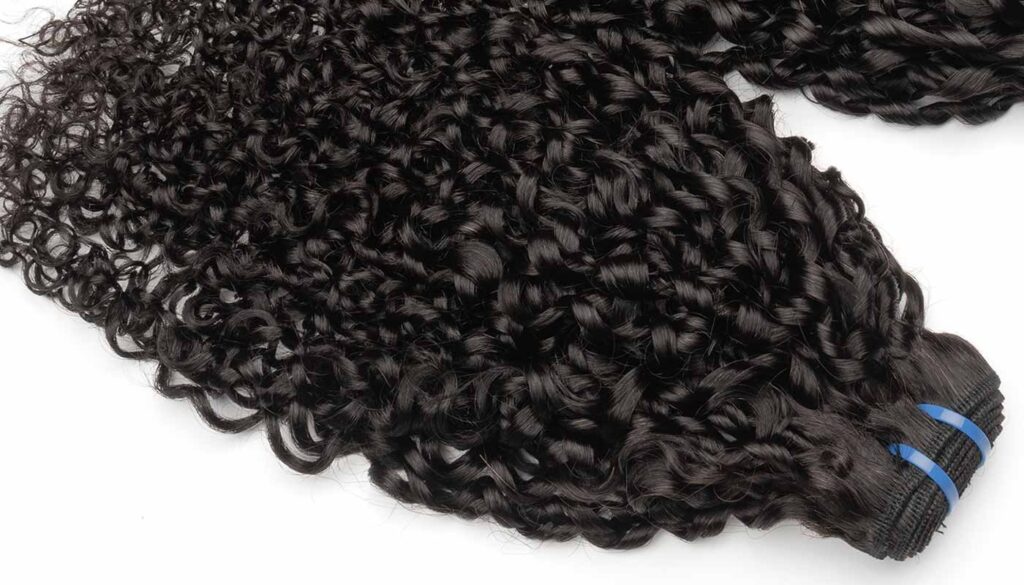
Curly textures often require minor processing too. Despite the cuticles being aligned top-to-bottom, curls add a 360-degree direction, making hair high-maintenance. That little bit of processing reduces the required maintenance.
That said, not all salespeople are aware of all hair extension production shortcuts, which is why it’s essential to work with a reliable hair supplier and know how to test for these things yourself before making a purchase.
12. Is the Hair Cuticle Aligned?
This is a good question to ask your hair vendor, but keep in mind that not all aligned hair is created equal. For some floor hair, the cuticles are aligned using a non-remy to remy machine. Technically, this means they can still call it cuticle-aligned, but the quality isn’t the same as hair cut directly from a donor. If cuticle alignment is crucial to you, it’s worth clarifying whether the hair is true donor hair or processed floor hair.
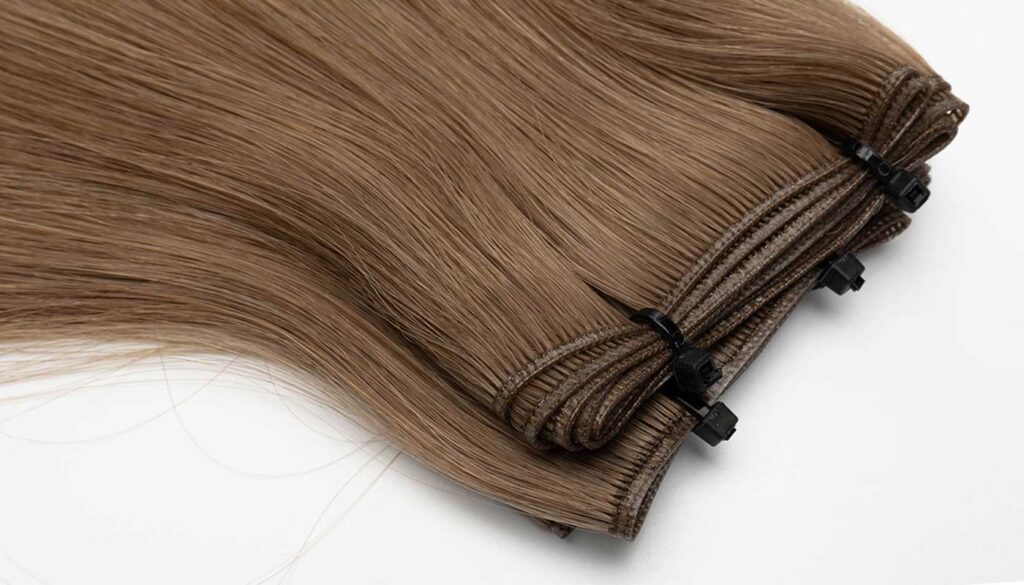
13. How Are Wefts Constructed?
Double-wefted is probably what you want and are most likely to get from any hair vendor.
14. Have You Had Any Issues With Lice?
Hair in Chinese factories is mostly disinfected by high heat. While you can sometimes see the egg sacks attached to the hair, they’re probably dead already. It’s something that you can’t avoid altogether. Even if your hair vendor complained, they probably wouldn’t want to admit it.
15. What Is the True Origin of the Hair?
A Chinese hair vendor who claims to sell Brazilian, Malaysian, and Peruvian hair can’t be trusted. You don’t want Indian hair from China, as imported Indian hair will typically be low quality. The highest-quality hair we have access to in China is Chinese hair. It would be best if you try to find a vendor who claims to sell hair from their own country.
16. How Is the Length of the Hair Measured (True in Length or Not?)
It could be an essential question to make sure you get what you paid for.
For example, when we receive hair from a hair manufacturer, some 24″ bundles might actually reach 26″. A reliable hair supplier will still choose to sell it as 24″, possibly trimming the ends to provide a fuller look. However, some vendors sell it as 26″, even if the ends are thin, causing them to earn an extra $10 per bundle for raw hair. At Bossique, we would still cut this 26″ to a 25″ giving our bundles slightly fuller appearances, and still sell it as 24″.
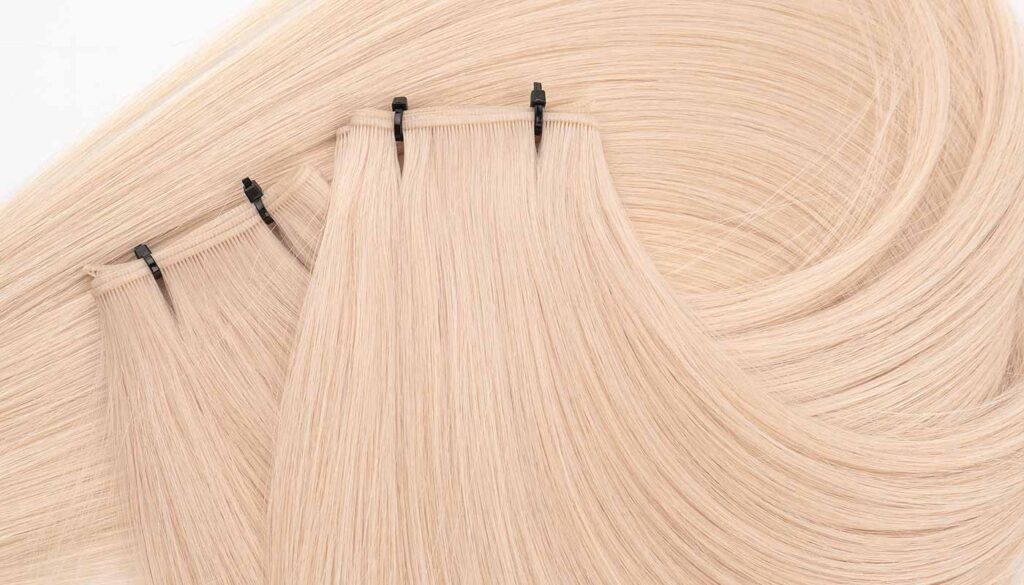
17. Can the Hair Be Colored, Bleached, or Dyed?
All hair can be bleached except salon hair. Salon hair has been dyed many times already and can sometimes only reach color #4.
Bleaching results largely depend on quality. For instance, if you’re purchasing raw hair from a reliable hair supplier, it should bleach healthily to a #613. If the bleach limit is around #27, it’s processed floor hair. A mix of these can often reach slightly lighter colors but wouldn’t fully reach #613, or at least not healthily.
The real challenge lies in whether your hair vendor is honest about these limits.
18. How Long Will the Hair Last with Proper Maintenance & Care?
Estimates from a hair vendor are just that—estimates. We don’t wear our own extensions, rarely have detailed insights into our clients’ maintenance routines, and rarely get long-term feedback. If you’re trying to gauge quality, focus on questions to ask hair vendors that clarify the quality of the hair and how to properly maintain it.
Typically, people who are unhappy with their hair purchase are very vocal, so the lack of negative feedback can often be taken as a good sign. Of course, how long the hair lasts will also depend heavily on how well it’s maintained.
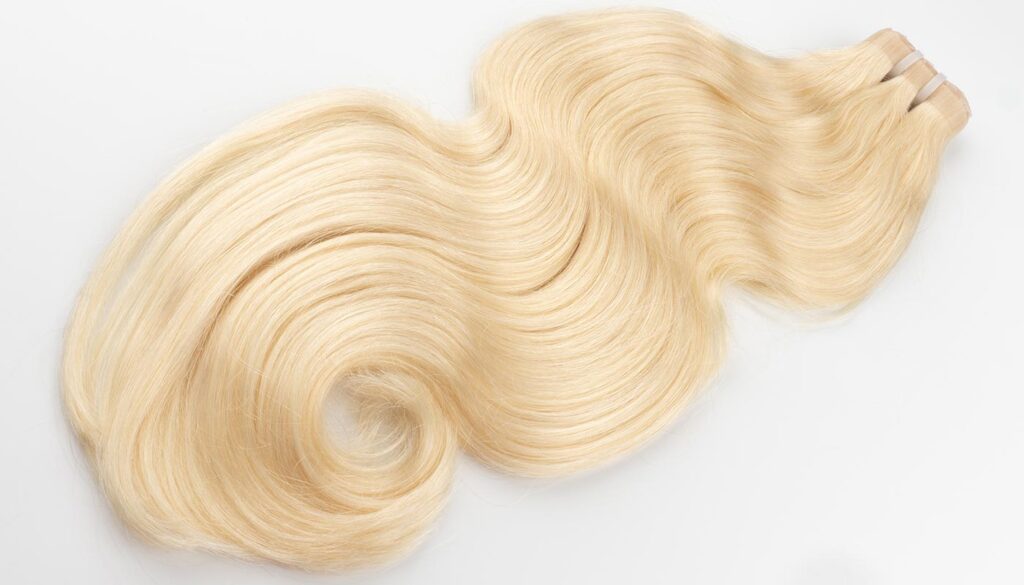
19. Is There a Silicone Coat Applied?
Silicone is often misunderstood in the world of hair extension vendors. Many assume that high-end hair doesn’t use silicone while processed floor hair does—but the truth is more nuanced. Almost all hair, whether top-tier quality or lower-grade, comes with at least a small amount of silicone coating. Without it, the hair would feel rough and dry, especially after treatments like high-heat processing, chemical cuticle stripping, bleaching, or coloring. Silicone helps restore a smoother texture and gives hair that desirable “finished” look.
However, there’s a difference in application. Lower-quality floor hair often gets a heavy dose of silicone, creating an overly shiny appearance. On the other hand, high-end hair typically has just enough silicone to improve feel and manageability without looking artificial. It’s important to understand these nuances when discussing hair quality with your hair vendor.
20. What Is the Process to Ensure High Quality, and How Do You Maintain High Quality?
If a hair manufacturer buys $10.000 worth of hair material, they know what quality they’re buying. For example, our former high-quality manufacturer categorizes top-end hair in 3 grades. The highest one is used for hair that bleaches to very light colors. 2nd grade goes to clients they like more, and 3rd grade to the rest. Anything lower gets rejected.
Sometimes, small inconsistencies can happen during production, but significant quality drops are rarely accidents—they’re deliberate choices. This is why it’s so important to focus on working with a reliable hair supplier that prioritizes transparency and consistent quality.
With almost ten years of experience, I personally check most bundles to ensure nothing escapes my attention. Over the years, I’ve developed the ability to recognize even the slightest inconsistencies in quality, simply by sight, touch, or smell. This level of expertise, combined with my direct involvement in inspecting every batch, ensures that any issues are caught before they ever reach you, delivering the consistent quality you expect from a reliable hair vendor.
21. What Is Your Return Policy?
Always check to see if you like the bundles before washing, bleaching, and installing them. If you return bundles intact, a hair vendor can still resell them and is more likely to accept a return.
If you use a bundle, it can’t be resold, so the supplier loses all its value. Since wholesale hair suppliers usually only make about 10-20% profit, they’re careful about replacing hair unless there’s a real issue.
22. Do you have 12A hair?
When you ask a hair manufacturer or wholesale supplier about 12A hair, keep in mind what it really means. The grading system isn’t an official standard—it’s just a marketing term that vendors use to label their products.
This means that if you buy 12A hair, you could get anything from the worst processed floor hair to extreme-quality raw hair.
23. What Are the Shipping Conditions, Delivery Time, Holiday Seasons, and Expenses?
In China, shipping during holidays isn’t possible because everyone, including shipping companies and hair manufacturers, is off work. That means we can’t hand off packages to carriers or customize orders during our holidays. Similarly, when you have holidays, your local delivery drivers might not be delivering packages either.
As for our holidays—let’s just say this: the only day I ever took off was when I gave birth to my son. Even during breaks, I’ve still been replying to clients from other countries.
The only part of shipping we can control is how fast we send out your order. After that, the delivery time is up to the shipping carriers, such as FedEx or DHL. It’s the same for all vendors, so there’s really no need to ask each one how long shipping takes. Generally, it’s about 3-7 days, but sometimes people get unlucky.
Shipping for hair extensions will always be pricey. It’s usually based on weight, and if it’s not, the cost is likely included in the price of the bundles.
24. Do You Allow Sample Orders?
When looking for reliable hair vendors, ordering sample products is a smart way to check quality without committing to a big order. Instead of buying 1kg or a full install, you can tell 90% of the product’s quality from just a small portion of a bundle. Sampling from different hair extension vendors lets you compare without spending a lot. For example, testing ten vendors with $300 full installs would cost $3000, but ordering $30 samples lets you check out 100 vendors for the same price.
If you’re looking to sample, you don’t want to have to order 1kg. You can tell 90% about the hair from a faction of a bundle. If ten hair vendors catch your interest, and you have to order a $300 full install from them, that’s an investment of $3000. If you spend $30 on a sample instead, you’d be able to test 100 vendors for the same money.
Or, ideally, spend $300 on testing ten vendors, then move on to a second round of testing for those who pass your initial test. Data is very valuable, and you’ll better understand what’s available.
-
 Free Hair Sample$0.00
 -
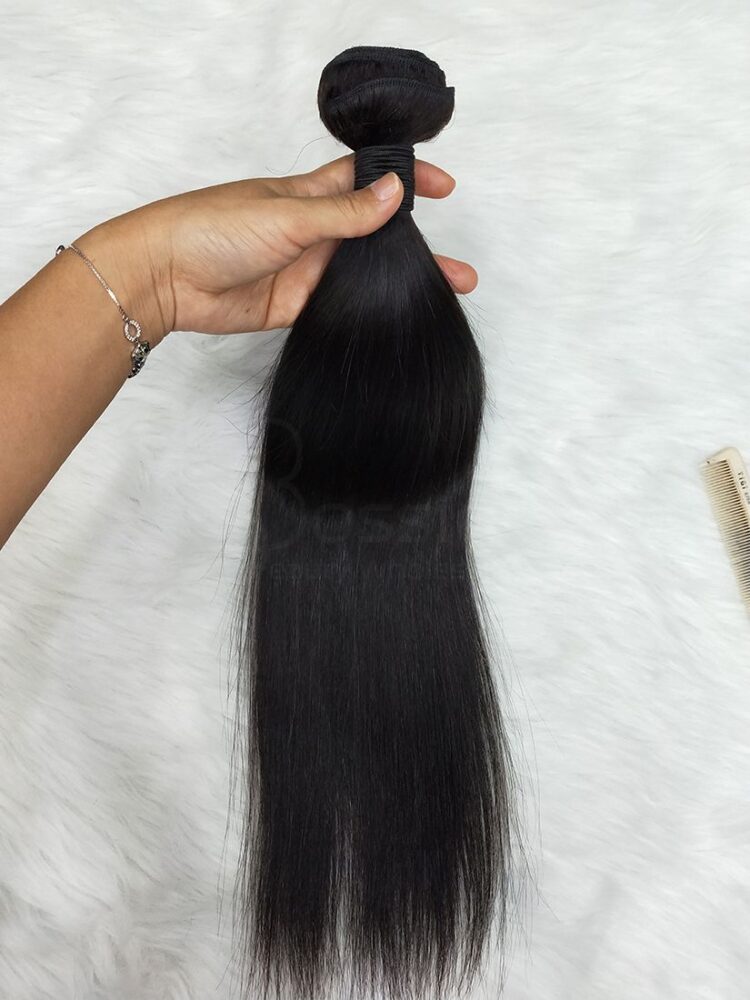 Black Line Straight Hair ExtensionsFrom $22.50
 -
Product on sale
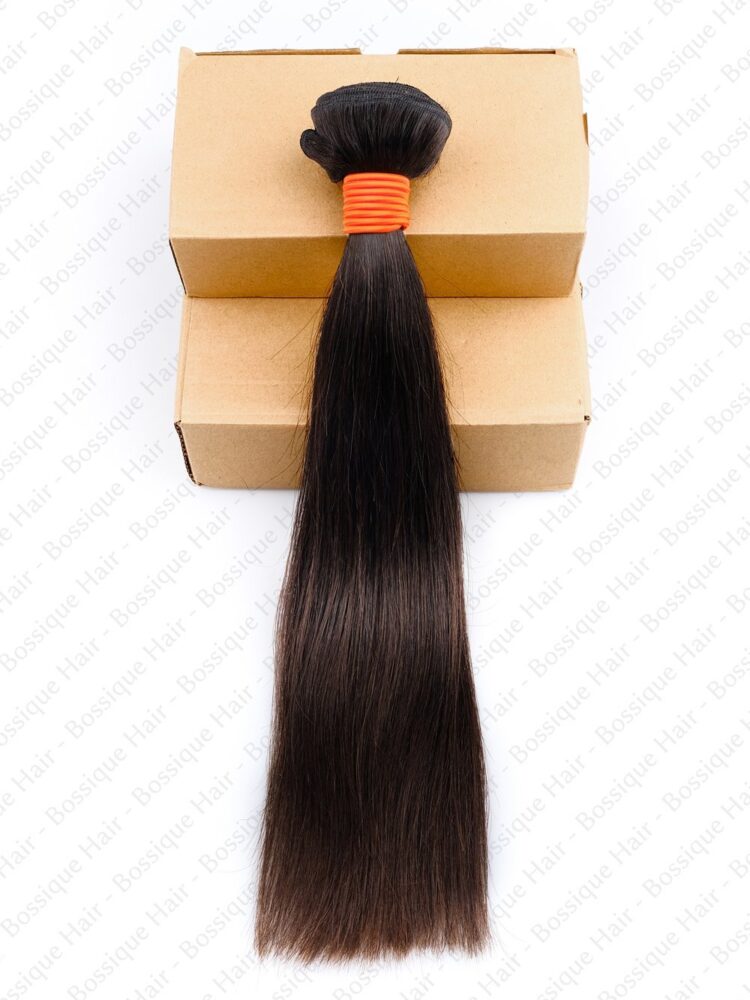 Orange Line Straight BundlesFrom $33.80
25. Do You Accept PayPal?
PayPal is one of the easiest ways to transfer money, with protections for both buyer and seller. However, it’s also an increasingly frustrating platform for hair vendors. For example, we’re no longer get the PayPal fee refunded when we refund a client. This means that it is an instant loss of 5%.
In the beginning, it’s still recommended to pay with PayPal. Any other option and you lose your money if there’s any issue. So be sure to use other payment methods only once you fully trust the hair vendor.
While hair vendors aren’t allowed to charge the 5% PayPal fee to the client (and technically, we can’t add it to the product prices since PayPal insists the fee comes out of the seller’s pocket), we think this rule only benefits PayPal, and not us or any of our clients. Our alternatives are:
- Increase our costs across all payment methods by 5%.
- Stop accepting PayPal as a payment option.
- Refuse service to anyone who makes a big deal out of it.
We’re happiest with the third option.
26. Do You Change Your Pricelist Often?
You don’t want a hair vendor who’s constantly changing their price list. But keep in mind, vendors work with small profit margins. For example, if the margin is 15% and the USD:CNY exchange rate drops—say, from 6.6 to 6.3—that’s a 5% loss right there. Suddenly, their profit margin shrinks to 10%, making it hard to survive, so prices have to be adjusted. During the pandemic, the rate even dropped from 7.1 to 6.3.
On top of that, shipping costs are rising. FedEx, for example, has increased their prices three times recently, and more increases are on the way. The USA has seen the largest shipping price hikes.
Sometimes things happen that are completely out of a vendor’s control, and they need to adapt to stay in business. It’s no different than when you have to adjust your own prices. Your prices are your prices, and you wouldn’t want clients complaining about them—hair vendors feel the same way.
27. Is the Shipment Insured, and Who Pays the Insurance Fee?
The insurance Fee will only be covered if a package gets lost during transit. Without this, FedEx/DHL will only reimburse up to $100 for a lost parcel. The fee we roughly pay is about 0.3% for every package.
Packages that show up as delivered in the tracking information will not be covered by insurance. So be sure to also pay for “Signature upon delivery,” or make sure that there’s always someone home at the delivery address. Your hair vendor can’t be held responsible if your package gets stolen by one of your neighbors.
28. Do You Offer Discounts to Regular Customers?
Discounts are much easier to give when the profit margin is higher. For example, if you’re dealing with a 15% profit margin, giving a 10% discount would basically mean not having enough income to pay for rent.
So, if a hair vendor decides to give a discount, it’s mainly based on their profit margin and possibly on how much and what you’re able to order. For example, long-length hair material is in short supply, so if the majority of your order is 30″, chances are that you’re less likely to get a discount.
29. Is the Wholesale Price Negotiable?
Most people who ask this question are retail buyers. To explain it simply: if we fulfill 100 individual orders of 1 bundle each, it would take a single worker several days to complete. But if it’s 1 order for 100 bundles, it would only take a few hours. This is where the price difference comes from.
So, before asking about the price, consider this: are you inquiring about hair extension wholesale prices for retail orders or actual wholesale orders
30. Do You Manufacture Tags, Bundle Bags, or Shipping Boxes?
Hair vendors usually don’t make these items themselves—they outsource production to specialized companies. The catch? These products often come with a high minimum order quantity (MOQ), and shipping costs from Asia can add up, especially if your packaging is bulky or heavy. So, it’s worth comparing the prices of Asian suppliers with those of local packaging vendors to see if you can save on shipping costs.
One piece of advice: If you’re a stylist, you probably have a backup vendor. And if you’re selling hair extensions, chances are you’re working with multiple vendors—even if some are only backups. So, for some business models, it can be smart to find your own packaging vendors so you don’t have to order customized packaging through several hair vendors.
31. Can I Get Images of the Products for Promotional Purposes?
Never advertise with pictures of your vendor’s products. It makes it relatively easy for your clients to find out who your vendor is and buy from them directly. If you invest in a website, try to learn about photography, get a two or three-point lighting setup, a non-reflective surface for under the product, a decent (phone) camera, and make your own product pictures.
32. What Is the Business Advice You Have for Me Selling Hair?
Stop focusing on finding a vendor. Marketing is where the real money gets made.
Remember…
It would be best if you were asking questions that help you find out whether that hair vendor is the right one for you.
If you require cheap wigs, you can ask for factory-made wigs. If you need more quality pre-made wigs, you can ask if your vendor can ask a wig maker to make them with their bundles and lace products.
If you require quality hair that can bleach to light colors, you ask if the hair can bleach to light colors.
If you require quality, should you be asking for the four most essential steps to producing quality hair extensions?
If you require something affordable, do you have to ask if the hair can be bleached to #613?
Our articles are created to help you make smarter purchases and save money. If you’ve found them helpful, we’d greatly appreciate it if you shared them with your friends, family, or in your favorite online groups. Your support helps us reach more people and keep producing high-quality content.
Have questions? Contact us directly on WhatsApp or iMessage at +86 135 3369 3283, or email me at cristina@bossique.com. Many of our articles originate from discussions on our Facebook page. We’d love to hear from you!