
I’ve spent weeks reading through the posts in the “Olaplex Hair Loss/Hair Damage?” group. With over 19,000 members, the sheer volume of pain is overwhelming. It’s heartbreaking to see so many people losing their hair, confidence, and peace of mind.
I am writing this because I want to find the cause. I believe that if we understand why this is happening, we can stop the damage before it turns into something permanent, like scarring alopecia.
“Please remember: I am not a medical professional. I am simply a researcher trying to connect the dots and make sense of the data. I don’t claim to be infallible, so I welcome your corrections if I’ve missed something. And as always, please consult a doctor for your specific medical needs.
Note: It’s a lot of information. Either take your time to read it all, or skip to the sections that are most relevant to you.
Table of Contents
Olaplex Hair Breakage: Why It Snaps & The “Straw” Texture
First, we need to understand that there are 2 very different problems. Most people confuse them, but they require completely different treatments. You might be dealing with just one, or both simultaneously.
Olaplex works by creating artificial bonds to reinforce the hair’s internal structure. While this makes hair stronger, it also makes it more rigid.
Over-Bonding: Can You Use Too Much Olaplex?
Healthy hair is strong because it is elastic—like a fresh rubber band. It survives brushing specifically because it can stretch and bounce back.
Bond builders act like Super Glue. If a rubber band is fraying, a tiny drop of glue repairs the weak spot. But if you coat the entire rubber band in glue, you don’t make it “stronger.” You make it brittle.
This is exactly what is happening with Olaplex. We can call it “overuse,” but this isn’t about pointing fingers or saying you are at fault. It is about simple mechanics. If your hair is already healthy, it needs zero glue. If it is highly porous, it soaks up too much of the ingredient and becomes over-structured. If you leave it on for too short a time, it does too little; if you leave it on too long, it does too much.
So yes, in the exact right window, it can strengthen hair. The problem is that finding that window is a gamble. If you miss, you end up trading your hair’s natural elasticity for a texture that resembles dry spaghetti.
The “Plastic” Film: Recognizing Product Buildup
Many Olaplex victims often describe a “waterproof, waxy, or plastic-like” coating. Obviously it’s not plastic, and it’s actually a buildup of the delivery system and conditioning agents.
It’s difficult to point fingers, as formulas like No. 3 rely heavily on cationic quats (e.g., behentrimonium chloride), which stick electrostatically to the hair. The maintenance lines (No. 4, 5 & 6) use silicones (like amodimethicone or dimethicone copolymers) and polymers to provide slip.
If not washed out perfectly (which is hard with gentle, sulfate-free shampoos), these ingredients layer up. The quats create a waxy adhesion, while the silicones seal it in, forming a “waterproof” shield that blocks moisture.
The Fix: How to Restore Moisture to Brittle Hair
The hair usually softens up a lot with moisture once you get rid of the blocking film.
- Stop the bond builder: No more Olaplex or similar products.
- Clarify thoroughly: Use a strong clarifying shampoo (with sulfates or C14-16 olefin sulfonate). It is the only thing strong enough to break the electrostatic bond of the quats and dissolve the silicone resins.
- Chelate if needed: If you have hard water, minerals may have bonded with the product residue. Use a chelating treatment, such as Malibu C, to dissolve this “mineral cement.”
- Hydrate Deeply: After the film has disappeared, use moisturizing products that are free of protein (look for ingredients like glycerin, aloe, or hyaluronic acid) to restore flexibility.
Most people who go through this see good improvement and get their hair back to a manageable state. But you should keep expectations realistic as your hair is basically full of superglue. Unfortunately, it’s hard to fully reverse the structural change. Those extra bonds are permanent in that section of hair, so the rigidity often needs to be grown out over time.
But while hair breakage comes with confidence-breaking frustration, it is ultimately cosmetic and not permanent. The next problem is the true emergency.
Olaplex Scalp Irritation & Burning: How It Gets Under the Skin
So what is the true emergency? This is when the scalp burns, itches, or becomes painful. This inflammation attacks the follicles, “the hair factories” themselves, causing hair to fall out, preventing new growth, and potentially triggering permanent scarring.
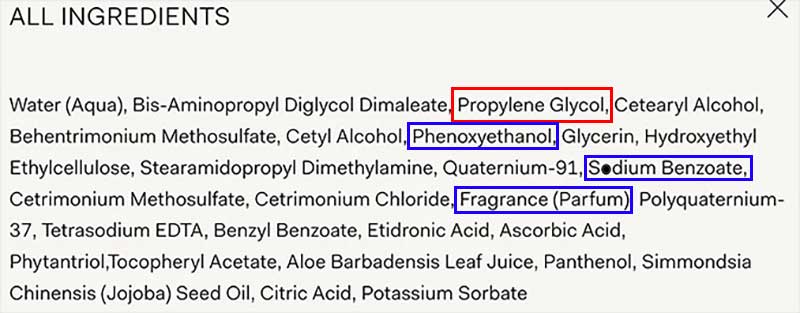
People are often looking for a specific “toxic” chemical to blame. And if you look hard enough, you can probably find something. But aside from the bond-building bis-aminopropyl diglycol dimaleate, the formula uses incredibly common ingredients found in everything from cheap drugstore shampoos to luxury skincare… and even baby wipes. Nothing in the list screams outright olapoison.
So, if these ingredients are safe enough to wipe a baby with, why is your scalp on fire? The clue is in the burning, itching and pain it causes. They’re classic signs of an immune response. Your body is attacking an intruder. This is what I think is happening:
The Trojan Horse: How Propylene Glycol Carries Irritants Deep
The third ingredient in Olaplex No. 3 is propylene glycol*. Being listed 3rd means there is a lot of it. The easiest way to explain it is that propylene glycol acts like a Trojan Horse. It is a solvent that carries the “soldiers” (other ingredients) in its belly and opens the gate so they can get inside.
- On hair: This is great. It dissolves ingredients to help them penetrate the hair shaft.
- On skin: It dissolves (or thins out) the natural oils that seal your scalp.
*Note: Propylene glycol is an amphiphilic solvent, meaning it bonds with both water and oil. This chemical structure allows it to physically thin out the lipid (oil) layer of your strands and skin, creating microscopic gaps that allow other ingredients to slip through. Thus leaving it on too long, would completely dissolve your protective barrier and leave you vulnerable.
The Invaders: Preservatives & Fragrances That Trigger Reactions
Now that the propylene glycol has opened the gates, the “soldiers” hiding inside can slip through. Who are they? Mainly sodium benzoate, phenoxyethanol, and fragrance.
Why these specifically? It comes down to size. Most ingredients in hair products (oils, thickeners) are large, clunky molecules. Even if the door is open, they are too big to squeeze through deeply. But preservatives and fragrance compounds are tiny, reactive molecules. They are small enough to slip through the gaps created by the propylene glycol and travel deep into your scalp.
Why Olaplex No. 3 Is the Main Culprit (Concentration & Time)
So, to answer the question: Why does this happen with Olaplex No. 3 but not your $5 shampoo that has the same ingredients? It comes down to time and concentration.
- Time: You rinse shampoo off in roughly 60 seconds. The solvent never has enough time to dissolve your scalp’s oil barrier. But Olaplex No. 3 sits on your scalp for up to 10 minutes (or sometimes more). It can be enough time to start breaking down your defenses.
- Concentration: In most products, propylene glycol is just a minor additive. In No. 3, it is a primary carrier.
And according to this mechanism, Olaplex No. 3 is a leave-on with high PG concentration. No. 0 is a leave-on with no PG (but often used before No. 3, amplifying risk in combos). No. 4, 5, and 6 are rinse-off products with relatively low PG levels. That’s also why complaints are most common with No. 3, followed by the daily-use line (from repeated exposure).
It isn’t that the ingredients themselves are toxic. It is that the delivery system combines a high concentration with a much longer exposure time than your skin is used to. This allows common irritants to bypass your defenses, which can trigger severe inflammation in sensitive scalps.
Olaplex Allergic Reaction: Itching, Bumps & Inflammation Explained
If these irritants manage to slip past your defenses and reach the deeper layers of your scalp, your body perceives them as an attack.
This triggers your immune system into action. You can imagine it like this: your skin has “guard cells” (mast cells) patrolling the area. When they spot an intruder, they release two types of alarm signals to call for backup.
The Biology of the Reaction: Why It Itches & Burns
These sensations aren’t random; they are the direct result of those alarm signals doing their job.
Histamine (The Itch)
The first alarm signal is histamine. Its job is to open the gates. It tells your blood vessels to widen and become “leaky,” allowing fluid and white blood cells to rush out of your veins and into the skin to fight the intruder. This rush of fluid causes the swelling you feel, while the chemical signal stimulates your nerve endings, triggering that intense, unscratchable itch.
Cytokines (The Burning Sensation)
If the intruder doesn’t leave, the body calls in the heavy artillery: Cytokines. These are chemical signals that launch a full-scale attack. They order white blood cells to rush to the area to destroy the irritant, bringing a surge of blood flow with them.
This rush of blood raises the local temperature, creating that hot, burning sensation you feel.
Unfortunately, the hair follicle can get caught in the crossfire. The inflammation meant to kill the irritant stresses the follicle, forcing it to shut down production and release the hair strand to conserve energy.
This is why you shed. And while discovering that you are increasingly shedding will cause you some panic, this information also offers something reassuring: Your hair follicle is resting; it didn’t die yet. Even if it got damaged, there’s a strong chance that it can recover over time.
Why “Waiting It Out” Doesn’t Work (Chronic Inflammation)
When you go to a dermatologist, they will spot the inflammation immediately and reach for their standard toolkit: antihistamines for the itch, corticosteroids for the swelling, and perhaps pregabalin for the nerve pain in more severe cases.
These treatments do a good job of calming the alarm bells, but here is the catch: they are fighting the signals, not the cause.
Most doctors aren’t experts on Olaplex formulas, so they often treat this like basic scalp irritation*. They don’t realize that a stubborn chemical residue is likely keeping the reaction alive. This makes steroids tricky. They work by suppressing your immune system to stop the attack. But if the irritant is still there, you are just pausing the problem, not solving it. You are telling your body to stop fighting while the invader is still inside.
Waiting it out isn’t the answer, either. Even though your skin renews itself every 28 days, it cannot flush out a deep chemical residue on its own. It is like expecting a splinter to vanish without actually pulling it out.
To stop the damage and let your scalp heal, we have to go after the irritant directly. That is what the next section covers: simple ways to clear the residue and finally get ahead of this.
*This is not to discredit medical professionals, but rather to highlight the limitations of a standard consultation. Doctors diagnose based on clinical observation—they see inflammation, they treat inflammation.
The Detox: How to Remove Olaplex Residue at Home
We need to stop the chemical reaction, remove the “splinter”, and then calm the inflammation.
If it wasn’t obvious already, you need to stop using all Olaplex products immediately. You don’t need it now, and you likely didn’t need it before. It is effectively super glue. And as with any glue, if you keep playing with it, it is only a matter of time before you end up sticking the wrong bits together.
Stop the Exposure & Stabilize
Schedule an appointment with a dermatologist ASAP. But do not wait for that date to act. You don’t need a doctor’s permission to start fighting back.
Internal Relief: Start Antihistamines
Over-the-counter antihistamines (like Zyrtec/cetirizine, Claritin/loratadine, or Allegra/fexofenadine) can quickly take the edge off your symptoms.
They work by blocking histamine, the main chemical your body releases that amplifies the itching, redness, and swelling. For many people, histamine can be a big reason you feel miserable: constant urge to scratch, poor sleep, and that overwhelming burning feeling.
Scratching breaks the skin barrier and can let bacteria in, making everything worse. Lack of sleep and chronic stress from the discomfort also create a feedback loop that further increases systemic inflammation.
A simple daily antihistamine helps break that cycle. It calms things down so you can rest, stop scratching, and think clearly while you tackle the next steps.
Side effects at normal doses are minimal (some drowsiness with Zyrtec), as uncontrolled scratching and stress far outweigh any tiny theoretical risk to recovery.
External Relief: Clearing the Chemical Residue
Your immune system is reacting to leftover product sitting in or on your scalp. The faster you (gently) remove it, the sooner the inflammation can calm down.
Note: What works for one person may not work for you. These “fixes” are generally safe, but everyone’s sensitivities and issues are unique. Always do a patch test before going all in.
Here are the three most common situations people face.
Scenario A: The “Waxy/Coated” Feeling
Symptoms: Your scalp feels heavy, suffocated, greasy, or like there’s a sticky film that normal shampoo won’t remove.
What’s (probably) happening: Product buildup (resins, oils, minerals) is coating the skin and trapping irritants.
The fix: Malibu C packets. Hard Water Wellness or Un-Do-Goo are both great for removing buildup.
How to use: Mix the packet with water into a paste. Apply to damp or dry scalp, put on a shower cap (optional), and wait 5–10 minutes. Rinse thoroughly, then shampoo as usual. Do this once a week. Always follow with a light conditioner on your hair lengths (not scalp).
What to expect & when to adjust: You might feel slight tingling or dryness immediately afterward. This is normal as your scalp is temporarily “naked” because the strong detergent stripped your protective oils along with the buildup. It should settle quickly (usually within a day) as your natural barrier returns.
Stop or change if: The tingling turns into burning, or your scalp gets much drier/itchier than before. In that case, skip a week or try every other week.
Scenario B: Greasy Roots + Painful Bumps
Symptoms: Your hair gets oily again just hours after washing, and you have tender, pimple-like bumps on the scalp.
What’s (probably) happening: The irritants are clogged inside the follicles, keeping inflammation going.
The fix: Switch to a salicylic acid shampoo 1–2 times per week. Unlike normal shampoo, which just cleans the surface, salicylic acid is oil-soluble. This allows it to dive deep inside the greasy pore to dissolve the clog from the inside out. Good options are Neutrogena T/Sal (classic, but sometimes hard to find), Dermarest Psoriasis, Baker’s P&S, and Denorex Maximum Itch Relief.
How to use: Wet hair, apply shampoo, let it sit 3–5 minutes (this is important!), then rinse thoroughly. Use your regular gentle shampoo on the other days. Do not try to go more than 2-3 days without washing during this “detox” phase.
What to expect: Your scalp might feel tight or “naked” after the first few uses. This is normal as the acid is stripping away your protective oils to dissolve the deep clogs. Unlike the one-time clarifying strip, this sensation may persist for the first week until your skin adjusts to the new routine.
Stop or change if: It starts burning strongly or feels raw. Reduce frequency to once a week, or pause and switch to Scenario C.
Scenario C: Bumps That Won’t Quit
Symptoms: You’ve tried salicylic acid for a week or two, but the red, itchy bumps are still there.
What’s (probably) happening: The irritation and clogged pores can feed an overgrowth of natural scalp yeast (Malassezia).
The fix: Use Nizoral (2% ketoconazole shampoo, sold over-the-counter in most places).
How to use: Apply to wet hair and leave on for 3–5 minutes before rinsing. Use it 2–3 times a week for 2 weeks.
What to expect & when to adjust: A mild stinging or warming sensation, especially if your skin is raw. The active medication is reacting with broken skin—much like applying antiseptic to a scratch. This is normal and usually lessens with each wash as the skin heals. You may notice your hair feels drier or “rougher” than usual. This is a common trade-off; medicinal shampoos are formulated to treat the scalp, often at the expense of hair softness.
Stop or change if: The stinging is painful or the bumps get worse/redder. You could use less, rinse off sooner, use it less often, or stop.
Olaplex Inflammation Treatment: Steroids, Injections & Advanced Options
Once you have an appointment, a specialist can examine your scalp and provide a confirmed diagnosis.
You might be thinking this step is just about getting steroids. While that is part of it, the doctor’s role is bigger than just writing a script. Up to this point, you have been managing this with basic over-the-counter tools and a ‘best guess.’ A professional can confirm exactly what is happening on your scalp so you stop fighting Olaplex hair loss in the dark.
To make the most of this visit, come prepared. Use the list below as a blueprint, not a script. Don’t copy it word-for-word and adapt the details to fit your unique situation.
- Bring the Data: Write down a clear timeline of your usage, when symptoms started, and every treatment you have tried so far.
- Bridge the Knowledge Gap: Ask if they are familiar with Olaplex-specific reactions. If not, briefly explain the common pattern you’ve found: deep ingredient penetration and unusually slow recovery times compared to standard inflammation. If you have to, ask an AI model to write a brief summary in a style that will be useful to your medical professional.
- Voice Your Fears: Be clear that you are worried about long-term damage from the chronic irritation or the side effects of prolonged steroid use.
- Get Answers: Don’t leave the room until every question on your list is answered.
Corticosteroids: The “Fire Extinguisher” for Inflammation
If your at-home efforts (antihistamines and clearing the irritants) haven’t broken the cycle, you will likely be prescribed Corticosteroids. These are designed to aggressively calm the inflammation.
But keep in mind that these are powerful tools. Because they work by effectively “pausing” your local immune system, they carry a higher risk profile than standard treatments and should be used exactly as directed.
Here’s what they usually offer, from most common to strongest:
Topical Steroids (Creams, Foams, Solutions)
This is usually the first thing prescribed because it is easy to use at home. Examples: clobetasol, betamethasone. It’s usually sufficient for milder allergic reaction cases but still comes with some risks.
- The Good: No needles, easy to apply, and covers the whole head if the irritation is widespread.
- The Risk: Daily use acts like a “blanket” on your scalp. Over time, it can thin the scalp skin (atrophy), making it shiny and fragile. Worse, by suppressing your local immunity daily, it can accidentally trigger secondary issues like seborrheic dermatitis (greasy flakes) or bacterial folliculitis.
- Greasy flakes and itching (seborrheic dermatitis): Pause the steroid. Switch to ketoconazole shampoo (Nizoral 1% or 2%) 2–3 times a week — it usually clears the yeast overgrowth fast.
- Tender red bumps or small whiteheads (bacterial folliculitis): Pause the steroid. Try a benzoyl peroxide wash (PanOxyl 4% or 10%) or chlorhexidine cleanser (Hibiclens). If it doesn’t improve in a few days, see your doctor; you might need a topical antibiotic.
- How long is “safe”?: Short bursts (a few weeks) are usually fine, but don’t push past 3–4 weeks of daily use. Atrophy can start showing around then, and while mild thinning often reverses slowly after stopping, it’s better to take an alternative approach* beyond 3–4 weeks.
* (Step down to lower-potency steroids or non-steroid options like antifungals (ketoconazole), calcineurin inhibitors (tacrolimus/pimecrolimus), or intralesional injections. For persistent scalp inflammation, escalate to oral meds or JAK inhibitors if scarring is suspected.
Intralesional Injections (Kenalog/Triamcinolone)
Examples: Kenalog-10 or Kenalog-40. The doctor injects tiny amounts of steroid directly into the burning spots.
- The Good: It works significantly faster than creams because it puts the medicine right at the root. It acts like a “sniper” rather than a blanket—treating the inflammation (mostly) without thinning the surrounding healthy skin.
- The Risk: It requires an office visit and, if overdone, can leave a (temporary) dent at the injection site.
- For acute, localized burning, this is often the superior choice to preserve skin health. If you have specific “hot spots,” ask your doctor if this is an option.
Systemic Steroids (Oral Pills)
Example: Prednisone.
- The Reality: These are the “nuclear option.” They are rarely used for hair loss unless the inflammation is severe and rapidly spreading across the body.
- The Risk: They suppress immunity everywhere, not just on your head. Side effects include weight gain, mood swings, and rebound inflammation when you stop.
- Doctors generally avoid this unless absolutely necessary.
Important Warning: Whatever option you choose, follow the doctor’s plan exactly. “More” is not better. Using steroids longer than prescribed is the fastest way to damage your skin barrier permanently.
JAK Inhibitors: Advanced Options for Resistant Cases
If steroids aren’t working, or if they are starting to thin your skin, ask your doctor about JAK Inhibitors.
The Reality: They can be expensive and harder to get approved than standard creams. But for stubborn scalp irritation cases where nothing else works, they are often the best solution to save your hair without damaging your scalp.
How they work: Unlike steroids, which suppress the whole area, these drugs act like a sniper. They block the specific signal telling your body to attack the hair follicles without thinning the skin.
Crucial Warnings & Reality Checks
Keep Your Scalp Breathable
A common mistake is panic-applying heavy oils (like castor or rosemary) to soothe the burn. Do not do this. Heavy oils create a seal, trapping the heat and chemicals back inside the pore.
The Rule: Generally, let the skin breathe. If you must moisturize, use a lightweight, breathable oil like MCT oil or squalane. If the burning is severe, stick to cool water rinses until it calms.
The 28-Day Rule
Patience is the hardest part of this cure. Your skin naturally takes about 28 days to renew itself (turnover cycle). Even if you remove the irritant today, the skin that was damaged needs a full month to grow out and replace itself. Do not expect the redness to vanish overnight; you are waiting for new skin to grow.
The Apple Cider Vinegar (ACV) Warning
You will see people recommending ACV to “reset pH.” Proceed with extreme caution. If your scalp is currently “raw,” burning, or has open sores, ACV will sting intensely and cause more irritation. Do not use this as a primary cleanser on broken skin.
The Hard Water Factor
If you have hard water, the minerals can react with Olaplex residues to create a cement-like buildup that normal shampoo cannot move. In this specific case, a Malibu C Hard Water Packet is often the only thing that works to break that bond.
Olaplex Hair Regrowth Timeline: From Shedding to Recovery
Your follicles are basically little factories that produce your hair strands. Prolonged inflammation can gradually stress or damage them. Even after you calm the inflammation, the factory needs time to repair its machinery before it can return to full production.
Dystrophic Growth: Why New Hair Might Look Weird
When inflammation surrounds a follicle, the production line suffers. It cannot create a normal hair shaft because the cells are fighting off damage instead of doing their job.
- Dystrophic Growth: A damaged follicle produces a hair shaft that is structurally weak, irregular, or flattened. This hair doesn’t necessarily fall out immediately; it grows out fragile and snaps easily because it lacks internal integrity.
- Texture Changes: You might notice new hairs growing in “kinky,” “wirey,” or with a strange crinkled texture. This happens because the swelling around the follicle physically distorts the shape of the tube the hair grows through, forcing the hair to harden in an irregular shape.
- Pigment Dysfunction: The disruption can affect the entire pigment process. You might see strands that are lighter than usual, translucent, or even “banded” (alternating color and no color) as the pigment cells misfire.
The Follicle Repair Timeline (The “Project” Analogy)
The easiest way to understand the delay is to imagine your follicle is a factory working on a specific project: “the hair strand.” Unfortunately, the factory cannot fix a project while it is still running.
1. The Corrupted Project (Immediate Phase)
When the inflammation hits, the factory gets damaged. However, it doesn’t always shut down immediately. It keeps the machine running, but because the machinery is broken, it starts producing a defective product.
This is why you see “wirey” or straw-like strands growing out of your head now. The follicle cannot “heal” this strand. It will continue to produce this “ugly duckling” hair until the strand reaches the end of its life cycle.
2. The Mandatory Shutdown (The 3-Month Lag)
Eventually, the follicle realizes the damage is too severe, or the hair reaches its natural end. The follicle has to scrap the project entirely to repair the machinery. It drops the damaged hair, and the factory closes its doors for renovation.
This telogen (resting) phase typically lasts 3 to 4 months. That’s why there’s a lag. Even if you fix the inflammation today, you won’t see the new, healthy hair for 3+ months.
3. The Generational Recovery (12+ Months)
When the factory reopens (returns to the growth phase), it doesn’t always open at full capacity. The inflammation may have caused the follicle to physically shrink (miniaturization).
- Cycle 1 (Partial Recovery): The first new hair will likely be healthier than the damaged one, but it may be thinner than you are used to. Do not panic. This is a sign of recovery, not failure.
- Cycle 2 (Bulking Up): As blood flow improves, the follicle expands with each new cycle. It often takes a second full growth cycle (which can take 12+ months) to return to producing your full, thick texture.
The Bottom Line: Realistically, you are looking at one full cycle (3-4 months) just to reset the machinery, and multiple cycles (12+ months) to get the factory running at full power again.
And yes, that’s 12+ months, meaning it can take years.
Maximizing Recovery (The Reset)
Once you have cleared the irritants (Step 2), your goal is to support the repair of the follicle’s machinery.
Minoxidil (The “Restart” Button)
Repairing a damaged follicle requires massive amounts of energy and oxygen, which are delivered by your blood. Minoxidil increases this blood flow and signals the follicle to abort the “ugly duckling” hair and start a fresh, stronger cycle immediately.
- Liquid vs. Foam: The standard liquid formulation relies heavily on propylene glycol and alcohol. On a scalp that is already compromised or recovering from inflammation, these strong solvents can be very harsh, causing severe dryness, stinging, and itching. Strongly consider the foam version (e.g., Rogaine Foam), which is typically propylene glycol-free and much gentler on sensitive skin.
- Oral Minoxidil: This works systemically, so you get growth everywhere and not just on your scalp. And side effects can be significant (heart palpitations and low blood pressure). Some are more sensitive to side effects than others.
- Crucial Warning: Never apply Minoxidil to a scalp that is still burning or inflamed. You should never throw fuel on the fire. Clear the inflammation first.
- The Shedding Phase: Minoxidil usually causes a “dread shed” 2-6 weeks in. This is normal; the follicles are pushing out old hair to make room for the new.
Alternative Ways to Increase Blood Flow
Minoxidil isn’t the only way to increase blood flow. But it’s the only one that forces a follicle restart.
Scalp Massage: A free, gentle alternative. Once the inflammation has ceased, massaging your scalp with your fingertips (not nails) for 5 minutes a day improves circulation without chemicals. Obviously less effective than a medical solution, but also with less side-effects.
Red Light Therapy (LLLT): Laser caps are advertised to increase blood flow. While the science is valid, they are significantly more expensive than minoxidil with often slower results. Stick to the basics first.
The “Do No Harm” Routine
Your follicles are currently “sick.” Let them rest and don’t ask too much of them.
Minimal Hair Care (The “Zero” Routine): Resist the urge to over-treat. Your scalp is currently injured skin; you must treat it like a wound, not a styling project.
- The “Bland” Rule: Switch to a shampoo that is sulfate free and fragrance free. If it smells like a tropical island, it likely contains allergens that will sting your sensitized scalp.
- Scalp vs. Strands: Conditioner is for the hair, not the skin. Apply moisture strictly from the ears down to keep the strands flexible without clogging your recovering follicles.
- The Ban List: Stop all “repair” masks, bonding treatments, dry shampoos, and complex styling products (like that “17-in-1” spray). Every extra ingredient is a potential irritant right now.
- Temperature Control: Wash with lukewarm water only. Hot water strips the protective oils and can retrigger itching and inflammation.
- Zero Tension (No Extensions): As much as you want to cover the damage, do not attach extensions (tape-ins, sew-ins, or bonds) to weak, recovering hair. A recovering follicle cannot support the extra weight. Adding tension now risks traction alopecia, where the root is ripped out permanently. Wait until the density and strength return.
- Chemical Fasting: No bleach, relaxers, or permanent dyes.
- Gentle Handling: The new growth will be fragile. Avoid heat styling and tight ponytails that pull on the roots.
- Patience & Photos: Take monthly scalp photos in consistent lighting. Progress is slow and hard to see day-to-day, but side-by-side comparisons will help keep you sane during the long wait.
Scarring Alopecia Risk (LPP/FFA): When It’s Not Just Temporary
For the vast majority of people reporting these issues, the nightmare is temporary: once the inflammation calms, the follicles repair, and hair gradually returns.
But for a small minority, the symptoms persist or evolve. The burning sensation doesn’t stop, and the hair loss continues despite stopping the product. In these rare cases, a dermatologist may diagnose scarring alopecia (cicatricial alopecia).
The “Dormant Gene”: Did Olaplex Trigger Autoimmune Hair Loss?
If—after a proper evaluation—you are diagnosed with a scarring condition (such as lichen planopilaris/LPP or frontal fibrosing alopecia/FFA), it is easy to blame yourself for using the product. Please don’t.
You likely carried a dormant gene for this autoimmune condition your whole life. The chemical trauma from the product was simply the “trigger” (known as the Koebner Phenomenon) that woke it up. Chances are, severe stress, illness, or another environmental trigger would have activated this condition eventually. You didn’t “cause” this disease; the Olaplex product was just the unfortunate key that turned it on.
The Outlook: Management vs. Cure
This is a hard pivot. If you have scarring, the goal is no longer “regrowth”—it is preservation.
The Hope: Many people achieve long-term remission with early intervention. Some keep most of their hair indefinitely with consistent management.
The Uphill Battle: Scarring alopecia is a chronic condition, much like diabetes. You don’t “fix” it once; you manage it for life. This means a long-term relationship with a dermatologist, anti-inflammatory medications, and regular check-ups.
The Goal: The medical goal is to put the disease into remission—to put the fire out so you keep the hair you still have.
Finding Freedom: Living with Permanent Loss
A diagnosis of scarring alopecia feels like a life sentence. And while medical intervention can stabilize the loss for years, there often comes a point where the daily battle to save every strand feels more exhausting than the hair loss itself.
Stepping away from the medical fight isn’t defeat—it is choosing peace and quality of life. Even if your active follicles are lost, your options aren’t. Modern solutions allow you to look and feel like yourself again:
- Mesh Integration Systems: These allow you to keep your existing hair while adding volume over thin spots. Crucially, they are designed to let your scalp breathe, unlike traditional weaves.
- Toppers & Custom Wigs: High-end toppers can blend seamlessly with your front hairline, giving you better density and texture than you had even before the damage.
- Scalp Micropigmentation (SMP): For milder thinning, this cosmetic tattoo technique reduces the contrast between scalp and hair, making density look fuller.
You are not “giving up” on your image; you are just changing the tools you use to maintain it.
Coping with Olaplex Hair Loss: Mental Health & Moving Forward
Hair trauma is never just physical—it is deeply psychological. For many, losing hair (or watching it change texture) feels like losing a core part of your identity. But in the panic of the moment, it is easy to lose perspective.
The Mirror vs. The Heart: Breaking the Obsession
When you look in the mirror right now, you might only see the damage. You might feel “less than” or fear that you have lost your beauty. But beauty is defined by connection, not follicles.
- The Reality Check: Think of the people you love most in this world—your partner, your parents, your children. Do you love them because of their hair texture? If they lost their hair tomorrow, would they be any less valuable to you? Of course not.
- Their View of You: The people who truly matter see you—your character, your warmth, and your history together. Your child doesn’t love you any less because of “thinning hair”; they just see the parent who comforts them. Friends see the person who laughs with them and shows up. And if you are navigating this alone, remember: your worth was never tied to your hair in the first place.
- The Stranger Trap: Do not sacrifice your mental peace worrying about how strangers perceive you. Their opinion is fleeting; the love of your support system is constant. Bathe in that safety.
I don’t write this to minimize your pain—hair loss is traumatic. But if I can offer one hard truth from my own life right now: Hair grows back. People don’t.
When we are faced with true loss—the kind that leaves a permanent empty chair at the table—we realize that “bad hair” is a luxury problem. It is a problem we can fix, hide, or outgrow. You are still here. You are still loved. And you will manage this.
Prioritizing Healing: Why Resting Your Scalp Matters
This is the hardest pill to swallow: to fix this, you have to stop using damaging methods to hide it. Panic often drives us to cover the damage with more products, heavy styling, or extensions to “look normal.” But this only prolongs the inflammation.
The Hard Truth: You need to halt the damage to reverse it. That means strictly avoiding extensions (which risk traction alopecia) and heavy concealers. It means accepting that your scalp needs space to breathe.
The “Safe” Way to Cover Up: If feeling exposed is causing you too much stress, you can cover it—but you have to do it safely. “Out of sight, out of mind” can be a valid coping strategy for some.
For example, there are some breathable, 100% cotton hats or headwear specifically designed for alopecia. These protect your scalp from summer sun or winter cold without trapping heat and sweat like synthetic fabrics do. But keep them loose (no friction), don’t wear them all day and wash them frequently. Putting a dirty hat on a healing scalp is asking for an infection.
The Light at the End of the Tunnel
Finally, remember that this is a chapter, not the whole book.
Right now, you are in the thick of the olapoison battle. The shedding, the texture changes, and the waiting are exhausting. But whether your hair recovers naturally (as it does for the vast majority) or you eventually pivot to the enhancement solutions mentioned earlier, you will get back to feeling like yourself.
Focus on healing the skin first. Once the foundation is healthy, we can build the house. The aesthetics will follow.
You are stronger than this moment. Healing—inside and out—is possible. You’ve got this.
A Note from the Author: Investigating the Mystery
I wrote this guide because the mystery of “Olaplex damage” has been haunting the community for years. Everyone seems to be guessing, official answers are vague, and concrete solutions are rare. The biological mechanisms kept cycling through my mind, and I finally needed a place to put it all down to see if I could connect the dots.
It is my best attempt to make sense of the data we have right now. But biology is messy. Trying to account for every variable—from steroid risk profiles to individual chemical sensitivities—often feels like playing 4D chess. I try to look seven moves ahead, but I can’t. I have spent entire days agonizing over single paragraphs, paralyzed by the fear of missing a specific detail. But I realized that if I waited until I had a perfect answer for everyone, this guide would sit in my drafts forever.
I have to make peace with that. I’m a Chinese hair extensions vendor and I typically focus on hair extensions. I am not a doctor nor a chemist, and I have to accept that I might miss things.
This is where you come in. To make this resource truly valuable, I need your help. If you find anything unclear, if you think I have misinterpreted the science, or if you have constructive feedback to improve this for future readers—please leave it in the comments.
I want to learn from you so we can finally solve this mystery together.