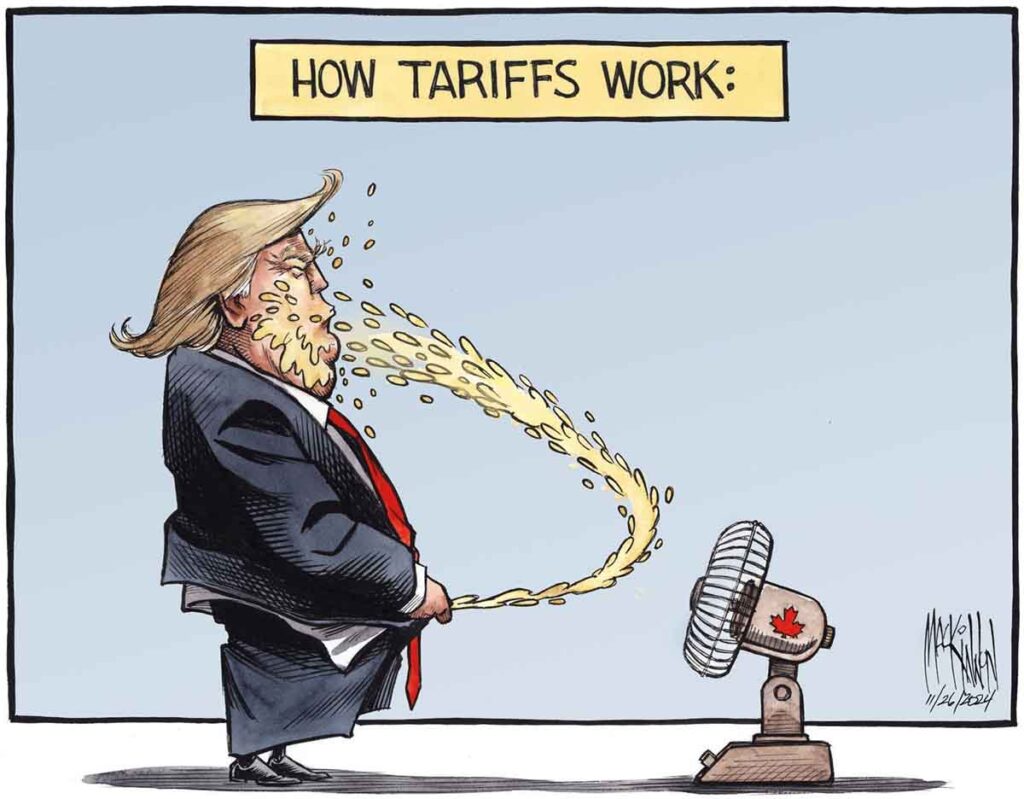
If you bought hair extensions in 2025, you remember the constant state of panic regarding U.S. tariffs on Chinese hair extensions. The U.S. government killed the $800 duty-free exemption, the industry spent months bracing for threats of a 145% import tax, and plenty of U.S. retail brands permanently raised their prices by 30% to compensate.
Now, the U.S. has announced they are setting global tariffs to 15%, but leaving them at a heavy 35-50% for China. Even shipping carriers have increased their customs handling fees to deal with the changes.
It sounds like importing hair extensions from China has gotten incredibly expensive… but the reality is very different. Your actual tariff bill on Chinese hair extensions can be just a few dollars.
How a $5 Tariff Bill is Possible
U.S. Customs does not calculate tariffs based on what you charge your clients in the salon; they base it on the declared commercial value of the package.
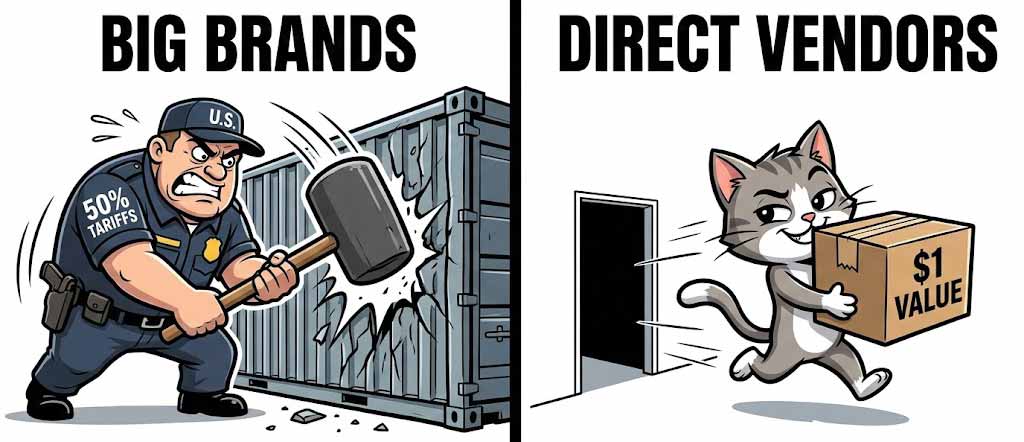
If you have ordered from us before, you already know the secret: your packages usually arrive labeled as “synthetic hair” with a very low declared value. By keeping the declared value extremely low, the resulting 35-50% tax becomes mathematically insignificant. Furthermore, shipping carriers typically don’t even bother applying their baseline handling fees to packages valued very low.
Over the last month or so, our average tariff bill for retail-sized U.S. orders has been incredibly low. Yes, it requires a bit of luck and playing in a gray area, but we have recently dialed in the exact sweet spot to get packages through. We even refunded our clients any excess tariffs they paid while we were testing out the new declaration limits.
The Wholesale Exception
Obviously, you cannot declare a massive, 30-pound wholesale box as a $1 synthetic wig. For larger wholesale orders, the package will likely catch a small bill for hair extension tariffs. But because we still declare the value as low as reasonably possible, that final bill spread across 30 or 50 bundles still only translates to a dollar or two per item.
In the exact same way, massive U.S. retail companies that import multi-million-dollar shipping containers full of hair cannot get away with lowering their declared value. When a corporation wires huge amounts of money to China, the IRS and U.S. Customs audit them strictly. Their financial records have to perfectly match their customs declarations, meaning they are legally forced to declare the absolute maximum factory value.
When the 35-50% tariff hits a corporate shipping container, they are instantly paying tens of thousands of dollars in pure tax. That is exactly why your favorite U.S. brands permanently raised their retail prices by 30%—they couldn’t dodge the fees, they couldn’t dodge the Chinese hair tariffs, so they had no choice but to pass their massive corporate tax penalty directly down to the salon owner. They are stuck paying the maximum rate, but if you buy direct, you don’t have to be.
Don’t Overpay for Import Costs
While the customs rules are currently operating in a massive gray area, you should not be paying massive surcharges for U.S. tariffs on Chinese hair extensions to your supplier.
With Congress and the administration recently shifting global tariffs to 15% while keeping the heavy 35-50% penalty on China, the math regarding U.S. tariffs on Chinese hair extensions is going to stay complicated. Do your research, and don’t let a vendor use the confusing news cycle to overcharge you.
Ask your vendor what their current declaration situation is, especially if they are Chinese. China’s logistics network is typically more advanced than other hair origins, and is much better at minimizing both shipping and declaration costs.
Is Dropshipping Hair Still Viable in 2026?
If the minimum tariff fee on any package is $20, and shipping is $30+, then dropshipping is essentially dead. Your profit margin gets completely eaten by shipping and tariffs, and you’ll start losing out to those who actually stock hair.
Now that customs fees on small packages are basically close to zero again, you might think it becomes a better option in 2026. However, dropshipping hair in 2026 is still a terrible business model for a completely different set of reasons. (You can read our full breakdown on why it’s so terrible right here).
The “Orange Man” Factor: Stay Agile
If there is one thing we know about the current administration, it’s that the “orange man” does not play by the traditional rulebook.
Supreme Court rulings change the game on a Friday, and U.S. Trade Representatives rewrite it on a Tuesday. Who knows what the exact percentage will be next month?
Because the situation is so volatile, the absolute worst thing you can do right now is let a vendor lock you into permanently inflated “panic pricing.” You need to stay up-to-date, stay flexible, and partner with a supplier who actually tells you how the math works—rather than using the news as an excuse to reach deeper into your pockets.