
Luxury hair extensions are usually seen as high-quality and worth the premium prices. However, recent changes in the industry, especially the Beauty Industry Group acquiring several top brands to control the market, have caused a noticeable decrease in quality, despite the high prices remaining the same.
This article looks into the luxury hair extension industry. It focuses on current sourcing practices, marketing tactics, and the observed decline in quality. We will discuss the future of the hair extension market and explore how luxury extensions can become accessible to those on a budget.
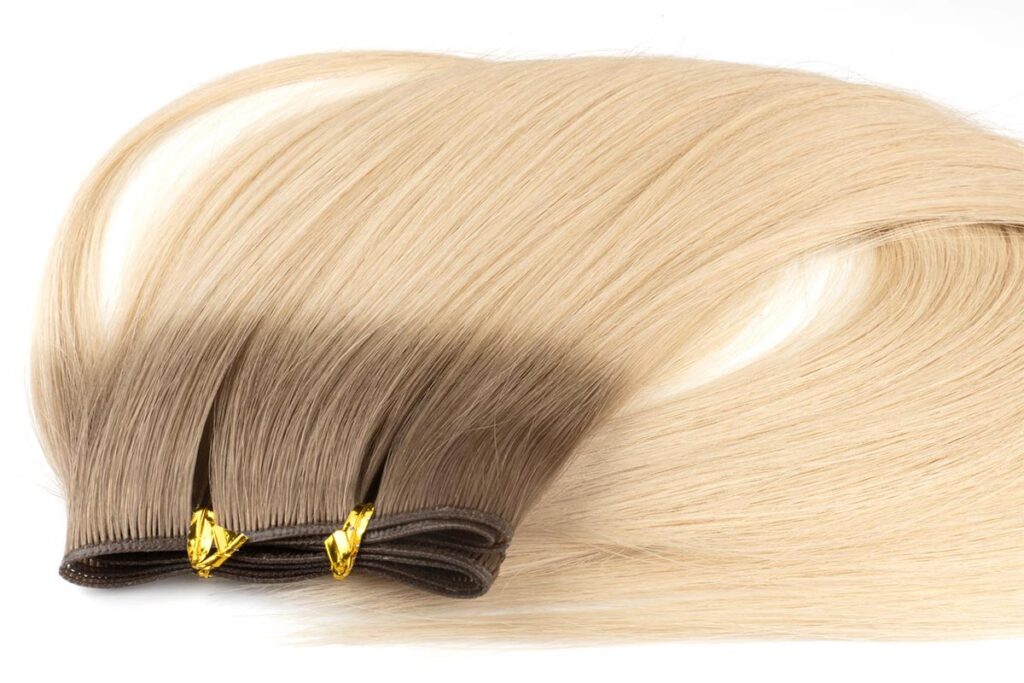
Table of Contents
The Truth About Indian Hair: Marketing vs. Quality
Challenges of Healthy Blonde Shades with Indian Hair
Different hair types respond differently to bleaching. Indian hair, which is finer, is more prone to damage compared to the coarser Chinese hair. Chinese hair holds a definite advantage due to its resilience to harsh processing. Chinese manufacturers cannot bleach Indian raw hair to a healthy #60 shade, even when using the same bleaching techniques. However, they can achieve this with healthy Chinese hair material.
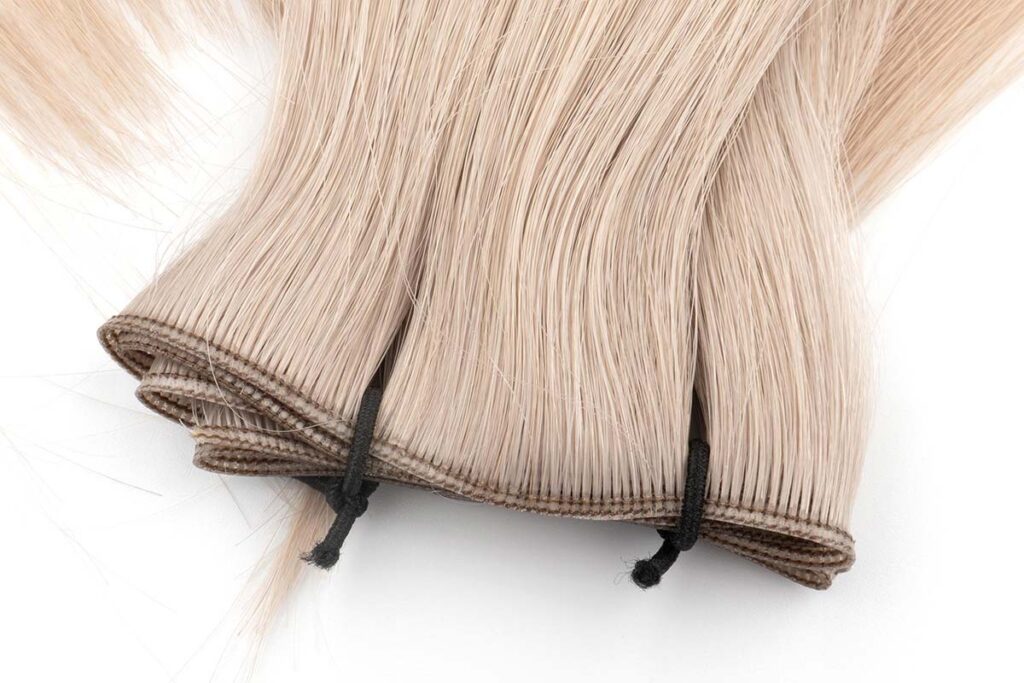
While it’s relatively easy to find hair in darker shades that are not problematic, it becomes very difficult to find healthy blonde shades.
Unveiling Marketing Tricks and Sourcing Secrets
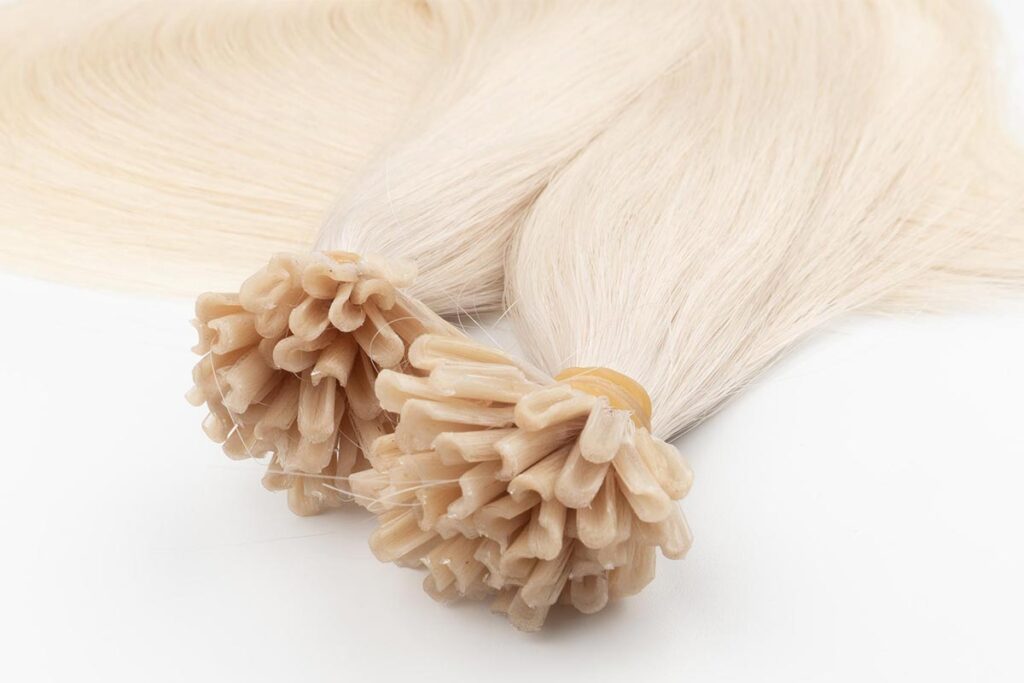
Retailers often advertise their hair extensions as “Indian hair” to take advantage of the perception that Indian hair is of high quality and luxurious. However, as mentioned before, Indian hair does not perform well in achieving the lightest blonde shades. So, if a product claims to be Indian hair, it should raise a red flag.
Some businesses prefer to market their products as Indian hair because “Made in China” products have a negative reputation. In reality, Chinese hair is more resilient to harsh processing, giving it a clear advantage.
But if you take a closer look, you might find that even these retailers who claim to sell Indian hair actually source their hair from factories in China.
The Ethically Sourced Hair Extensions Label
When purchasing high-quality human hair extensions, the label “ethically sourced” often implies that the hair comes from fairly compensated donors. However, the reality is more complex and less transparent.
Is Your Ethical Hair Really Ethical?
In the best-case scenario, a factory uses its own team of hair collectors, which might have some evidence of them paying women fairly for their hair. No official authority issues certificates, but it is possible to use Photoshop to create them.
So, for example, our LUX quality hair manufacturer is completely dedicated to quality and has records of paying women accordingly for their hair, but doesn’t have any certificates. Would you compromise on quality just for the sake of marketing?
The Dirty Secrets of Hair Extension Companies
Some large retail companies might claim to use ethically sourced Indian hair. While we, as a hair vendor, may not know the origins of every source, we have a large supplier network through which we can gather certain information. We know that some of these sources are dishonest about obtaining their hair from India, and we can trace it back to specific factories in China.
Lying to clients is unethical. On the positive side, Chinese hair bleaches to lighter shades better than Indian hair. However, suppose a supplier is dishonest about the origin of their hair. How can we trust them to source it ethically?
The BIG Effect: Reduced Quality in Hair Extension Brands
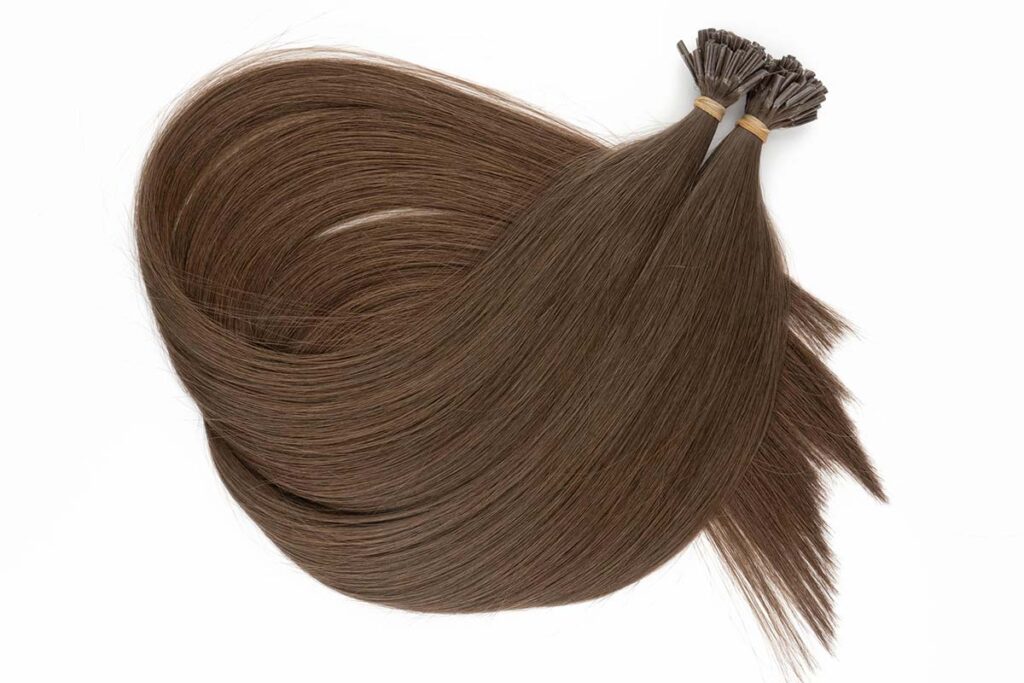
The Beauty Industry Group (BIG) has acquired several retailers known for their high-quality hair extension products. This is part of BIG’s attempt to dominate the market. However, some people are concerned that this focus on growth and market control may negatively impact product quality.
As you can find on their website, they own Bellami, Beauty Works, Babe, Zala, Luxy, Glam Seamless, Donna Bella, Halo, Hairtalk, Hidden Crown, and Hotheads.
Quality Decline Under Monopoly Control
Since BIG acquired these popular brands, there’s been a noticeable shift in their quality. Rather than focusing on top-quality hair, BIG is now more interested in finding hair that fits a specific price range, often at the expense of quality.
The number of negative comments about some of these brands on social media is increasing. It’s difficult for us in China to get their products, but we still have ways to buy them and find their suppliers’ information. This allows us to check their quality and see what they’re selling.
We don’t have complete data on all brands. Still, the information we do have clearly shows a decline in quality for several of them. Bellami, for instance, has seen a slight decline in quality but still outperforms their other brands. Beauty Works has started paying very low prices to their suppliers, which is reflected in the reduced quality of their products. Donna Bella’s quality has remained steady, but it was never considered top-tier to begin with.
Stylists and Consumers Feel the Impact
These brands are used to providing great products for stylists and consumers. However, the quality has decreased, which has been disappointing and caused problems. People used to trust these brands, but now that trust is fading. As a result, stylists and their clients are looking for other options.
When companies compromise on quality, even the largest players in the market can quickly begin to lose out to competitors who prioritize quality.
Empowering Stylists: Wholesale Sourcing
Markup Strategies in the Hair Industry
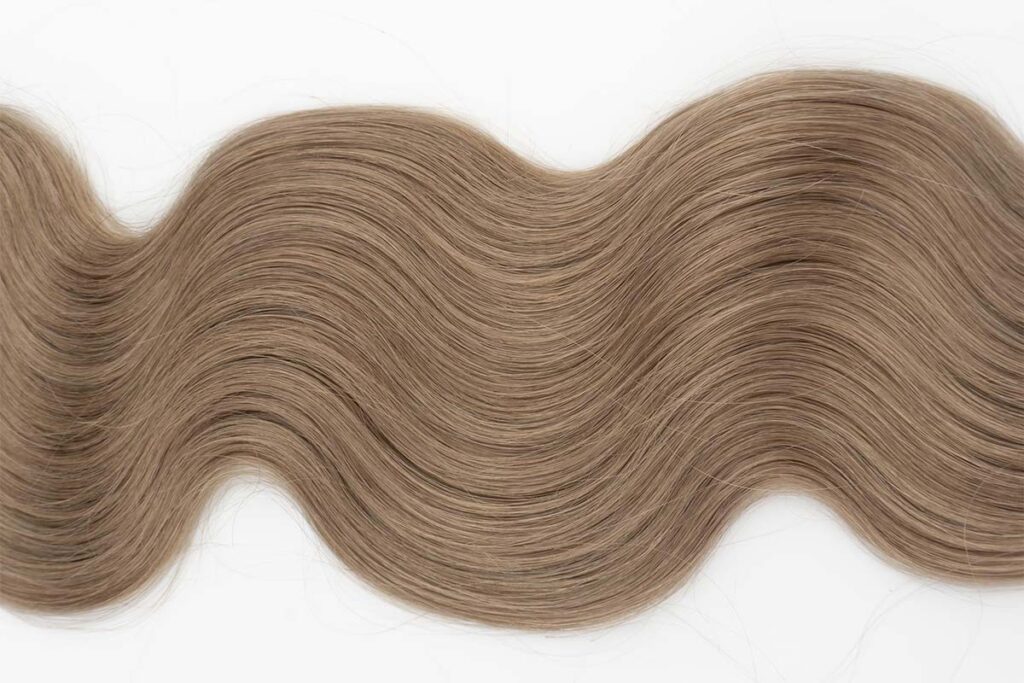
The hair extension industry is often dominated by big brands that significantly mark up their products. Although there’s a widespread belief that “you get what you pay for,” this isn’t necessarily true. These retailers acquire their products wholesale—sources also available to others at much lower prices.
When comparing these wholesale prices to those charged by popular brands like Bellami, JZ Styles, Donna Bella, and Hotheads, the potential for savings is clear. Typically, these brands mark up prices by 150%, and stylists add an additional 30%. As a result, consumers might pay $600 for extensions that only cost $200 at wholesale.
Buying Luxury Hair Extensions Wholesale
This $400 difference creates an opportunity for stylists. By sourcing hair extensions directly and cutting out the middleman, stylists can offer better value to their clients and attract a wider customer base. They are able to provide high-quality extensions at more affordable prices, thus delivering luxury quality without the luxury price tag.
Ultimately, we should question the idea that higher prices always mean better quality. By buying wholesale rather than retail, we can make hair extensions cheaper and more available, especially for women who depend on them for confidence in public. This not only helps customers but also makes luxury beauty products more inclusive and available to more people.
Our articles are designed to help you avoid bad purchases and save money. If you’ve found them useful and wish to support us, please consider a small donation. Your contributions will help us purchase better equipment, like a new camera, or even just a milk tea to keep us going! Thank you for your support!
Thank you for taking the time to read this article. If you have any questions or want to learn more about the topic, please don’t hesitate to contact me at +86 135 3369 3283 (WhatsApp/iMessage). If you find this information helpful, please share it with your friends and family on Facebook. Together, we can spread knowledge and empower others to make informed decisions.
Frequently Asked Questions
How can I ensure I’m buying high-quality hair extensions?
Perform the stretch test when you receive the hair: hold a single strand between both hands and gently pull on it. Healthy hair is elastic. Okay hair isn’t elastic, but it won’t break either. Overprocessed hair breaks. Depending on what you paid and the quality you’re aiming for, consider returning the hair if it doesn’t pass your test.
What are some challenges with Indian hair extensions?
Indian hair extensions often do not bleach well to achieve healthy blonde shades. Indian hair is finer and more prone to damage compared to Chinese hair, which is more resilient to harsh processing.
Are “ethically sourced” hair extensions truly ethical?
The term “ethically sourced” can be misleading. While some factories have evidence of paying fair compensation, there is no official certification, and some claims may be fabricated. It’s important to approach these claims with skepticism.
How has the Beauty Industry Group affected the hair extension market?
The Beauty Industry Group has acquired several luxury hair extension brands, leading to a decline in quality. Their focus on monopolizing the market and sourcing hair within specific price ranges has compromised the quality of the extensions.
What marketing tactics do hair extension companies use?
Hair extension companies often market their products as “Indian hair” to capitalize on the perception of high quality. However, much of this hair is actually sourced from Chinese factories. The marketing tactics can be deceptive, making it important for consumers to do thorough research.
How can stylists offer luxury extensions at affordable prices?
Stylists can offer luxury extensions at affordable prices by sourcing hair extensions directly from wholesalers. This eliminates the middleman, allowing stylists to provide high-quality extensions at a lower cost, benefiting both the stylist and the client.