
Many new clients come in search of the “best quality” and insist on SINGLE DONOR raw hair. What they don’t realize is they’re often wasting time and money chasing a vendor who’s feeding them a clever lie. Single Donor Hair is nothing more than a flashy marketing term, and when you think about it logically, it falls apart completely.
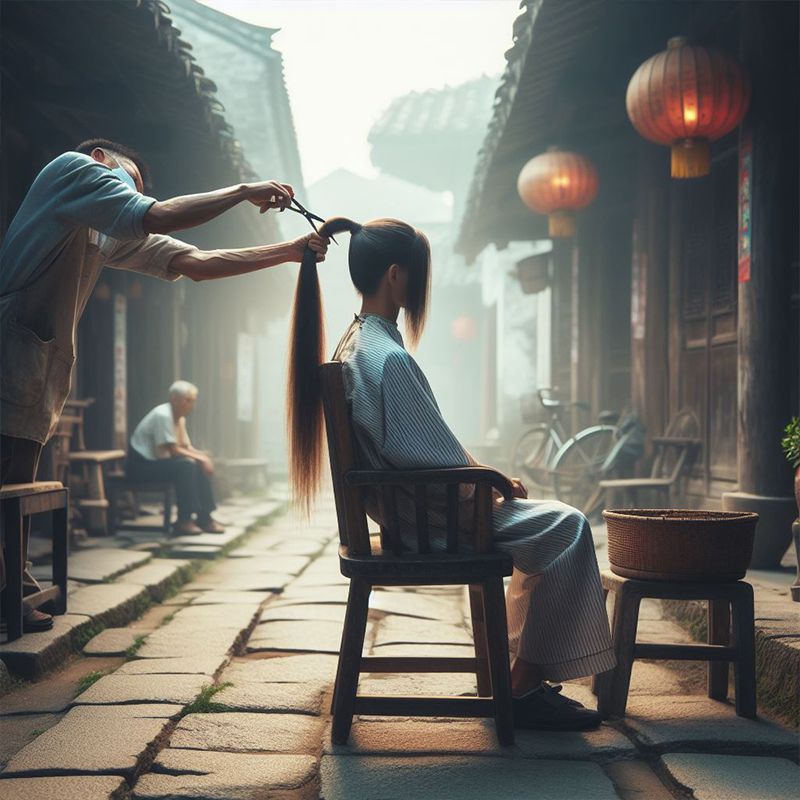
Table of Contents
What Are Single Donor Hair Extensions?
Single donor hair is a buzzword in the hair extension industry, used to suggest that every strand in a bundle comes from the same person. The promise? Uniform texture, color, and quality, all from one magical donor. On paper, it sounds amazing. In reality, it’s more marketing myth than fact.
Most hair extensions are made from hair collected from multiple donors, carefully combined to ensure consistency in fullness, weight, and quality. And here’s the kicker: the number of donors doesn’t automatically dictate quality—something the term “single donor hair” conveniently ignores.
Does the Number of Donors Affect Quality?
Let’s bust this myth with a simple example. You buy three single-donor bundles and a single-donor frontal. After your stylist installs them, how many donors are now in your hair? Four. Does that suddenly make your extensions lower quality? Of course not!
The reality is that quality depends on the health of the hair, not the number of donors. High-quality hair retains its strength, texture, and durability, whether it’s from one donor or several.
Great + Great = Still Great
Let’s say you have three ponytails from three different donors, all premium quality. Each ponytail can bleach to #60, the lightest blonde shade. If you combine the strands, does the hair suddenly lose its ability to bleach? Not at all! Even if there’s slight variation—one goes slightly lighter, one exactly #60, and one a bit darker—the evenly mixed strands will still appear as color #60.
This principle applies to other properties of high-quality hair as well:
- Frizz: Damaged hair gets frizzy when washed. But if none of the individual ponytails are damaged, the combined hair won’t get frizzy either.
- Tangles: Hair tangles when cuticles aren’t aligned. If all ponytails are individually bound and cuticle-aligned, combining them won’t change that.
- Bleachability: Bleachability doesn’t change because you’re combining donors. It’s impacted by coloring or processing, not by mixing healthy hair.
- Shedding: Shedding results from damage, not donor count. Damaged hair is weak and dries out, leading to tangles and shedding. If the individual strands are healthy, the combined hair will remain strong and durable.
Quality isn’t defined by the number of donors. Even hair from a single donor can fall short if it comes from a girl with poor genetics, UV damage from excessive sun exposure, or the effects of malnutrition.
The real secret? Healthy hair. Strong, undamaged strands are the foundation of quality, ensuring superior performance and durability. With proper sourcing, hair from multiple donors can easily surpass a disappointing single-donor option.
The Real Problem: Processing and Coloring
In an ideal world, high-quality hair extensions would come from just a few healthy donors. But reality rarely cooperates. Raw hair is scarce, and truly healthy raw hair is even rarer. This scarcity makes it nearly impossible to consistently produce premium bundles that meet the highest standards. And where scarcity reigns, shortcuts are never far behind.
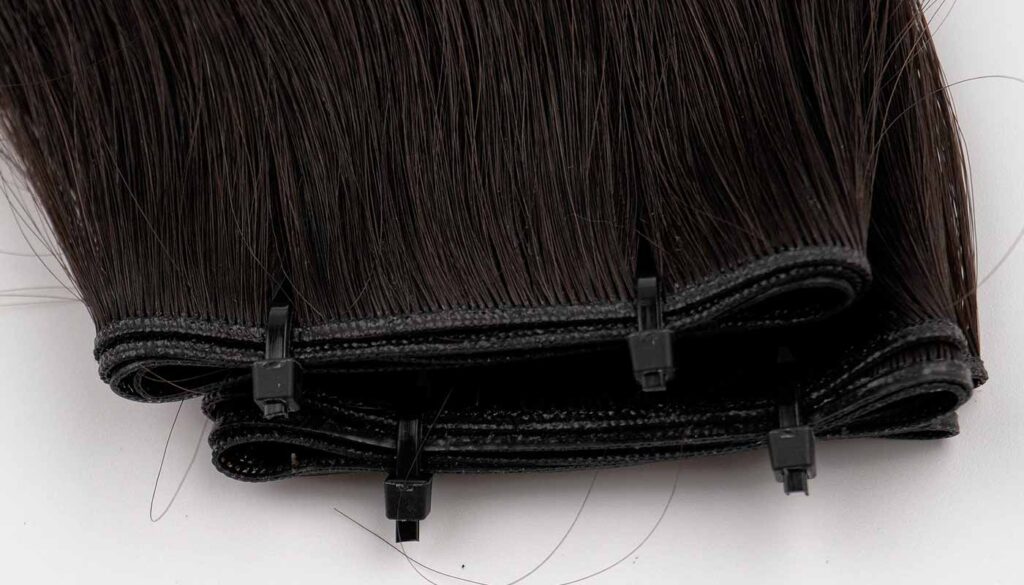
To meet demand, manufacturers increase the number of donors per bundle. For average raw hair, this can mean double-digit donor counts; with processed floor hair, the numbers soar into the triple digits. A mix of colors so uneven it’s like “50 shades of black.” To clean up the mess, manufacturers process and dye the hair for that uniform, polished look—but it’s a beauty hack that comes at a cost. The lower the hair quality, the harsher the processing, leading to an even lower quality final product.
Let’s cut through the fluff: hair quality isn’t about flashy buzzwords like “single donor virgin hair.” It’s all about sourcing and production. And the best way to tell the difference? Test for coloring.
Healthy, 100% raw hair doesn’t need coloring—it’s naturally flawless. But as donor counts climb, mismatched shades make dye a necessity. Floor hair, often heavily processed, is drenched in dye to cover its flaws, but a clarifying shampoo or scraping test will easily expose it. For subpar raw hair, where minor amounts of dye are used to keep up appearances, even clarifying shampoo can’t always catch the act. That’s where the acetone test steps in, peeling back the truth that marketing wants to keep hidden.
Why Your Hair Extensions Aren’t Truly Single Donor
Weight of the Donor’s Hair
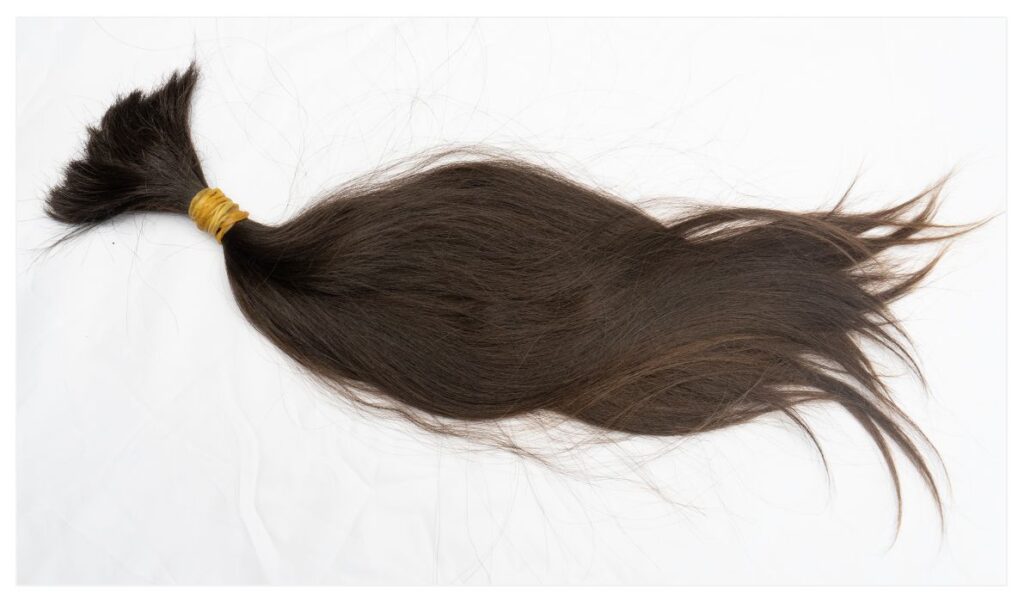
Hair extensions typically come in 100-gram bundles, right? If you were to buy 100 bundles of our Orange Line, they’d all weigh in at 95g±2g. But here’s the catch: when you cut hair directly from a donor, it rarely comes in perfect 100-gram ponytails. Some donors might provide more, but most offer less.
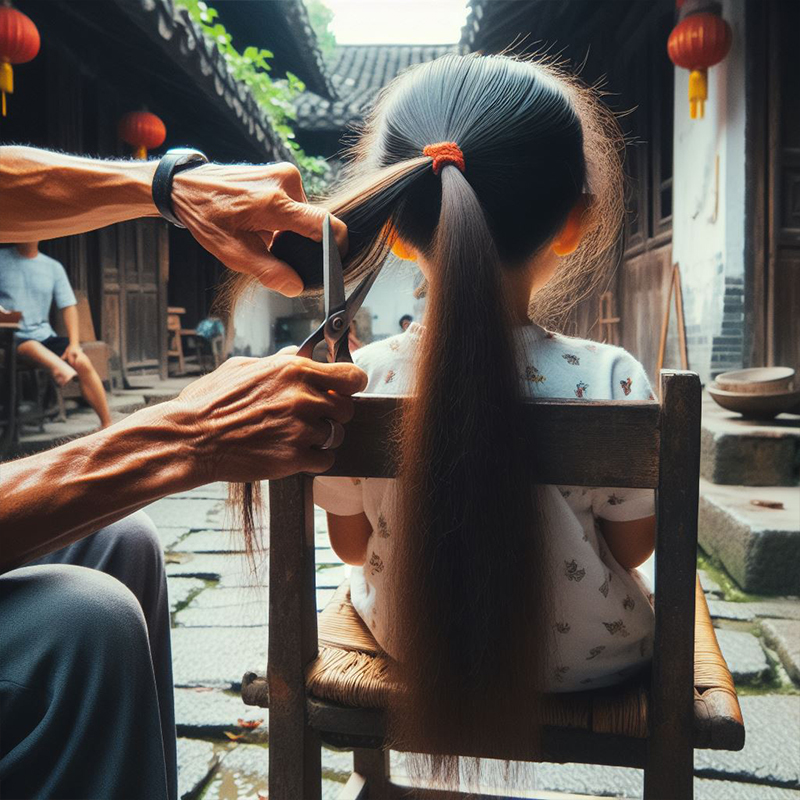
Consider this: parting with long, luscious hair isn’t an easy decision. As a hair extensions wearer, you’re likely seeking more length and volume—but for some women, the choice to sell their hair is about financial necessity. To preserve their confidence and appearance, collectors often avoid drastic haircuts by trimming just the lower layers, resulting in ponytails that weigh around 30-40g.
Even if this hair is the healthiest, most stunning quality imaginable, it still falls short of the 95g bundle requirement. Should manufacturers discard it, label it as lower quality, or sell it at a discount? Of course not.
We’ve already established that mixing hair from multiple donors doesn’t compromise quality. So instead, this high-quality hair is carefully blended with similar hair from other donors to meet the standard bundle weight. The result? Gorgeous and healthy extensions, no matter how many donors contributed.
The Short-to-Long Hair Ratio
Ever noticed how every 20″ bundle you buy has equally full (or equally thin) ends? That’s no accident. The average Chinese single-drawn bundle has about 12% fullness, meaning only 12% of the hair in the bundle is full length, with the remaining 88% being medium or shorter lengths. For shorter bundles, it’s not as noticeable, but as soon as you get to 22″ or longer, those thin ends start telling on themselves. That’s why, for our Orange Line, we’re raising the bar to 20% for those longer lengths.
This kind of consistency isn’t just limited to China—you’ll find similar fullness ratios in bundles from Vietnam and India.
But here’s the real question: how do you think these perfectly even fullness ratios are created? Are donated ponytails neatly weighing in at 150g, sculpted with consistent ratios? Or would some of the bundles you buy be whisper-thin at the ends, while others are full and luscious? That’s exactly what you’d get if you were truly dealing with single-donor hair.
In reality, individual ponytails from different donors are expertly combined to achieve that uniform short-to-long hair ratio. It’s not magic—it’s just good manufacturing. And that’s exactly why the idea of single donor hair bundles is complete nonsense—because no single ponytail could naturally deliver the consistency you see in extensions.

The Difference Between Few-Donor Hair and One Donor Hair
At first glance, you might think single-donor hair offers something unique, but here’s the reality: you can’t actually tell the difference between few-donor hair and single donor raw hair. Multi-donor hair, when properly mixed and matched, looks and performs just as seamlessly as single-donor hair. You can test for synthetic fillers, detect coloring, or spot chemical processing, but no test will reveal the number of donors behind a bundle. Unless, of course, you’re moonlighting as a forensic scientist—then maybe you’d stand a chance!
When Marketing Beats Honesty
Let’s face it: admitting your hair is chemically processed isn’t exactly a marketing goldmine. If two vendors are selling the exact same processed hair, one branding it as “Virgin Hair” and the other as “Chemically Processed Floor Hair,” who do you think will win the sales game? The vendor with the fancy, misleading label.
Sure, there are customers who value honesty and will choose the vendor who tells it like it is. But in the world of sales, marketing often speaks louder than integrity. And when flashy claims outshine the truth, the honest vendor is left fighting an uphill battle.
The Bottom Line: How to Choose Quality Hair Extensions
Forget the buzzwords. The true measure of quality isn’t in how many donors contributed but in the health of the hair and the integrity of the sourcing. Look for transparency, test for dye or fillers, and focus on performance over labels. In the end, it’s not about chasing myths—it’s about finding hair that’s worth every penny.
Our articles are created to help you make smarter purchases and save money. If you’ve found them helpful, we’d greatly appreciate it if you shared them with your friends, family, or in your favorite online groups. Your support helps us reach more people and keep producing high-quality content.
Have questions? Contact us directly on WhatsApp or iMessage at +86 135 3369 3283, or email me at cristina@bossique.com. Many of our articles originate from discussions on our Facebook page. We’d love to hear from you!
Hair Cheat Sheet
What Is Single Donor Hair?
Single-donor hair refers to extensions marketed as being sourced from one individual. However, in most cases, it’s a marketing term rather than a factual claim. Extensions are typically created by blending hair from multiple donors to ensure consistency in weight and fullness, without reducing quality.
Can You Tell If Hair Is Single Donor?
No, it’s almost impossible to tell if hair is single donor or multi-donor. Properly mixed multi-donor hair looks and performs the same as single donor hair, making the distinction undetectable without forensic testing.
Is Single Donor Hair Better Quality?
No, hair quality depends on health, not the number of donors. Single-donor hair isn’t automatically better—if the donor’s hair is damaged by malnutrition, UV exposure, or genetics, the quality will suffer. Meanwhile, healthy hair from multiple donors performs just as well, delivering 100% of the same results.
How Can I Avoid Fake Single Donor Hair?
True single-donor hair is virtually non-existent and offers no quality advantages over multi-donor hair. However, if you insist on finding it, look for bundles with inconsistent weights and uneven fullness at the ends. Hair extensions are sold in 100-gram bundles, but donated ponytails are typically only 30-40 grams. Manufacturers blend hair from multiple donors to meet weight requirements and create the consistent fullness you see in most extensions—something true single-donor hair cannot provide.
Very informative! Especially for someone new to the hair world. Thank you
Thank you for your feedback, much appreciated!