
In the world of hair extensions, the phrase “you get what you pay for” echoes loudly.
This is well known in luxury markets, where iconic brands like Apple, Louis Vuitton, Rolex, Chanel, and Nike maintain high profit margins by investing significant resources into marketing, research and development, and design. These well-known brands are valued for their quality. They are difficult to replace because cheaper alternatives often result in a worse experience.
Is the same true for the hair extension industry? Big companies like Bellami, JZ Styles, and Glam Seamless dominate the market. Do these brands really offer the best experience, or do they take advantage of their position? Can stylists go around these big companies and find their own high-quality hair extensions at better prices?
The hair extension industry is about to change. This article explains how stylists can lead the way by finding high-quality hair and offering premium products at affordable prices.
Note: This article focuses on hair extensions typically sold to white women and does not apply as much to lace + bundles.
Table of Contents
1 – Luxury Brands Explained
Most people would agree that Apple produces high-quality products. But even though it only costs $500 to make, the average iPhone sells for about $1000. So what’s that extra $500 spent on?
Apple spends a lot on marketing, research, and design, which make their products more valuable and justify the higher prices. People pay more for iPhones not only because of the product itself, but also for the experience of owning an Apple product, the customer service, and the status it brings.
You might find fake iPhones from China that look like a good deal at first. But when you look closer, you’ll see they’re not the real thing. They have different hardware, cool features, or overall Apple experience. If you need more convincing, watch the video. It’s not just about the cost; it’s about what you actually get – that top-quality, one-of-a-kind experience only Apple can provide.

When companies have a unique position in the industry and cannot be easily replaced, they can charge higher prices and profit more. But does it apply to the hair industry as well?
2 – Retail Prices vs. Wholesale Value
Luxury brands and large hair retailers are different. These hair extensions are made in China or Asia without any input from the retailers. The manufacturers sell to everyone, not just the retailers. This is why these retailers maintain a strong market position through the illusion of “you get what you paid for.”
2.1 – Comparing Prices
So if wholesale prices are available to consumers and stylists, it is fair to compare them to brands like Bellami, JZ Styles, Donna Bella, etc.
For wholesale prices, we’re using our 35% LUX quality hair extension prices. They are the top-tier quality extensions in the Chinese industry. Out of 500-1000 sources, I have yet to find better. It’s roughly 20% more expensive than what I would call “B-grade,” with B standing for “Good, but not great.”
Prices for K-Tips are listed below, and you can download the full file by clicking the button. Please note that prices are subject to change, so always contact us for the most up-to-date pricing.
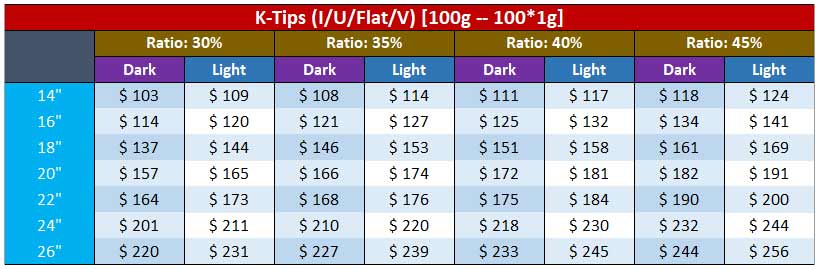
All prices are for light-blonde hair, standardized to 100g.
Bellami
20-inch K-Tips: Our extensions cost $174. If you buy directly from Bellami, you pay $520.
JZ Styles
24-inch Machine Wefts: Our extensions cost $217. If you buy directly from JZ Styles, you pay $500.
Donna Bella
24-inch Genius Wefts: Our extensions cost $242. If you buy directly from Donna Bella, you pay $495.
Hotheads
20-inch Tape-Ins: Our extensions cost $182. If you buy directly from Hotheads, you pay $988.
Some stores have pricing for professionals, making it hard to get accurate pricing. If you think we made a mistake, please get in touch with us, and we’ll fix it.
2.2 – The 30% Stylist Markup
To make matters worse, hair stylists are taught that hair extensions must be marked up. Every stylist incurs costs for education, tools used for installation, expertise, location, and taxes. The markup should cover these essential expenses.
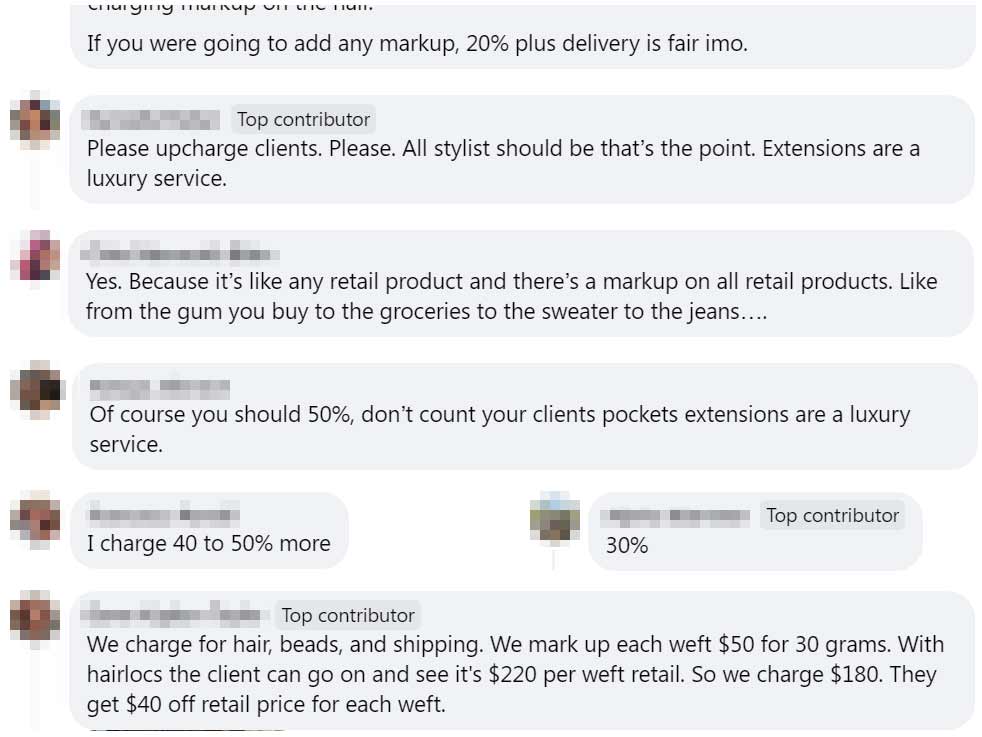
However, when a consumer buys it from a stylist who buys it from a retailer, prices go up quickly. Let’s take those $217 wholesale extensions, sold for $500 by a retailer and now marked up 30% to $650. That’s $433 over wholesale.
And that’s insanity, and that’s why the industry needs to change.
3 – Advantages of Buying Retail
These retailers are still important for customers because they handle marketing, making products easy to find. If you have any issues, you can reach their customer service easily and get replacements. They also keep products in stock, so you can usually have them the next day.
Wholesale has its drawbacks. While we can offer every option, we don’t keep stock, and there’s usually a 2-week production time. Producing 1kg takes only a little more effort than producing 100g, which is why there are often minimum order quantities (MOQs). Shipping occurs via air and can be costly, taking an additional 3-5 days. Our profit margin is minimal, so we have little flexibility to offer the best return policy.
4 – The Replaceability of Large Hair Extension Retailers
When I started Bossique 5 years ago, the minimum amounts for wholesale orders were quite high. It costs around $1,500 per color due to the 1kg minimum order quantity (MOQ) per variation. In recent years, these minimums have decreased. Good-quality hair now requires a minimum order of 100g per variation. In comparison, top-quality hair has MOQs ranging from 200g to 3 kg.
Suppose you can find a good quality source and wait 3 weeks before receiving your order. In that case, you can easily save $300-400 on your extensions.
While retailers played a massive role in bringing hair extensions to stylists and consumers and have done so with greatly added value, the industry is reaching a stage where they’re replaceable, not just by us Asian vendors but also by tons of smaller resellers popping up with smaller profit margins.
There is no doubt that there is some amazing talent working in these retail companies. I wish them nothing but the best. However, it is clear that there is room for change. If they do not find ways to offer value to the hair extension industry, they will eventually lose their dominant position in the industry.
5 – Strategies for Cutting Out Large Retailers
Since you have read our article, we may be the vendor worth considering. You can trust that you are receiving honest information without any marketing tactics. Our B-grade is available with an MOQ of 100g. Still, we highly recommend investing in our LUX quality, especially when ordering blonde hair extensions.
5.1 – Consumers – Buying for Yourself
If you’re buying for yourself, you can buy directly from anywhere, even Amazon. However, as doing FBA (fulfilled by Amazon) and Amazon’s return policy requires high profit margins, it’s still difficult to find hair that’s both affordable and high-quality.
Consider buying directly from Asia. Finding a vendor that offers high quality with low minimum order quantities (MOQs) can be challenging. This may require some investment, but it could be worth it if you plan to wear hair extensions for a long time.
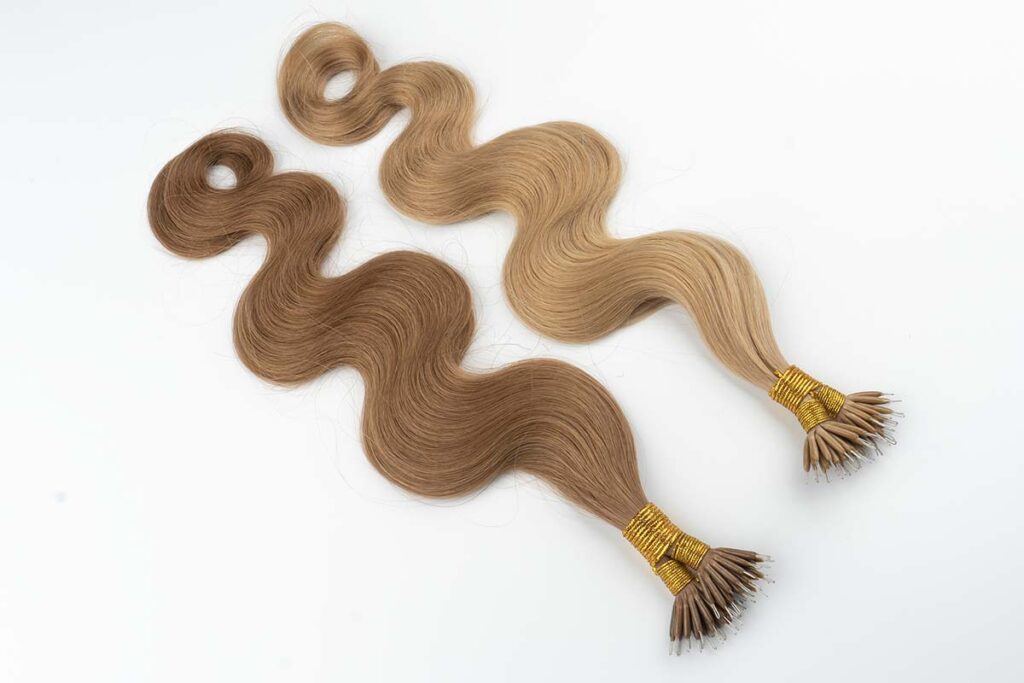
5.2 – Stylists – Buying For Your Clients
An experienced hairstylist might find it easier to buy their own hair. They are skilled at recognizing good-quality hair and have the resources to invest in the future. Choosing more affordable hair can provide high quality at lower prices and attract more customers. For example, if they mark up $500 hair by 30%, they would make $150 just from the hair. By keeping the same profit and buying from us at $217, they would only charge the customer $367, which means the customer pays $283 less.
Even as a stylist, you don’t want to focus on being cheaper and stand for being exclusive and luxurious; if you can source your own extensions, you can easily earn $400 for the extensions you sourced from Asia.
I’m not a fan of high markups, and my ultimate goal is to make hair extensions more affordable for consumers. However, I believe it’s more justified for stylists—who put considerable effort into sourcing quality hair, ensuring professional and durable installations, and providing excellent care advice—to benefit from these markups.
And certain companies will have to try hard to keep their head above water. Their yacht might be afloat, but their reputation is taking on water.

5.3 – Sourcing Alternatives
Even if you’re not planning on sourcing from us, the yearly hair exhibition held in Guangzhou or Qingdao would be great places to source your own extensions.
Conclusion
Many people are accustomed to paying high prices for luxury hair extensions. Typically, these consumers purchase the extensions at retail prices from stylists. These stylists, in turn, acquire the extensions from large retailers who originally purchased them from wholesalers. This layered purchasing process adds to the overall cost for the end consumer.
While in the past, your only choice was to go through these channels, wholesale MOQs have been reduced, and wholesale is now available to both consumers and stylists.
“You get what you paid for” quickly transforms into “you paid too much for what you got,” as comparable products now come at significantly lower prices.
By sourcing directly from trusted suppliers and bypassing traditional retail channels, stylists can offer high-quality extensions at more affordable prices. This empowers stylists and consumers and challenges industry norms, making luxury accessible to a wider audience.
Our articles are designed to help you avoid bad purchases and save money. If you’ve found them useful and wish to support us, please consider a small donation. Your contributions will help us purchase better equipment, like a new camera, or even just a milk tea to keep us going! Thank you for your support!
Thank you for taking the time to read this article. If you have any questions or want to learn more about the topic, please don’t hesitate to contact me at +86 135 3369 3283 (WhatsApp/iMessage). If you find this information helpful, please share it with your friends and family on Facebook. Together, we can spread knowledge and empower others to make informed decisions.
Frequently Asked Questions
Are luxury brands like Bellami and Hotheads worth the high prices?
Cheaper top-tier hair extensions can be purchased wholesale, but finding them takes time and effort. If you want quick and easy access to hair extensions and receive good customer service, the luxury brands may still be worth it.
Why is the wholesale-retail price gap crucial for hair extension businesses?
Comparing wholesale and retail prices reveals the markup along the supply chain, empowering consumers and stylists to make informed purchasing decisions.
How can stylists benefit from sourcing hair extensions directly?
By sourcing directly from trusted suppliers, stylists can access high-quality extensions at lower prices. This allows them to offer premium products to their clients while maximizing their profit margins.
What are the drawbacks of wholesale hair extensions?
While wholesale options may offer cost savings, they often come with drawbacks such as longer lead times, minimum order quantities, and limited return policies, so it’s important to understand these trade-offs for informed decision-making.
Can stylists play a role in reducing the cost of hair extensions for their clients?
Yes, stylists can source high-quality extensions directly and pass on the cost savings to their clients. By cutting out middlemen and retail markups, stylists can offer premium extensions at more affordable prices.
1 thought on “Enough! No More Overpriced Hair Extensions! – Dominate the Market”
Comments are closed.