If hair factories were doing a great job, and actually have factory prices, there wouldn’t be any need for trade companies. But there are tons of trade companies, meaning hair factories aren’t doing a good job. However, people still keep looking for hair factories and believe that they can get much lower prices than they would get with a trading company. Is that really the case?
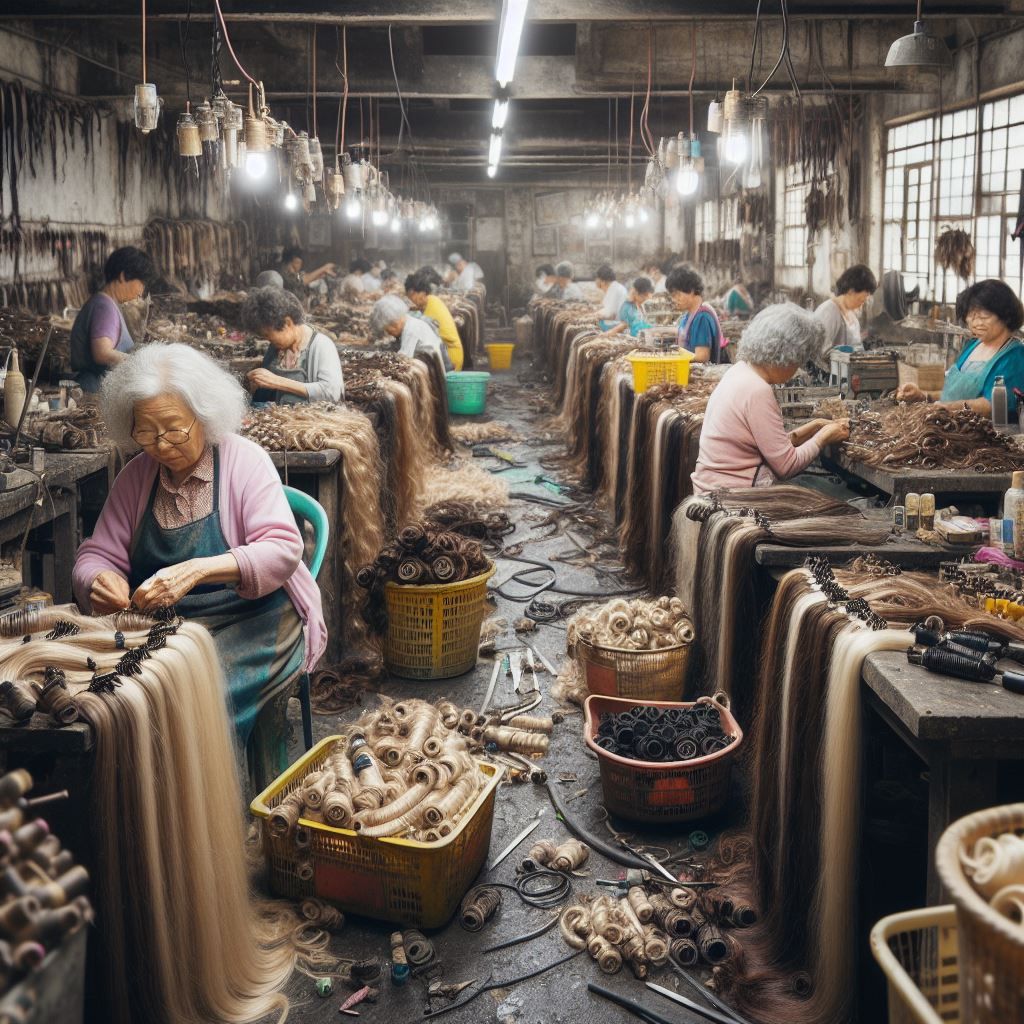
Table of Contents
1. Price
Cut out the middleman, buy from the hair factory directly, and pay less for your hair. It sounds logical but oversimplifies how the hair industry works. People tend to think that if they end up paying $100 a bundle at a certain trade company, they could pay $90 for the exact same hair if sourced from a hair factory. In rare cases, it’s true, but it’s more of an exception than the rule.
1.1 Your local vendor gets better prices than you
If a Chinese hair factory gets two clients. Client 1 is a local Chinese buyer, and client 2 is a US-based buyer. Will they both get the same price?
- You buy hair for your clients, and your vendor buys hair for you and your clients. That makes vendors bigger buyers than you. This is one reason why we get better prices than you could.
- Packing up 1 order of 100 bundles might take a worker an hour or two. Packing up 100 orders of 1 bundle would probably take about 9 hours. Aftersales on that one order will be minimal. Aftersales on 100 different orders will take hours or days. Time is money, and that is reflected in the wholesale prices.
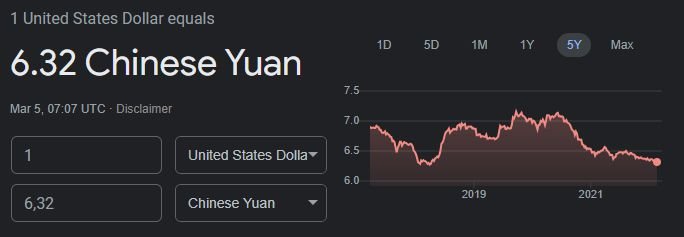
- A local Chinese buyer pays in Chinese Yuan. We can’t use USD in China, and we would need to convert it to Chinese Yuan. The government doesn’t make it particularly easy to do this conversion, as they would ask companies to pay 13% tax on all their sales. So, it sometimes requires some ‘creative’ methods and comes with costs. Even the USD to CNY conversion rates aren’t that stable, and the value of the US Dollar could suddenly drop. This needs to be taken into consideration when calculating the product’s USD prices. So when someone pays in Chinese Yuan, it’s possible to give better prices.
- It takes time to pack up orders and have them shipped off to an overseas client. Sometimes the bands will have to be changed, labels/tags have to be added, and all information will have to be entered into the shipping system. It’s much easier when a trading company picks up the hair from the hair manufacturer’s warehouse or has it shipped domestically. This will also be reflected in the prices.
- Selling to overseas clients can be expensive. Having hair doesn’t mean that people want to buy it, either. It needs to be marketed, which isn’t exactly free. It requires educated English-speaking workers who try to promote the products and receive commission upon making sales. That commission is an extra 3% of the price that YOU will have to pay. Some of these sales will actively steal clients, and that’s one more problem to deal with. Money needs to be converted into a different currency, and certain payment methods, like PayPal, require fees to be paid. All these things add up and require a larger profit margin to keep the company running simply. If a factory is selling locally, they don’t have to include all these costs in the product price.
- We’re quite close with some of the manufacturers we work with. Some of them we’ve known for years, celebrate our birthdays together, give each other small gifts, go on holidays together, even my husband teaches one of them English. While you sometimes might feel connected to your vendor or hair factory salesperson, our connections can go a bit deeper. In Chinese, we call this “Guanxi,” which is a kind of “friends-with-benefits,” where the benefits are of a platonic, material nature.
1.2 Trade company and hair factory price difference?
So how much is the price going to differ? We’ve worked over time with different manufacturers, and they’re never open to us about what prices they give to their clients. But it’s fairly easy to buy a foreign phone number, contact them and inquire them about the price. In general, our prices have always been quite competitive with the manufacturers who actually sell to overseas clients. Sometimes a bit higher and sometimes a bit lower. The only time that we’re losing out is for actual high quantities of hair.
That said, hair factories are usually quite terrible at sales, and they simply get clients based on their presence in the Guangzhou hair market. But since the pandemic, borders have been closed, meaning they have difficulty finding new buyers as well. So when a really large buyer contacts us and demands really low prices, we could possibly strike a deal with the manufacturer, where we share our profits. After all, if you only get 5% profit per sold product, and someone places a $100.000 order every month, that’s an extra $5000 of monthly income. So even in those types of situations, as a trading company, we could still offer competitive pricing.
We’re really close to our orange line hair manufacturer. They have quality but don’t have very capable staff. They don’t sell retail to overseas clients, but they focus on the local market. I was asked to make the price list they use for trade companies, which basically comes down to our prices +xx%. Prices are also based on your relationship with that hair factory.
1.3 Sellers pretending to be a hair factory.
Still want to buy from a hair factory? How many companies do you see advertising on Facebook that they’re a hair factory and offer factory prices? Many of them are simply lying about it for the sake of marketing. Just like vendors are claiming that they have single-donor hair.

2. Hair factories are “one-trick ponies.”
Ever seen someone claiming to be a hair factory selling both bundles AND eyelashes? Yeah, they’re not a hair factory. There isn’t a single manufacturer who produces both these products. Manufacturers tend to focus their production on one type of product, and trade companies focus on offering a more complete selection of products. Those manufacturers who actually sell multiple types of products are mostly the middlemen in some of these products. That makes factory prices a lie already.
We offer hair bundles in 3 different qualities. The closures come in 2. The orange line bundle manufacturer takes care of all the custom-color work and sometimes outsources this as well. Some customized lace products are made by another manufacturer. Tape-ins and tips by another. So now we’re already talking about 7 manufacturers a company has to deal with to be able to provide a variety of products. It’s impossible to get everything from one place.
2.1 Check their social media presence
These are a couple of guidelines you can use to recognize trade companies or individuals posing as hair factories. They don’t always apply and are only to be used as guidelines:
- It’s difficult to give an exact number, but an average raw hair factory has about 200kg of stock in their warehouse, which comes down to roughly 50 bundles per length per texture. There’s plenty more material in the making. If they’re selling directly to overseas clients, they would need at least a SMALL TEAM to deal with everything involved. So whenever you only see one contact email or phone number, most likely not a factory. These companies are often small companies run by a few employees or possibly even a single person working from their home. They could still have great quality hair, but if you catch them lying once, you don’t know what else they will be lying about.
- Some sellers post pictures of all their employees. The majority of factory workers are older women from the countryside. When these photos have a great number of young girls, but a lack of these older employees, they’re mostly a trading company, as these young girls are their sales team.
- If you see a collection of different products, like a bundle manufacturer providing eyelashes and satin bags, they’re a trading company.
- According to government regulations, it’s illegal to have a hair factory in Guangzhou (south of China). So whenever you see a random company from Guangzhou claiming that they’re a hair factory, they’re probably lying. There are a couple of exceptions, like KBL Hair Factory and Cacin. They’re located somewhere in the outskirts and the pollution they create is quite severe.
- If you see an Alibaba account of a vendor claiming to be a factory, and their name says “blablabla贸易有限公司”. “贸易” are the characters for trade, and everything behind that means Ltd. Company.
- Check for photos. When there are factory photos without obvious branding, it could simply be a place that they once visited and/or sourced their hair from. Some photos obviously have distorted perspectives and/or logos photoshopped in. It’s very common for Chinese companies to do this, and these are some of the things you can find on Alibaba, for example.



3. You’re trying to find someone who can deliver you the right quality product for the right price
In any case, you’re trying to find someone who can deliver you the right quality product for the right price. Whether they are a Vietnamese hair factory or an Indian trading company shouldn’t be your main concern. You’d better have a vendor who charges $5 per bundle more but gets everything right, rather than a manufacturer who is $5 cheaper and causes $200 mistakes. You want a vendor you can trust to get you the right product, and not suddenly change qualities on you.
And honesty goes a long way. Asian countries aren’t always the best at that, and you will often end up dealing with salespeople who don’t know much about hair or those who are blatantly lying to you. If calling themselves a hair factory is the first lie you catch, then you should have second thoughts about any future cooperation with them, as they might lie about more things.
4. Confessions of a Trading Company
Bossique is a Dutch / Chinese trade company located in the middle of the Chinese hair market. That puts us in a fairly unique position, as we have a greater understanding of what Western people think and how certain “normal” behaviors of Chinese can be considered incredibly frustrating to deal with.
4.1 Talking with some manufacturers is a pain in the rear
In Chinese culture, it’s simply polite to refuse something a couple of times, before accepting it. So a “no” could be a “yes”. If you ask a hair factory: “When will the product be done?”, the reply might be something along the lines of “By the end of yesterweek, at 26:85 DM, but I’m going to extend that deadline by at least 14 times and deliver a product that you didn’t originally order.” It’s already difficult to communicate with them in their local language, but considering that very few of them have educated English-speaking workers even slightly familiar with western culture, it’s even going to be harder for you.
So they delay your deadline? Simply ask them to hurry up, right? Well, chances are that if you ask them to work faster, they might take shortcuts. That’s something you don’t want either. Factories are great at shortcuts, simply look at the quality of pre-made wigs or some 13*4 frontals. Some of these frontals are actually 13*3, as removing that 1 extra inch of hair, makes them a whole lot cheaper to produce.
What happens if you send your high-quality material to a hair factory and make a custom product out of it? Well, some of them might see the value in your hair, and exchange it for some cheaper alternative. That makes it quite scary to send authentic Russian hair to a hair factory to make customized products out of them. Especially considering that this type of hair is roughly $900 per 100g.
4.2 How do we find our manufacturers to work with
Finding the right manufacturer for your product can be essential, but they’re rarely delivering the right quality of the product in the right timeframe. We’re living in Guangzhou, near the hair market (MeiBoCheng). Many manufacturers have a shop and/or warehouse there, making it quite easy to have access to a whole lot of products. With our own knowledge, we can tell a lot from the hair by simply seeing, feeling, and smelling the hair, making it really easy to sample the best quality, at the best price, with decent availability.
But the hair market doesn’t have all items in good supply. A lot of it is heavily processed hair which we mostly refuse to deal with. Products like tape-ins can be produced in about 35 different color variations, a few different lengths, in different qualities, and in different textures. With some simple math, that’s easily 1000 variations that would need to be kept in stock, which no supplier or hair manufacturer is crazy enough to do.
But even for products, we can’t find the quality that we’re looking for, we can contact random manufacturers we find online, and order a sample. We simply pay a deposit, that we will get once we send it back. We generally tend to keep good samples around when we need them.
Our articles are designed to help you avoid bad purchases and save money. If you’ve found them useful and wish to support us, please consider a small donation. Your contributions will help us purchase better equipment, like a new camera, or even just a milk tea to keep us going! Thank you for your support!
A lot of our articles first start out on our Facebook page. Follow us there and feel free to leave your questions there, or contact us through WhatsApp/iMessage: +86 135 3369 3283.