The hair extension industry is booming, with big names like Bellami and Beauty Works dominating the retail market. But did you know that many of these companies source their products from manufacturers in China, resulting in hefty markups for consumers?
There is a way to bypass the middleman and buy Asian hair extensions directly from vendors. However, while Asian vendors offer affordable options, there are challenges such as language barriers and longer shipping times to consider. Despite the drawbacks, it is worth exploring the pros and cons before making a purchase.

Table of Contents
Reasons to Buy from an Asian Hair Extensions Seller
It’s the Affordable Option
The main reason for buying hair extensions from Asia is the cost. Countries like India and China have a vast population of 2.6 billion people combined, which means there is a significant amount of hair available for use in extensions. In China, women often sell their hair for extra income, while in India, hair plays a role in cultural rituals like tonsuring.
There are tons of studies comparing the health of hair from different ethnicities. Asian hair is least prone to breakage, with Caucasian somewhere in the middle, and African hair on the other end.
Asian hair extensions are cost-effective due to cheap labor. For instance, it takes up to 10 hours of manual labor to produce a 4×4 closure, even longer for toppers or full lace wigs. In China, minimum wages can be as low as $2 per hour, leading to lower production costs compared to Western-made products.
Most hair extensions come from Asia. If you buy from a local retailer, there’s a high chance that they sourced it from China. Generally, Indian hair is a bit finer and doesn’t withstand the bleaching process as well, making it difficult to reach #60 healthily, so the focus tends to be on China.
Your local retailer marks up the price of the hair. People are used to paying $500 for 100g of extensions, or even more. However, these retailers likely purchase these extensions from China at wholesale prices, probably around $200/100g.
And while you might think that there’s a lot of research done to find reliable sources, in all fairness, I’m offering you one right now – myself. If you want to find someone else, you can visit the Guangzhou Hair Exhibition, which is mostly held in September.
Customization
Stocking hair extensions can be quite expensive, which is why many local retailers often offer a limited range of extension methods and color options.
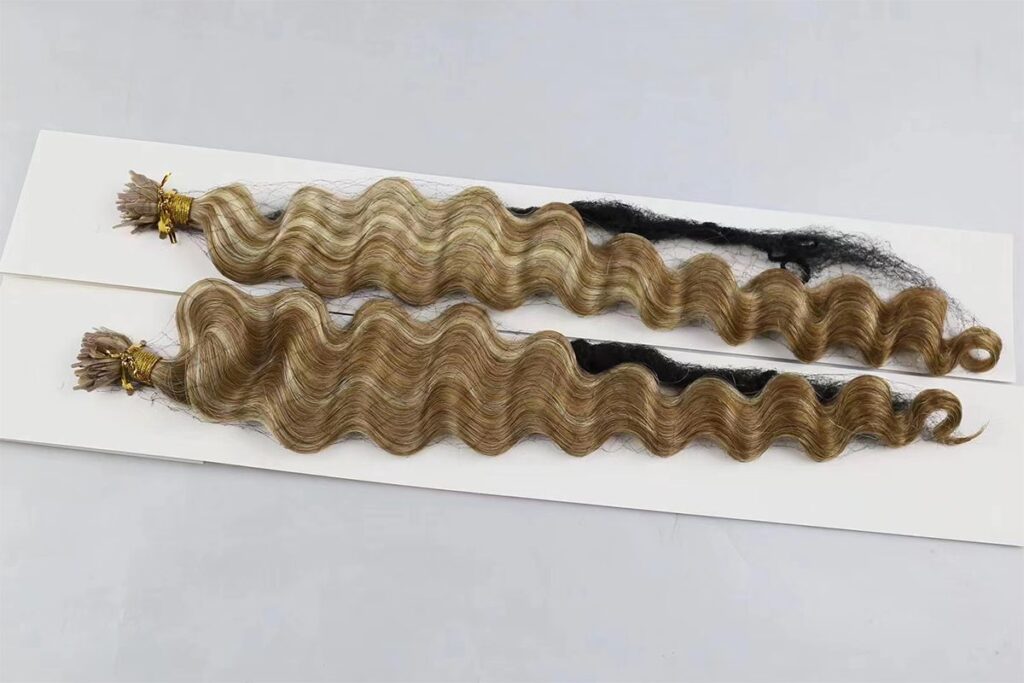
However, when you buy hair from Asia, you have access to a wide range of possibilities. There are thousands of color variations available. For example, you can find a color #8 with brown roots and a #8/#60 piano color mix throughout the rest of the hair. The options are truly limitless.
Moreover, these hair extensions can be customized to different fullness ratios and lengths, and there are close to 20 different hair extension methods to choose from.
This means that you can customize your extensions based on your preferences. However, it’s important to note that customization may have specific requirements, such as a minimum order quantity (MOQ) and some production time.
Reasons NOT to Buy from an Asian Hair Extension Vendor:
Language Barriers
When the vendor and the buyer do not speak the same language, communication can be difficult. This can lead to misunderstandings and errors. For example, terms like raw, virgin, and remy hair are used to describe different qualities in English, but in Chinese, more precise words describe these distinctions in hair quality.
Cultural Differences
Asian vendors may have a different mindset than yours due to their cultural background. In our culture, we are not encouraged to ask questions or seek knowledge beyond what our superiors ask of us. This is especially true in the hair extension industry, where many vendors have little understanding of the product they are selling.
You can often see this happening on Facebook posts. Someone might be describing a problem they’re having with their extensions and asking for help. Then, Chinese and Vietnamese sellers reply, essentially saying “BUY MY HAIR!”
Shipping Time
Shipping times from Asia can be costly and longer than those from local resellers. This can be an issue for buyers who need their hair extensions quickly.
Inventory Limitations
It’s impossible to keep all hair in stock. There are simply too many variations. Where your local reseller focuses on a small subsection that fits with the majority of their clients, we have to be able to offer all variations.
These products come in various variations such as machine/hand-tied/genius wefts, U/V/I/Flat-tips, nano ring/bond, micro links, halo, regular or PU clip-ins, and require at least a dozen color variations and lengths
These products need to be customized, which can take 1-4 weeks, depending on the manufacturer. Creating 1kg of product doesn’t require much more effort than creating 100 grams. Therefore, manufacturers prefer dealing with larger orders, which often come with minimum order quantities (MOQs).
Difficult Returns
Returning hair extensions is costly. Not only will there be a costly shipping fee, but we will also have to pay import tax on any refunds. If you pay by bank transfer, Western Union, or MoneyGram, getting your money back pretty much becomes impossible. PayPal is probably one of the few platforms that can help you win a dispute.
Reasons to Buy from a Local Hair Extensions Reseller
It’s Convenient
It’s much easier to pay from someone local who has hair in stock and can ship it to you overnight. So there’s no need for high shipping fees or customs fees that may arise when importing goods. And if you’re unhappy with the item, you can easily return it. It’s simply a better shopping experience.
Physical Inspection
If you’re buying from a store, you can physically inspect the hair extensions before buying. Even if you’re buying online, when you don’t like the hair, you can easily return it, often free of cost.
This is important, as even heavily processed hair can look good in the picture. Just take the following body wave blonde picture for example. It’s made with chemically processed floor hair and should only last you 3-4 months at best.
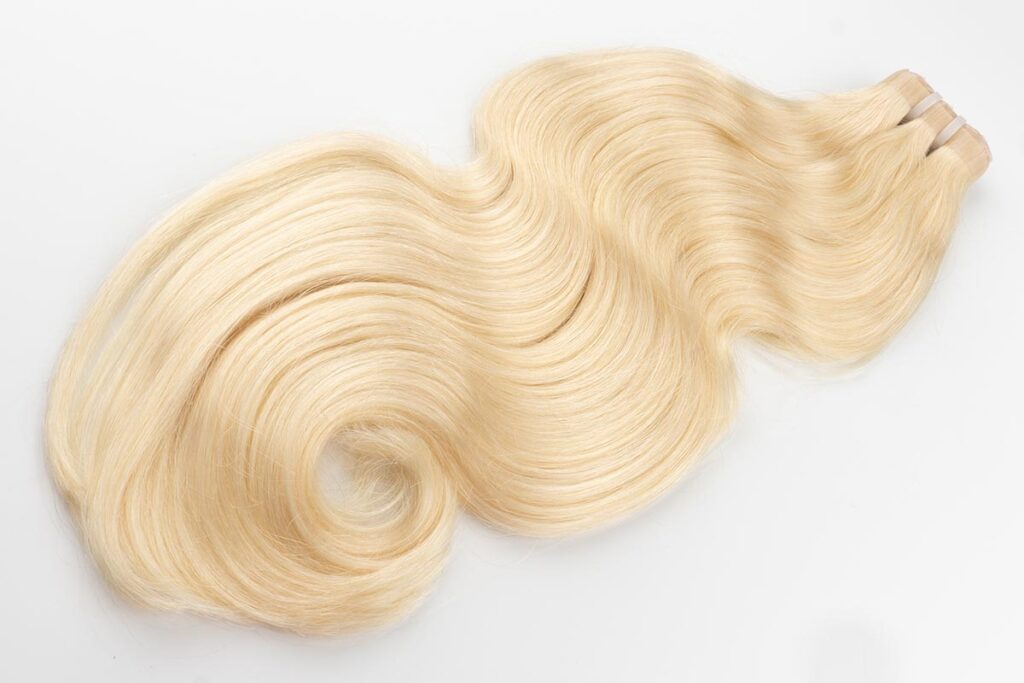
So that hands-on experience is incredibly valuable.
Personalized Service
Local resellers often provide personalized customer service, helping buyers choose the best hair extension products based on their needs. They can give advice on what color best matches your hair. Stylists can help you choose which hair extension methods would be best for your hair and would cause the least amount of damage.
The options for hair care routines can seem endless. If you have dry hair, should you use Olaplex, oil products, conditioner, or a hair mask? Making the wrong choice could significantly reduce the lifespan of your hair. And getting this kind of guidance can help you save money.
Customization
At times, there are specific variations that only your stylist can access.
For example, wholesale hair extensions come in a wide range of colors, but they may not perfectly match your needs. In these situations, stylists are available to help you find the ideal match for your desired look and guide you based on your own hair.
Wigs, toppers, and hair replacement systems should be guided by experienced stylists as everyone’s head shape is unique. It would be disappointing if the $700 wig you ordered doesn’t fit properly.
Local Currency
Another reason to consider buying from a local hair extensions reseller is that you can often pay in your own currency. This helps you save money on currency exchange fees that you would otherwise have to pay when buying from an overseas vendor.
Reasons NOT to Buy from a Local Hair Extensions Reseller
Higher Cost
“You get what you paid for” isn’t always the case. As a consumer, you might pay $650 for hair from your stylist, who purchased it for $500 from a local reseller, who in turn bought it wholesale for around $200. By skipping retailer (and stylist), you can save a lot on the extensions.
So if you can cut out the stylist, and retailer, you can easily save big on the extensions. But where an experienced stylist can mean the difference between a happy result and long-term hair loss, and that’s worth something. The local reseller doesn’t offer that large of an advantage and can be cut out much more easily.
Limited Variety
Local resellers may not have as wide a variety of hair extensions available as Asian vendors. For example, we provide 15 different types of hair extension methods, and 4 different fullness ratios, available in every texture, while a local reseller might, for example, focus on tape-ins, genius wefts, and nano extensions in a few color variations. As vendors, we’re expected to be able to offer everything, while local resellers can focus on a small selection.
Local resellers may not offer as wide a variety of hair extensions as Asian vendors. For example, we provide about 15 different types of hair extension methods and 4 different fullness ratios available in every texture. On the other hand, a local reseller might focus on tape-ins, genius wefts, and nano extensions in only a few color variations. As vendors, we need to offer a wide range of products, while local resellers can focus on a smaller selection.
Our articles are designed to help you avoid bad purchases and save money. If you’ve found them useful and wish to support us, please consider a small donation. Your contributions will help us purchase better equipment, like a new camera, or even just a milk tea to keep us going! Thank you for your support!
Join us on our Facebook page, where many of our articles first appear. You can leave your questions there or contact us via WhatsApp/iMessage at +86 135 3369 3283.
Ultimately, whether to purchase hair extensions from an Asian vendor or a local reseller depends on the buyer’s needs and preferences. Cost, quality, availability, and customization options should all be considered when deciding. By carefully weighing the pros and cons of each option, buyers can make an informed decision and find the hair extensions that best meet their needs.
Frequently Asked Questions
Why Are Asian Hair Extensions Popular in the Market?
Asian hair is known for being healthy and durable, making it great for making hair extensions. With roughly 60% of the world’s population residing in Asia, a large hair supply is available. Additionally, many women in Asia have low incomes, which makes selling their hair an attractive option. The hair is collected, processed, and sold at relatively low wages, making it an affordable option for customers worldwide.
Pros and Cons of Buying Asian Hair Extensions: Vendor vs. Local Reseller
Vendors usually have better prices and a wider selection of hair extensions. They are often closer to the manufacturer and have more control over the price and quality of their products. However, because there are so many options, you often have to buy a large quantity, which makes them a good choice for medium to large orders.
On the other hand, local resellers can offer more personalized service and be more accessible to customers who prefer retail purchases. They can provide quick delivery and good customer service.
While many believe only local resellers sell quality hair, your local reseller most likely sources their hair from Asia. Thus quality can be found anywhere.
Differences in Asian Hair Extensions: Black vs. White Women’s Market
The market for Asian hair extensions is divided into two major categories: black and white women.
The black women’s market is very competitive. Everyone is trying to start their hair extension business. But with how easy it is to buy from Asia, things become really competitive. Sellers are driven to minimal profit margins.
When it comes to the market for white women, there are numerous options available, with over 1000 possible variations in types, colors, and lengths. However, due to the wide range of choices, orders often need to be customized, with minimum order quantities (MOQs) ranging from 1-3kg per length and color. This has made it challenging to start a business in this market, requiring the support of larger retailers who stock the hair.
Nonetheless, there’s a shift in the market towards lower MOQs, making it possible to bypass the middleman and save money.
Common Misconceptions About Asian Hair Extensions and How to Avoid Them
People believe that “you get what you pay for.” But this only applies when you don’t compare apples and oranges. There’s a difference between wholesale and retail, and in the hair extension industry, you often end up paying for a double retail markup. The reality is that the quality can vary greatly depending on factors such as hair sourcing, processing methods, and quality control standards.
Many people have complicated hair care routines, but the most important part is to wash and condition your hair regularly. Damaged hair can become dry, frizzy, and tangled, so it’s crucial to keep it moisturized to maintain its health and beauty. If your hair extensions are severely damaged, certain silicone products can help restore their shine and extend their lifespan.