
One of the methods to test the quality of your hair extension bundles is bleaching it to a 613 hair color. If you’ve already dealt with vendors, you will have noticed that they often say, “can be bleached to #27” and “can be bleached lighter than #27, but not 613.” Suppose you ask them why they will give you false reasons. Are you wondering why you can’t bleach it to 613? Then keep on reading.
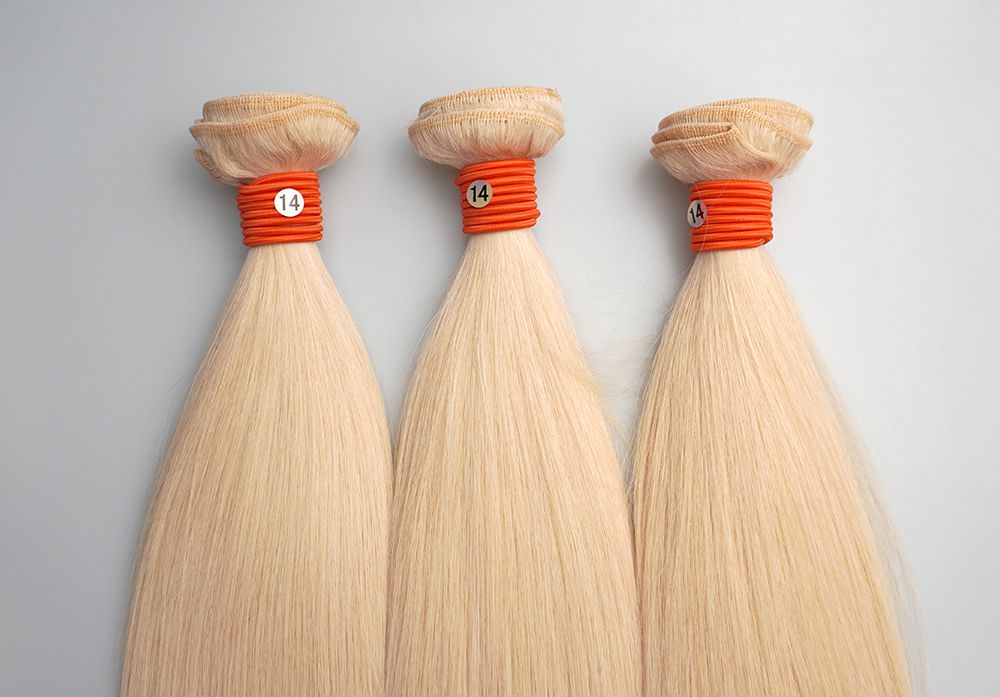
Table of Contents
1 – Bleaching to 613 – It’s All About the Cuticles
The bleaching process involves chemicals and is quite damaging to the hair. It thins the hair, reduces the natural elasticity, and causes easy breaking of the hair strands. When bleaching to 613, it’s better to start with thick and healthy hair, or in other words, unprocessed hair.
Your hair extensions’ bleaching limit is when they lose their natural elasticity. If it no longer stretches, it breaks. It’s pretty easy to check for this. Hold a healthy strand between two hands, spaced roughly 3 inches apart. Gently pull on the hair, and you will notice that the hair stretches. Processed hair is damaged hair and is easier to break. You can watch a video demonstration of this process for further clarity.
For other information on determining quality, check out this article.
2 – Why Some Hair Only Bleaches to Color 27
We’ve asked some vendors why their hair can only be bleached to 27 using a +1 US phone number and got different responses. “The hair has more melanin,” “The hair color is closer to #1, making it harder to bleach,” “The hair is from a few donors, single donor hair bleaches to 613,” and more silly excuses. Some vendors say that “the hair can bleach to 27, and some professional clients can bleach it to 613.” If you see this, you can confirm that you’re buying processed floor hair and not unprocessed cuticle-aligned hair.
The hair on my head is very close to color 1, and I’ve bleached it alongside our orange line raw hair bundles. The bleaching result is the same; both bleach to a healthy 613 hair color. (In the past, bundles with white rubber bands were our current “Orange Line.”)
The problem with processed hair from the floor was that it was mixed, and a single bundle could easily contain hair from 50 girls. It’s basically “50 shades of black.” That’s why it gets colored to an even shade of black.
Processing limits the bleachability, as bleaching damages the hair. When hair is processed and then bleached, it becomes overprocessed and may start shedding before reaching lighter shades. Additionally, coloring the hair can also limit the bleaching process, as it’s harder to remove hair dye from extensions compared to stripping the hair’s natural melanin.
Do you want to know if your hair is colored without performing the bleaching test? You could scrape the hair. While this test picks up on colored floor hair, it’s not sensitive enough to pick up on slightly processed “raw” hair. You can still perform the acetone test to determine whether it was colored, regardless of the amount of coloring.
3 – Why Some Hair Bleaches to 613
If you cut hair from the head of an Asian girl who has never colored her hair, it will bleach to 613. This applies to all unprocessed Asian hair, whether it’s from a single donor or multiple donors. The hair will still bleach to blonde even when it’s combined from multiple donors. Therefore, single-donor hair isn’t superior to hair from multiple donors.
4 – I Bleached it to 613! Is it Definitely High-Quality Hair?
No! Factories can bleach dyed hair to #613. Some clients who mainly buy processed hair can bleach it to 613. You may be one of those few professionals who can achieve it.
There’s a large gap between unprocessed cuticle-aligned hair and floor hair. Badly sourced raw hair and a mix between these two can generally achieve 613 hair color.
That’s why before you do the bleach test, you could wash the hair first and see whether it gets frizzy. It’s generally a good first indication of how damaged hair is and can tell you more about the hair.
5 – The Bleaching Test – Important Details
People often make mistakes during the bleaching test. These are two common ones.
100% unprocessed raw hair takes longer to bleach to reach the color 613 than processed “raw” hair or floor hair. The chemicals used in processing remove some of the hair’s melanin, making it bleach 4-5 times faster. So, the process of bleaching is more like a marathon than a sprint. If you bleached for 30 minutes and it only reached a color level of 27, don’t worry. Simply reapply the bleach and try again. Keep repeating this process until the hair starts to lose its elasticity. That’s when you know it has reached its true limit.
Many people make mistakes when preparing the bleaching mixture. Clients often forget to add one of the two main ingredients, which happens more frequently than you might imagine.
6 – What 613 Bundle Pictures Can Tell About Hair Quality
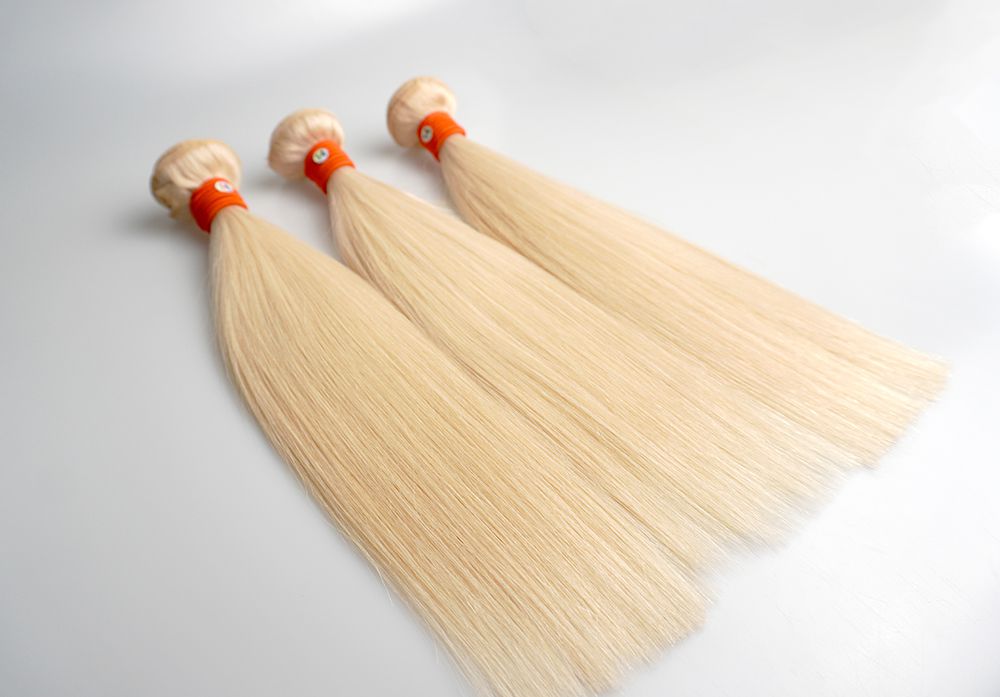
Healthy 613 bundles have a wheat-like look to it. It’s not particularly shiny and has more of a diffuse look to it.
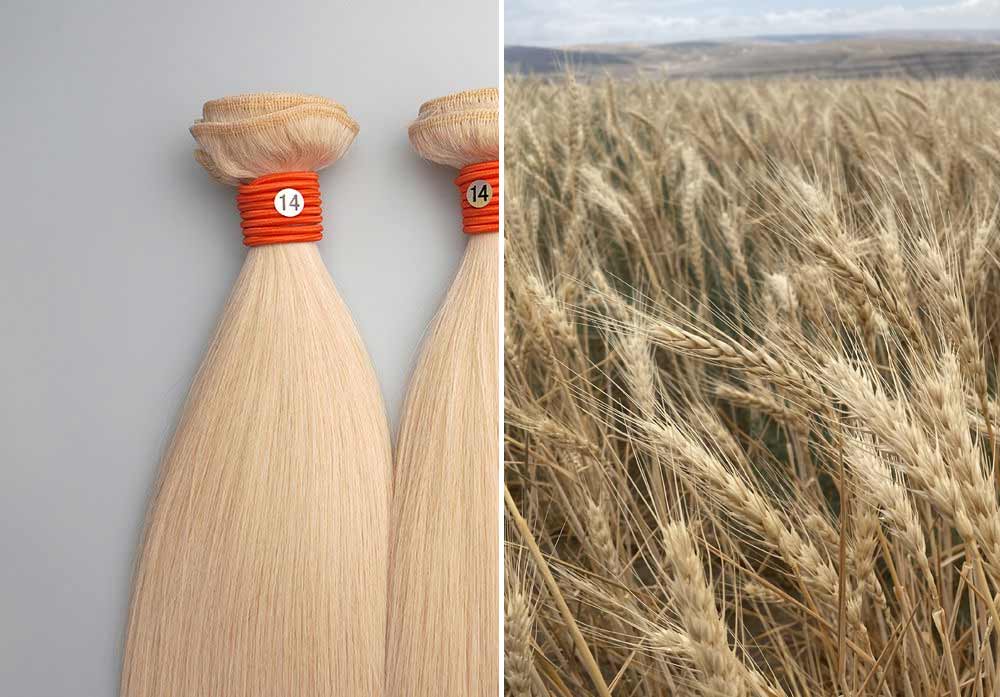
Where 613 hair was made out of processed floor hair, it looks like they emptied a yellow-shine spray on top of their hair.
Where 613 hair made of processed floor hair, gives the impression that a yellow-shine spray has been applied on top of their hair.
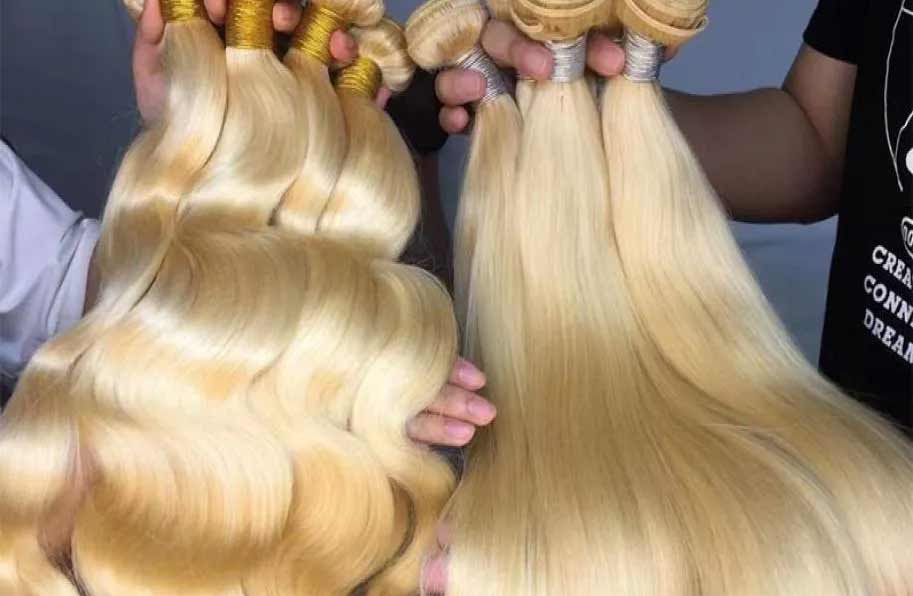
It will look different in each picture. But basically, floor hair doesn’t bleach to a wheat-like 613. So what you typically see, is very yellowish, and shiny 613 hair.
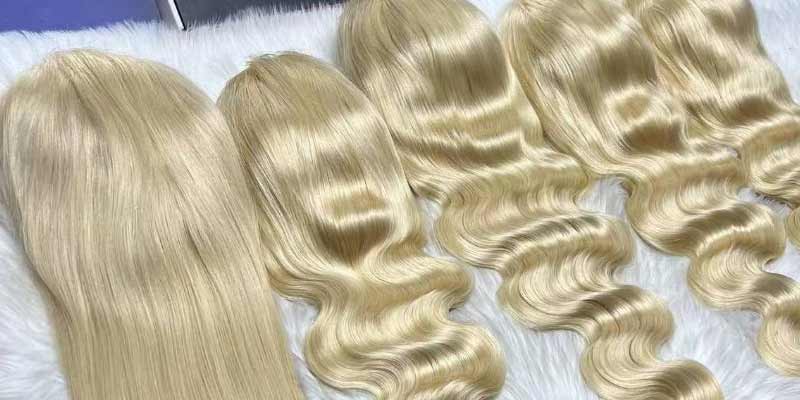
There should be a bit of flexibility in interpretation. Nearly all Asian hair is naturally straight, requiring steam styling to achieve different textures. Exposing 613-colored hair to heat can make it turn more yellow.
The shine often indicates that the quality is not great and the hair has been damaged. This can lead to frizziness. To improve its appearance, some silicone is applied to give it a nicer look.
So when looking at pictures, it’s always best to look at straight textures. They’re least likely subjected to high heat. And if you’re dealing with Indian hair… Indian hair is finer than Chinese hair. That means it has less of a margin to withstand the processing required for it to become 613. So if one of your goals is quality 613 hair, avoid hair origins with naturally wavy textures.
7 – Yunnan Remy Hair
There’s even a thing we Chinese call Yunnan Remy Hair. Yunnan Remy hair is known for being relatively coarse/thick, making it able to withstand processing better than a thinner variant. This includes the chemicals required to bleach hair to light colors. Many suppliers who sell remy machine-aligned hair (also known under the marketing label of “virgin” and is quite a bit cheaper than raw hair) sell 1b hair, which isn’t Yunnan remy hair, and use Yunnan remy hair for 613 blondes.
Conclusion
So whenever you see a supplier using:
- Can be bleached to 613
- Lighter than 27, but not to 613
- It can be bleached to 27
You can guess which quality hair it is. However, if you really want to be sure about the quality, you will have to test the hair by yourself.
Our articles are designed to help you avoid bad purchases and save money. If you’ve found them useful and wish to support us, please consider a small donation. Your contributions will help us purchase better equipment, like a new camera, or even just a milk tea to keep us going! Thank you for your support!
Got any questions? Feel free to ask us! Got any feedback? Feel free to give us! Want to experience actual high-quality hair? Order our sample or bundles now! https://bossique.com/shop/hair-sample/
WhatsApp: +86 135 3369 3283
Email: cristina@bossique.com
Facebook: https://www.facebook.com/bossique
Frequently Asked Questions
Bleaching processed hair vs unprocessed hair
Unprocessed hair is the best choice for achieving 613 hair because it bleaches well and maintains its natural elasticity and cuticles. Although bleaching can cause some damage, unprocessed hair can still last a long time. On the other hand, processed hair has already been damaged by acid, had some cuticles removed, and is dyed to a darker shade of black, making it difficult to achieve 613 hair. Investing in high-quality unprocessed hair is a better choice if you want healthy 613 hair.
Can you bleach remy hair extensions?
If you’re wondering whether it’s possible to bleach your Remy hair extensions, the answer is yes, but with some important caveats. Remy hair, sourced directly from a donor and has cuticles aligned in the same direction, is ideal for bleaching to a 613 hair color. However, some hair extensions labeled as “Remy” may be machine-aligned floor hair that has been processed and dyed. While these extensions can still be bleached, they generally cannot reach light colors.
Is raw 613 hair the best quality available?
Asian hair naturally comes in an off-black color and needs to be bleached to 613. Technically it could no longer be called raw. The bleaching process still damages the hair and will decrease its quality. Those with deep pockets could choose extensions made from Slavic hair, but healthy and authentic hair goes for around $900 per 100g. Anything cheaper, and you’d end up overpaying for the same Asian hair under a fancy label.
What does 10a hair mean?
There’s no universal grading system. Some 10a hair is cut directly from a donor, and some of it is floor hair. It could be any quality, and it’s a bad practice to market your hair by calling it 10a. Bleaching to 613 isn’t determined by how a hair vendor calls their hair. Anything unprocessed will bleach to 613, while your processed hair would probably bleach to a 613 hair color healthily.
Does bleaching virgin hair result in healthy 613 hair?
Real virgin hair is equal quality to raw hair, as steam-styling has a negligible effect on hair quality. So bleaching virgin hair should result in healthy 613 hair. However, vendors don’t want to tell you they’re selling processed hair and call it virgin hair instead. You can’t bleach this type of fake virgin hair to 613 because it’s processed and pre-colored hair. Both can affect the bleaching result.
What should raw 613 hair look like?
Raw 613 hair still has a rough surface which creates a diffuse reflection. Anything shiny in a 613 hair color is either processed or coated with silicon. Our double-drawn extensions are silicon-coated for improved looks, but our raw 613 hair bundles come without silicon and aren’t shiny at all. You can see how it looks in the following image.