
If you’re new to the world of hair extensions, it’s easy to get overwhelmed by the various terms and jargon used in the industry. That’s why having a hair extension dictionary on hand can be incredibly helpful. In this article, we’ll break down some of the most common terms you’ll come across when researching hair extensions, so you can better understand your options and make informed decisions about which type of extension is right for your hair goals. Whether you’re looking for length, volume, or just a new look, our hair extension dictionary has got you covered.

Table of Contents
Hair extension dictionary:
Raw Hair
Raw hair refers to unprocessed hair cut directly from a donor with intact and aligned cuticles. While 99% of the Asian population has naturally straight or wavy hair, curly hair is rare and is mostly made by steam-styling. That includes the “naturally curly” texture you buy from India, Cambodia, and Burma.
Raw hair is considered the highest quality, but its quality can vary based on factors such as split ends, UV or heat damage, use of low-quality shampoos, or the donor’s natural hair thickness.
Many hair vendors mix lower-quality hair with their products, and it’s important to note that a significant portion of hair marketed as “raw” is likely not truly raw.
Virgin Hair
Virgin hair refers to entirely natural hair with no chemical processing involved. This hair type is typically cut directly from a donor and is often styled using steam, which doesn’t affect its quality significantly. As a result, virgin hair and raw hair are equal in quality.
The term “virgin hair” has been misused in the hair extensions market, particularly when targeting black women. In this context, it is often used to describe processed floor hair, which doesn’t meet the definition of virgin hair.
In the market targeting white women, the term “virgin hair” is commonly used to refer to the highest quality hair. However, it is important to note that the label can be misleading even in this segment since most of the hair has been subjected to chemicals during the bleaching and coloring process.
Remy Hair
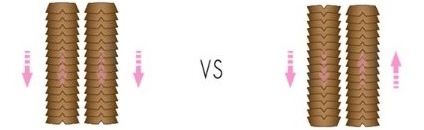
Remy hair has cuticles that are aligned. It’s possible that the hair was cut directly from a donor, which is why they’re aligned. However, it also describes floor hair aligned with a non-remy to remy machine.
Although both types have aligned cuticles, there is a significant difference in quality. Given the substantial price difference, you can usually determine which is which.
Single-Drawn Hair
When you purchase 24-inch hair bundles, only a small percentage is 24 inches long. For single-drawn hair, this amount usually falls between 10-15%. While this percentage is sufficient for shorter-length bundles, it can result in thinning for hair lengths over 20 inches. Therefore, we’ve decided to offer Orange Line bundles with 20% fullness to ensure a thicker, fuller look.
There is no international standard governing the degree of fullness in single-drawn hair. Even the definition of what constitutes 15% fullness is left entirely to the manufacturer’s discretion.
Double-Drawn Hair
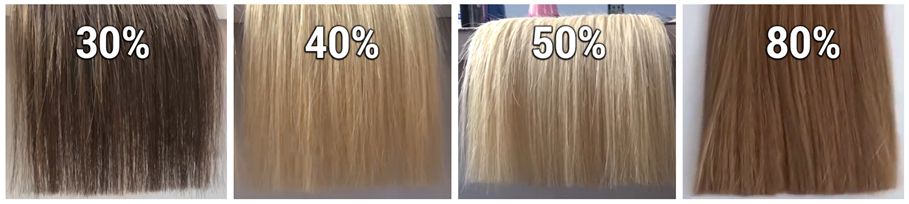
Double-drawn hair is a type of hair extension that is significantly fuller than single-drawn hair. While single-drawn hair has a 10-15% fullness, double-drawn hair can range anywhere from 30-100% fullness. This means that a greater percentage of the hair in the bundle will be the same length, resulting in a thicker and more voluminous appearance.
The level of fullness in double-drawn hair can vary depending on the desired look and the type of hair used. For example, some double-drawn hair extensions may be 50% full, while others may be 80% or more. It’s important to note that the higher the fullness, the more expensive the hair extension will be.
Super Double-Drawn Hair
Super double-drawn hair is a term mainly used by Vietnamese vendors. All you can say is that it’s fuller than their double-drawn hair, as it doesn’t have a specific fullness attached to the label. It’s mostly all chemically processed floor hair, as super double-drawn raw hair would be too expensive for 99% of clients.
Fullness or Ratio of a Bundle
Single, double, and super double-drawn aren’t specific. Measuring which percentage of the bundle reaches full length is more accurate. While the percentage is just one number, you’ll also have to consider which length the bundle has. A single-drawn 10″ bundle will look much fuller than a single-drawn 30″ bundle. It also matters what the shortest added length is. Hair with the shortest length of 4″ will look thinner than hair with the shortest length of 10″.
Single-Donor Hair
Most vendors lie about their hair being single-donor. It’s just marketing.
The average ponytail might only be 30-80 grams, while your hair bundles weigh about 95 grams. Yes, those are multiple donors. And it doesn’t matter, as when hair is mixed and matched well, a bundle from 4 donors is the same quality as a bundle from 1 donor.
Furthermore, if you’ve read the section above about single-drawn, double-drawn, and super-double-drawn, you already know that the manufacturer controls the fullness ratio of bundles. This means they will mix xx% long-length hair, yy% medium-length, and zz% short-length hair. This hair is all going to come from multiple donors.
Real single-donor hair doesn’t consistently come in 100g per bundle, and each bundle would have a different weight. Hair quality is measured by the health of the hair material, not by the number of donors.
Naturally Curly Hair
It’s common to see Indian, Cambodian, and Burmese vendors calling their curly bundles “natural curly.” Data shows that most Vietnamese and Chinese have type-I (straight) or type-II (slightly wavy) hair. The majority of the Indian population has type-II or type-III hair. This is on a scale from 1 to 7. You will see that most so-called natural curly bundles still come with a very consistent texture. That’s because they’re made to be that way.
My Vendor Charges a Long-Length Fee
While there’s a surplus of short-length hair (lengths up to 20″), there’s a shortage of long-length hair (22″ and up). If you’re only buying long-length bundles, the manufacturer will be stuck with this short-length material and only buy increasingly scarce long-length material. This drives their prices up.
Many manufacturers require buyers to purchase four short-length bundles for every long-length bundle. If this requirement is unmet, the cost of long-length bundles increases by about 30 to 50 RMB (roughly $6-10 per bundle). Most vendors don’t tell you about this as it makes things hard to understand and leads to abandoned orders. But if you order many short-length bundles, some vendors will offer you a discount. It explains why there’s often a big price gap between 20 and 22″.
Should I Buy from a Hair Vendor or a Hair Factory?
In short, it doesn’t matter. The price difference between these two isn’t as big as you might imagine it to be. As a Chinese hair vendor who can speak Chinese and pay in the local currency, we get way better prices and MOQs than you. This means that we can offer competitive prices even as a hair vendor.
Purchasing hair extensions directly from a hair factory may seem the most cost-effective solution. However, hair factories may only specialize in producing one product type, and their range of products may be limited. Hair factories may purchase extensions from other suppliers to offer a complete product range, essentially becoming middlemen.
While middlemen are important in the market, working with a reliable vendor consistently providing quality products is crucial. It’s worth spending a little extra per bundle to avoid any disputes that could potentially cost you hundreds of dollars. In short, when looking for hair extensions, prioritize reliability over lower prices from a hair factory.
Why are there Red and Copper-Colored Strands in my Bundles?
Hair contains melanin, to be more precise, pheomelanin (yellow to red) and eumelanin (brown to black). The combination of these two determines your hair color. Floor hair gets processed with hydrochloric acid, which will strip away some of this melanin and turn some strands red or orange. So, if you see many of them, you’re dealing with processed floor hair.
Whether henna is responsible for this color change could be debated, but I would put my money on the chemical processing explanation.
What is an MOQ (Minimum Order Quantity)?
MOQ stands for Minimum order quantity. Products in stock can usually be sold per one. But many products have to be customized, and it’s easier to produce products in bulk than one by one.
Generally, products are manufactured in large quantities using assembly lines or specific machines. If running a steam-style room costs $100 each time, it makes sense to use the machine only when you have at least a hundred bundles ready to be steam-styled rather than just an individual bundle.
Also, ordering retail for small and cheap products doesn’t make much sense. Shipping is expensive, and it can be more cost-effective to spread out the shipping fee over more significant quantities of products.
Wholesale Prices
Wholesale prices are something vendors say to convince you that you’re getting reasonable prices. Real wholesale prices come from ordering in bulk. It simply takes less effort to pack one order of 100 bundles than 100 orders of 1. When you buy more, vendors will be willing to lower their prices by an amount to get your order.
Vendor Lists
Vendor lists are usually made by someone trying to exploit people unwilling to do their homework. There’s no guarantee that the seller understands hair and is looking for the same hair you are. Any good vendor list would come with a testing protocol and share details about the quality of a specific vendor they tested. Anything else is simply a list of many vendors you’d have to test one by one, which you could’ve done in the first place without wasting money on those lists.
Smooth and Silky Hair
Hair becomes smooth when you chemically remove some of the cuticles. It can be further enhanced by adding silicon. It’s an indication of overprocessed hair, not of quality hair.
Why is Silicon Applied to Hair Extensions?
Adding silicon to hair extensions is a way to make your hair look prettier and feel better, but it can also be used to hide quality issues. If the cuticles aren’t aligned, the hair will tangle. Damaged hair is quite porous and will cause the hair to become dry and frizzy. Applying silicon is a temporary fix for these problems.
Hair Grades
Hair grades refer to the naming conventions that vendors use to identify their own hair products, but they do not have any universal or standardized meaning. Therefore, it’s important not to compare grades from different vendors or have preconceived notions about hair quality based on its grade number.
P/M/T Colors
P – Piano colors, strips of hair with two alternating colors || M – Mixed colors, evenly mixed colors || T – Top colors, the root is different from the bottom.
Wig Density
Two factors, weight and length, determine the density of a wig. The longer the length, the more weight you get per wig. This ratio differs for every vendor; you barely get any hair for 180% density wigs. You get fuller wigs when you customize them with lace products and bundles.
What is a Hair Vendor’s Price List for?
A price list is a list you can ask your vendor to calculate the prices yourself, double check invoices, and don’t have to ask your vendor for the cost of every possible combination of hair. Try to use them. Your vendor will appreciate it.
Frizzy Hair
Hair becomes frizzy when it can no longer control its moisture levels. It’s often related to hair damage, which increases porosity and causes hair to become dry.
If your hair is dry and frizzy, proper hydration can help. Start by washing it with a sulfate-free hydrating shampoo, followed by a deep conditioning treatment and a moisturizing hair mask.
Products like Olaplex and K18 can repair hair, but only if used in moderation. Overuse can actually damage hair.
Hair Porosity
Porosity is about the hair strand’s ability to contain moisture inside. The leading cause of high porosity is hair damage. The structure of your hair can play a role, and straight hair is usually less porous than naturally curly hair. Chemical processing, applying heat, and environmental factors can all make these problems worse.
Mink Hair Extensions
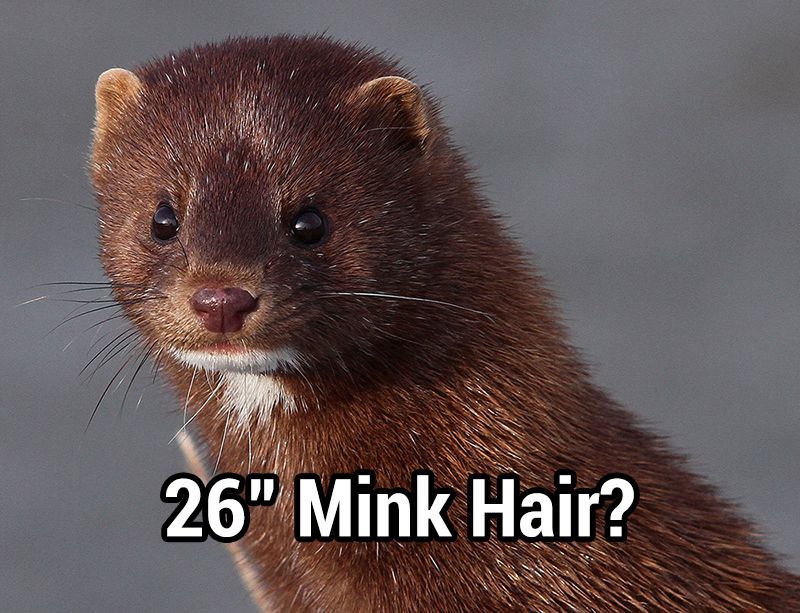
Mink Hair is a marketing label to describe random qualities of hair. It’s not animal hair, and there’s no universal ‘recipe’ to turn human hair extensions into mink hair extensions.
Burn Test
You can do the burn test to determine whether your hair is made of plastic. Plastic melts and becomes hard, while hair turns to ash and will disappear between your fingers.

Acetone Test
The acetone test is a test you can do to determine whether your hair is natural color or dyed. Acetone dissolves hair dye and makes the hair stain white surfaces. The first test you should do when testing raw hair. Hair being dyed usually indicates more significant problems.
Washing Test
The washing test you can do to determine how damaged hair is and if it will tangle. Damaged hair is porous and becomes frizzy when washed. Hair without aligned cuticles will tangle when in water.
PayPal Fee
There’s a fee associated with payment platforms. The buyer is going to end up paying for it. It can be included in the product prices, but it can also be an extra charge.
While you can refer to the PayPal documentation saying that sellers aren’t allowed to charge a PayPal fee, only thing it’s going to achieve is a vendor refusing to sell to you.
Hair Quality Problem
The seller will blame the buyer, and the buyer will blame the seller. Both sides will deny that it’s their fault. It would be best if you always tried to find quality problems before installing the hair, as that would exclude it from being caused by the user. Use the before-mentioned tests.
Hair Origin
The country the hair originates from. Always try to get Chinese hair from China, Indian hair from India, and Vietnamese hair from Vietnam. These countries don’t like exporting their best quality to other vendor countries. However, it’s mostly marketing, and it’s impossible to determine your extensions’ origin. So focus on what’s really important: Quality.
Lifespan of Hair
We, the vendors, don’t have a clue. But if you want a number, we can give you one. Usually very optimistic. Raw hair should last around 2-3 years, and processed floor hair should last a maximum of one year. It’s with optimal hair care; honestly, we don’t expect most users to have optimal hair care.
When do you get free shipping?
A vendor with a profit margin large enough can offer free shipping. This means you get something for free but pay more for the products.
What is Russian or Slavic Hair?
Russian and Slavic hair is quite expensive. Expect to pay $900 for 100g of quality material. If you’re paying less, you buy fake or lower-quality hair. It’s not of higher quality than Asian hair but can give a unique experience compared to Asian hair.
What’s Real Tangling?
Hair that becomes an instant mess when in contact with water. It indicates that the cuticles aren’t aligned. Hair matting in the neckline usually has other causes (high collars, jewelry, friction from bed/seat/sofa, static electricity, etc.). Always wash your hair from top to bottom, and don’t rub it in random directions. This causes hair attached to the head to tangle as well. Don’t let your hair become dry.
What are Hair Factory Prices?
You can get better prices from a factory than from a hair vendor. But that’s only the case if you live in China, pay in the local currency, and can pick up your own hair. But one more issue is that factories outsource a ton of work. For example, if they focus on making bundles, they will outsource the production of lace products to another factory.
Most hair vendors claim to have their own factories, but most are liars. Whenever a team of people provides you with English customer service, they require an office, educated employees, pay medical insurance, give commission on sales, and need to advertise themselves—all of these drive up the costs of your product.
Our articles are designed to help you avoid bad purchases and save money. If you’ve found them useful and wish to support us, please consider a small donation. Your contributions will help us purchase better equipment, like a new camera, or even just a milk tea to keep us going! Thank you for your support!
Many of our articles start on our Facebook. If you want to discover more, please check the link: www.facebook.com/bossique.